Paynes Titus Excelsior ET Wins Sire of the Season Award
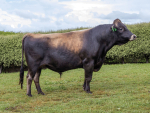
Paynes Titus Excelsior ET, an LIC bull bred by Brad Payne and Claire Brodie in the Waikato, has won the JT Thwaites Sire of the Season 2026 Award.
 increase font size
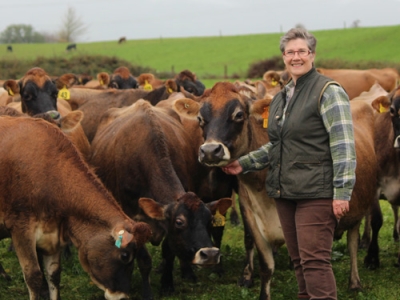 Alison Gibb has become the first female president of Jersey New Zealand in its 114 year history.
Alison Gibb has become the first female president of Jersey New Zealand in its 114 year history.
"As to being the first woman president I believe the membership will be watching with keen interest and while that brings a challenge in itself I'm not afraid of it," said Gibb, a partner with her husband Russell in Zenith Jerseys at Taupiri in the Waikato.
"In some respects I've been there before. In the early 1980s I was the only full time female maths teacher in a department of 10 plus."
Gibb finished 25 years as a maths teacher at Fraser High School in Hamilton in 2008.
"The reality is that it is a sign of the times. Farming businesses are predominantly family businesses where husband and wife are in partnership and the women play a huge role in the decision making process. Male or female we have a job to do, gender shouldn't enter into it."
As president Gibb will help the 1902 founded organization promote the efficiency of New Zealand Jersey cattle to the national dairy industry. She'll also help Jersey cow farmers add value to their herd by promoting Jersey New Zealand resources to them.
Gibb, one of two appointed directors on the six strong Jersey New Zealand board, was asked to fill the role after an appointments committee was set up to find the right person for the job.
Her 24 years' experience in governance of various organisations made her a good choice. She has served on a school board, served as a trustee then acting chief executive of Arts Waikato, and is a Dairy Women's Network trustee which she also served as North Waikato convenor.
"As a trustee of Dairy Women's Network I have rubbed shoulders with many successful women and the key message always is that women need to back themselves more, to 'lean in' and contribute to the decision making process. Women offer a different dynamic around the board table - it's not that we are better, we think differently and hence add diversity of thought in the decision making process."
Gibb said Jersey New Zealand had been through a tough time and needed to develop a sustainable business model through strong governance.
"Our members strongly believe in the advantages of the Jersey cow, but we need to promote that message to the wider dairy industry and thus build our organisation. "There is a growing demand for Jersey genetics world-wide. Sustainability and efficiency being the key driver.
Gibb said the Jersey cow had a number of advantages, including higher fertility and ease of calving. Its lighter frame means less pugging of pasture.
Jersey milk contains more nutrition per litre than any other dairy breed. "The higher fat component of the milk had been seen as a disadvantage when public perception was that fat was bad for you but now that the public have realised that fat provides flavour and is a naturally healthy choice," Gibb said.
"The biggest advantage is the Jersey cow's efficiency in terms of the milk produced per kilogram of feed and live weight, with many Jerseys producing in excess of their own live weight in milk solids.
"We have a strong and diverse board and I am looking forward to working with them to propel Jersey New Zealand to the next level, through strong governance, vision and leadership."
Gibb will help lead the board to develop a strategy underpinning the Jersey New Zealand business model and delivering growth and sustainability.
Paynes Titus Excelsior ET, an LIC bull bred by Brad Payne and Claire Brodie in the Waikato, has won the JT Thwaites Sire of the Season 2026 Award.
The future of sustainable, profitable and environmentally friendly dairying will be on full display at the upcoming 'The Right Balance' field day at NZ Young Farmers' Donald Farm in South Auckland.
The last thing most Jersey members would expect to read in the Jersey Focus is an article about the well-known Holstein Friesian and Ayrshire breeders Gary and Karen Peters of the Rock View stud, Midhirst, Taranaki.
Two Jersey cows-linked organisations have invested in a 215ha Southland farm with a view to raise funds for breed promotion.
The jersey-cross beef business at his Whangarei Heads dairy farm is a sideline – but it is a valuable sideline, says Murray Jagger.



National’s much-touted free trade deal with India featured in the Rural Issues Debate at Mystery Creek, Hamilton on Wednesday night.
New Zealand's 2026-27 freshwater fishing season has opened, with anglers encouraged to head to rivers and lakes over the coming days as conditions look favourable across much of the country.
Central Otago District Council (CODC) has voted against a plan to spread treated sewage sludge from Cromwell and Alexandra on farmland near Lauder, a decision Federated Farmers says reflects strong opposition from rural residents.
Pāmu has released its FY26 Integrated Annual Report, reporting a Net Operating Profit of $113 million, more than double the $49 million recorded in FY25.
Meat Industry Association data, released alongside the Red Meat Sector conference in Wellington, shows export value climbing across the US, China, UK and Canada.
Applications are set to open for the 2027 Zanda McDonald Award, a trans-Tasman award recognised for identifying and fast-tracking talented young leaders in agriculture and agribusiness.