What Would Synlait Be Worth to Fonterra or a2 Milk?
Speculation of a possible joint move by Fonterra and a2 Milk to buy Synlait raises a much bigger strategic question, says agribusiness expert Dr Nic Lees.
 increase font size
 Peter Nuthall.
Banks need to take a different approach to lending to farmers, according to new Lincoln University research.
Banks usually look at historic business statistics and equity levels, but the research suggests that a better indicator of a farmer’s credit worthiness is his or her skills, attitudes and knowledge in running a farm.
Honorary Associate Professor Peter Nuthall said the study emphasised the fact that the world runs on individuals and their skills.
While a lender might form a subjective impression about a would-be borrower…“they rely on those records, credit ratings and so on to make those decisions rather than their personal feelings,” he said.
“I think that in cases where the lending levels are high, they [lenders] should be looking at not only the history but also the personal characteristics of the people concerned.
“And if you’ve got a new person coming in wanting to borrow to put up a new farming venture of some kind or other, there isn’t a great history to work on so they should be looking more formally at their personal characteristics.
“It’s all common sense really. We’ve put together some figures that show that common sense is quite good sense.”
In the recently published study, Nuthall and his colleagues Bruce Greig and Dr Kevin Old used data from a representative sample of New Zealand farm owner/operators to come up with a model which they then tested with data from a postal survey.
“The results make it clear a manager’s personal characteristics are highly correlated with debt payback and, logically, are very likely to be the drivers,” Nuthall told Rural News.
Under personal characteristics, the team considered such factors as age and experience, objectives, management style, relationships with friends and colleagues, spousal influence and even the number of children.
“A farm manager’s personal characteristics are likely to be a better predictor of future debt payback performance,” he said.
“They have a lifetime of education and experience. A farmer’s objectives, and that of their associated household, can be considered part of the human capital which should be considered including attitudes to risky situations and their originating factors.”
Nuthall said it was also important to note that the human characteristics related to payback can potentially be modified and improved.
“Counselling and psychotherapy can have very positive impacts and are likely to change a manager’s basic characteristics.
“This is a positive approach which might be used when difficulties first surface, preventing further problems. However, the manager must be prepared to cooperate in positive action which will then have lasting impacts.
“This is in contrast to short-term fire sale action.”
Nuthall and his colleagues have previously done research on factors such as farmers’ use of intuition in decisionmaking, and on farms’ financial sustainability.
While there was currently widespread concern about banks’ potentially tightening up on farm lending, Nuthall said people tended to hear only about the cases of extreme debt.
He added that, on average, most farms are not at their lending limit at all.
“There’s a goodly proportion of farms that have no debt. People seem to forget that.”
Speculation of a possible joint move by Fonterra and a2 Milk to buy Synlait raises a much bigger strategic question, says agribusiness expert Dr Nic Lees.

Lynnette Hudson's 30-year obsession with Pinot Noir was sparked working vintage in Burgundy, seeing how subtle changes in terroir were expressed in the glass. It was, she says, "an elightening moment in every way".
A four year trial has reaffirmed that mixing plantain into dairy pastures can help reduce nitrogen losses to freshwater while maintaining milk production and profitability, say researchers.
Twenty five secondary school students from around New Zealand recently completed a three day residential programme designed to explore career opportunities across the food and fibre production supply chain.
A Lincoln University student is set to become the first person to contest both the Young Viticulturist and the Young Winemaker national titles in one year.


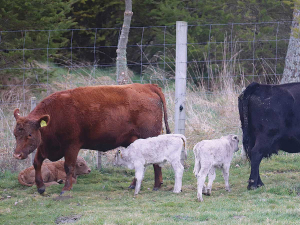
A major move is about to get underway to improve the quality and viability of dairy beef and cattle in NZ.
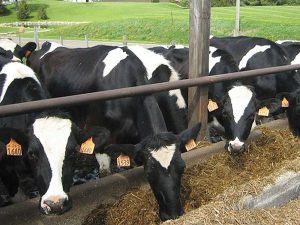
Veterinarians say changes to the code of welfare for dairy cattle provides a positive foundation for improved cattle welfare across the country.
Today, 15 October, is the International Day of Rural Women, which recognises rural women’s contribution to farming, communities and the environment.
Global dairy giant Lactalis has integrated its Australian operations with the Mainland Dairy consumer business it acquired from Fonterra earlier this year.
After almost two decades of sharemilking, saving and building equity, Aaron and Marcia Flay this year realised their long-held dream of settling on their first dairy farm.
Good medium to long term prospects for NZ beef, especially in the US, has heighted the focus on various initiatives to capitalise on this situation.