Tony Egan: NZ Meat Processing More Collegial Than Before
The meat processing industry is much more collegial than it was in the past and is now more focused on common goals.
 increase font size
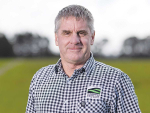
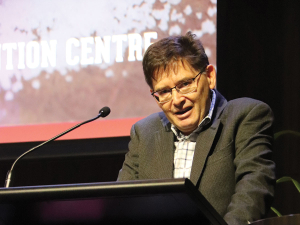
 Greenlea managing director Tony Egan.
Two meat processors have joined forces to take over the tannery operations of Wallace Group.
Greenlea Premier Meats and Wilson Hellaby will jointly own and operate the hides and skin operations as Waitoa Tannery Ltd.
The two processors have also partnered up with Glendenburg Holdings to run the composting business owned by Wallace Group.
Glendenburg Holdings, owned by Glenn Smith and Steve Dahlenburg, will run Wallace Proteins Ltd, the rendering business arm of Wallace. Smith and Steve Dahlenburg have significant experience in rendering operations including the marketing of meal and tallow products.
The joint venture acquisition includes Wallace assets based in Waitoa, Feilding and Northland: assets associated with the rendering, composting and tannery operations undertaken at the Waitoa site as well as in Northland and Feilding.
Fred Hellaby, managing director of Wilson Hellaby, says it is a great opportunity for two meat companies to work together for the future of the industry.
Greenlea managing director Tony Egan says the deal will ensure existing employment, creating new jobs, and supporting the local community during this difficult economic period.
“There will be approximately 100 staff employed across all business activities at the Waitoa, Feilding and Northland sites,” says Egan.
Greenlea Premier Meats is a Waikato based, family owned and operated beef processing company and export their products globally to over 40 countries worldwide.
Wilson Hellaby is a privately owned Auckland based meat processor predominantly focused on the marketing of beef, lamb and pork products into the domestic and selected export markets.
The Wallace Group Tannery was established in 1992 and has since expanded its collection area to service the greater North Island, as well as Canterbury and Otago.
About 25% of the wet/blue Tannery production is made up of casualty calves and cows, with the balance being hides from meat processing plants.
The meat processing industry is much more collegial than it was in the past and is now more focused on common goals.

Cambridge and surrounding communities are benefiting from a new emergency ambulance, thanks to joint funding from longstanding supporters, Grassroots Trust Limited and Greenlea Foundation Trust.
Greenlea Premier Meats managing director Anthony (Tony) Egan says receiving the officer of the New Zealand Order of Merit (ONZM) honour has been humbling.
Ahead of the World Butchers' Challenge, the captains of 14 nations’ teams squared off in Paris over the weekend.
Alliance Group has launched a new $16 million warehouse technology system at its Lorneville plant near Invercargill.

The meat processing industry is much more collegial than it was in the past and is now more focused on common goals.
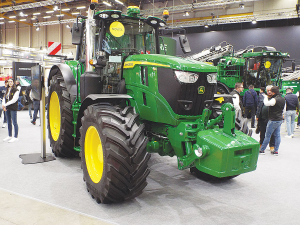
With the last couple of months having seen some potential tractor purchases put on hold with the impending election and continued input cost rises, year-to-date figures, ending September, has seen deliveries up around 5% over the same period in 2025, with a total of 2026 units.
Beef+Lamb New Zealand is calling for nominations for director roles in the Northern South Island and Northern North Island electoral districts.
Fonterra chief executive, Richard Allen says being resilient has helped the dairy industry overcome extreme volatility in recent years.
The head of the Ministry for Primary Industries (MPI) trade and international relations group says New Zealand is well-positioned to secure trade access and compete internationally as the world becomes more complicated, demanding and uncertain.
Northland farmer Greg Collins has taken over as chair of the Fonterra Co-operative Council.