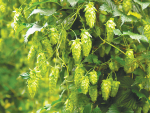
Investors hopping into horticulture
Low interest rates are driving record enquiries for cash yielding real assets, says the rural syndicate property investor MyFarm Investments.
 increase font size
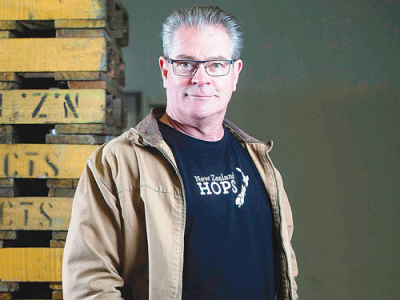 NZ Hops chief executive Doug Donelan.
NZ Hops Ltd has at least quadrupled the value of its co-operative during the past 10 years.
Chief executive Doug Donelan says the Tasman-based 27-member producer co-op has grown from about $8 million to about $35m gross revenue.
But he says the co-op believes growth needs to be managed to ensure the significant increases in volumes that are coming on stream can be marketed.
“There are others who believe we could triple the current volume. My view is that attempting that would be reckless,” Donelan told Rural News.
“Cycles exist in the international hop market and it’s easy to get caught on the wrong end.”
Donelan noted in an industry update earlier this year that mature craft beer markets like the US are showing market signals of slowing down. However, overall the craft beer market domestically and internationally is quite buoyant with significant growth in emerging markets.
Donelan says there are now more hops in the ground than at any time previously. Most of the increase is quite recent – in only the last two or three years.
“But generally the volume has been quite static between 700 and 800 metric tonnes.”
He says craft beer has contributed much to industry growth as more hops are used in certain beer styles favoured by the craft segment consumer. Big brewers actually produce a large amount of craft beer these days.
“Our cooperative has a broad customer base which for the most part is high-value specialty hops for craft and higher value beer products.”
About 75% of the hops produced by NZ Hops is exported. All commercially grown hops in New Zealand are grown in the Tasman District, however there are trials underway in Central Otago and Hawkes Bay.
“Hops are latitude sensitive which means they require a specific day length to flower and mature, and they need cold winters and calm, sunny, stable growing conditions, low wind and good rainfall,” he says.
NZ Hops has a breeding programme and owns the plant rights.
“The hop breeding programme continues to develop new and unique hops with two new varieties in grower trials this season and approaching commercial release,” Donelan says.
“Two other promising selections will also be advanced next year into grower trials as NZ Hops Ltd continues to focus on creating a point of difference for its customers while keeping pace with the international brewing market.”
Low interest rates are driving record enquiries for cash yielding real assets, says the rural syndicate property investor MyFarm Investments.

The Ministry for Primary Industry is sinking $5.3 million into a seven-year $13.25 million venture to breed new hop cultivars to expand the New Zealand craft beer industry.
Waikato companies Power Farming and the Good George Brewing Company got together during Fieldays...
Winemaker Josh Scott of Marlborough has perfected the art of brewing, while still keeping his hand in with grapes.
It might seen a little sacrilegious in some quarters to be writing about brewing beer in a wine publication...


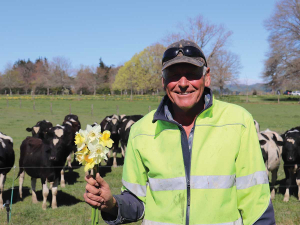
South of the central Hawke’s Bay town of Waipukurau is Taniwha Station – a highly successful 550ha bull beef farming operation.
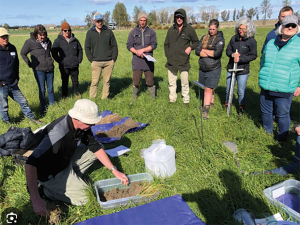
Beef + Lamb NZ funded research has shown that some simple changes to pasture management could help farmers make better use of rainfall and build resilience before dry conditions hit.
OPINION: There could hardly be a more appropriate theme for a conference than the one chosen by the red meat sector - Navigating Volatility.
When Northland leather worker Vernon Suckling started making horse saddles 50 years ago, quad bikes and side-by-side vehicles were unheard of.
Alliance Group has confirmed that eligible farmer-shareholders who supply and continue to back the business will receive up to $20 million later this year, following the strategic investment partnership with Dawn Meats.
With a general election under five weeks away, Rural News is asking major political parties about their policies and positions on key issues facing the primary sector. We will run their responses to each question over the next four weeks. The ACT Party and the Greens didn't respond in time.