New Mates
OPINION: Proponents of regenerative agriculture tend to be naturally aligned with a 'green mindset', so they will be nonplussed with their new mates in the US of A.
 increase font size
 Genevieve Toop.
Greenpeace has launched a proposal calling for a $1 billion investment in regenerative agriculture.
The organisation has created a plan outlining five key projects that they say the Government should immediately invest in to "begin a transformation of the New Zealand agriculture sector".
Greenpeace campaigner, Genevieve Toop, says serious investment in regenerative agriculture as part of the Government’s post-COVID economic planning could catalyse a much-needed shift.
Toop claims unlike mainstream farming, regenerative agriculture is all about diversity instead of monocultures, building soil health instead of degrading it, and using natural systems instead of “costly and harmful inputs” like chemical fertilisers.
Greenpeace says the practice draws heavily on indigenous knowledge and some common techniques include agroforestry, cover cropping and conservation tillage.
"We know that regenerative agriculture has a whole host of benefits, like more productive and resilient farms that clean up waterways, lock carbon into the soil and nourish whole ecosystems," claims Toop.
Greenpeace also is critical the “millions of dollars spent by previous Governments on intensive agriculture”, which it claims includes “subsidies to increase agri-chemical use and stocking rates, drain wetlands and convert forest into pasture”.
The organisation also criticises the funding of multi-million-dollar infrastructure projects such as a fertiliser factory in Taranaki and several irrigation schemes.
OPINION: Proponents of regenerative agriculture tend to be naturally aligned with a 'green mindset', so they will be nonplussed with their new mates in the US of A.
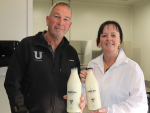
Wayne and Ange Moxham of Horowhenua have just been named as Fonterra's top organic performer for milksolids. As well as providing organic milk to Fonterra, the couple also sell Udderly Organic milk to more than 100 outlets in the region and are embarking on another exciting venture producing organic gelato. Reporter Peter Burke went along to see their farming operation.
OPINION: Reckless action by Greenpeace in 2024 forced Fonterra to shut down a drying plant for four hours, costing the co-op about $300,000.
A day after selling its consumer businesses, Fonterra has settled a civil claim, filed by Greenpeace, out of court.
OPINION: Governments all over the world are dealing with the fuel crisis.


An Auckland gelato shop and an established New Zealand ice cream maker have both been named Supreme Champions at the NZ Ice Cream & Gelato Awards 2026.

As the cost-of-living crisis continues to put pressure on household grocery budgets, new figures show pork remains one of the most affordable fresh meat options for New Zealand families.
OPINION: In politics, credibility is and should be big. It must surely rank higher than charisma, which is quite trite and superficial. Yet, voters nowadays are often wooed and influenced by how someone looks or talks at a superficial level. TV plays a huge role in this.
Farmers can spend less time on paperwork, thanks to a new data sharing agreement between DairyNZ’s DairyBase and LIC’s MINDA software.
Kaikōura families affected by July's severe storm have found a practical solution to a problem that's kept some children away from regular schooling for weeks: a washed-out section of Inland Kaikōura Road, which has stopped the local school bus from running its usual route.
Rural New Zealand is welcoming the Government’s recent package of rural healthcare initiatives.