
NZ Milk Price Could Hit $10/kgMS as Global Supply Eases
A 'tsunami' of milk from key exporting countries is winding down and this may be good news for New Zealand dairy farmers.
 increase font size
 Stefan Vogel, Rabobank’s head of agri commodity markets and an author of the Rabobank Global Outlook 2017.
Record-high stock levels are set to keep worldwide food prices low during 2017 even as inflation starts to rise in many developed economies, says a major report from Rabobank.
Staple food commodities like wheat, corn and soybeans – a key part of livestock diets across the world – are being stored in record volumes, weighing on the prices which are expected to be paid to farmers next year.
In the Rabobank Global Outlook 2017 report, which looks at the prospects for 13 crucial food and agricultural commodities, Rabobank highlights the role of China in creating further uncertainty in the market. The world’s most populous country has huge stocks of many key commodities, with estimates suggesting it holds 60% of global cotton supplies, over half of corn, 40% of wheat and 21% of soybeans.
If China decides to begin selling some of these reserves, this could depress global prices for commodities including cotton, sugar, corn, soybeans and vegetable oil, according to Rabobank.
It expects US inflation to increase to around 2% during 2017, while prices are also expected to rise in the UK and, to a lower extent, the Eurozone. Even these small increases may be enough to attract attention later in 2017 to commodity index funds, which offer a hedge against inflation while agricultural prices remain low.
Stefan Vogel, Rabobank’s head of agri commodity markets and an author of the Rabobank Global Outlook 2017, says: “After three years of declining prices and extreme weather wrecking crops in many important agricultural regions, 2017 looks set to bring some much-needed stability to food prices.”
Nevertheless, record global stock levels mean prices are likely to remain stubbornly low – good news for consumers but less so for the world’s farmers.
“Yet the most striking wildcard in this is China. Given the size of its population, its economic growth and its massive share of global agri commodity imports, it exerts a colossal influence on world food prices. And with huge stocks of many of the most important commodities – including corn, wheat and soybeans – any decision by China’s policymakers to begin selling down these reserves would have a profound effect on world markets as Chinese imports would decline.”
Elsewhere, Rabobank predicts that volatility in the global currency markets will move agricultural commodity prices during 2017, with the euro likely to depreciate as a result of French, Dutch and German elections during 2017.
The potential impact of such currency fluctuations can be seen in the UK where the decline in the value of the pound since the Brexit vote in June has pushed up the price of food imports by as much as 16% while boosting agricultural exports. As a result British grain sales abroad are at their highest level for almost 20 years.
Following the election earlier this month of Donald Trump as president, Rabobank is cautious on the outlook for the US. During his campaign Trump suggested he may pursue protectionist economic policies. Such action could have wide-reaching effects on American imports and exports of commodities if trade agreements are revised.
In terms of individual commodities, coffee prices (currently 163.3 USc/lb) are expected to decline significantly, with an especially bearish outlook on arabica coffee, while robusta coffee prices are expected to be supported by a large production deficit. However, lower prices are unlikely to find their way through to consumers.
Rabobank predicts the ongoing shift of developing countries to more meat-based, Western-style diets, which will continue to drive consumption – and therefore support the prices – of soybeans (currently 1,020 USc/bushel) which play a major role in feeding livestock, pork (56.5 US$/cwt) and beef (108.7 US$/cwt). Dairy prices should also rise during 2017 as demand steadily increases, according to Rabobank.
Stefan Vogel added: “While farmers, consumers and commodity traders will all be keeping an eye on potentially volatile currency prices during 2017, overall the fundamentals remain strong. The global population is growing and prosperity is rising, fuelling the switch to more expensive, meat and dairy-rich diets. In our view global food prices should in the main hold up, even if farmers are braced for little or no commodity price growth during the year.”
First published in 2010, the Rabobank Global Outlook report looks closely at the prospects for the following year of 13 key food and agricultural commodities. Outlook sets out quarterly price forecasts with the ‘base case’ representing the most likely price trajectory in Rabobank’s view and ‘high’ and ‘low’ cases accounting for the risk factors driving volatility in the market.
A 'tsunami' of milk from key exporting countries is winding down and this may be good news for New Zealand dairy farmers.

Chinese beef trade quotas and a looming suspension of Brazilian beef imports into the European Union are expected to reshape global beef trade flows over the remainder of 2026, with implications for New Zealand exporters, according to Rabobank's Q3 Global Beef Quarterly report.
New Zealand consumers are paying more for beef mince than ever before, with the average retail price now sitting above $24 per kilogram, according to Rabobank.
West Otago dairy farmer Luke Kane has been awarded the 2026 Rabobank Dr John Morris Business Development Prize.
Twenty five secondary school students from around New Zealand recently completed a three day residential programme designed to explore career opportunities across the food and fibre production supply chain.



Entries opened on Monday, 5 October 2026 for the 2027 New Zealand Dairy Industry Awards (NZDIA), which organisers describe as the nation's biggest celebration of excellence in the dairy sector.
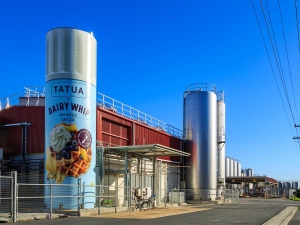
Waikato milk processor Tatua has again declared a record milk payout to farmer shareholders, leaving other processors in the dust.
A Labour-led Government won’t be bringing back the controversial freshwater rules of 2020.
National’s much-touted free trade deal with India featured in the Rural Issues Debate at Mystery Creek, Hamilton on Wednesday night.
New Zealand's 2026-27 freshwater fishing season has opened, with anglers encouraged to head to rivers and lakes over the coming days as conditions look favourable across much of the country.
Central Otago District Council (CODC) has voted against a plan to spread treated sewage sludge from Cromwell and Alexandra on farmland near Lauder, a decision Federated Farmers says reflects strong opposition from rural residents.