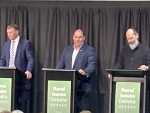
India FTA Unites NZ First, Greens
National’s much-touted free trade deal with India featured in the Rural Issues Debate at Mystery Creek, Hamilton on Wednesday night.
 increase font size
 Federated Farmers president Andrew Hoggard with the farmer lobby’s General Election Platform 2020.
Federated Farmers has released its election manifesto, advising the incoming government on the policies farmers want.
If rural broadband isn’t improved quickly it will become even more challenging for farmers to comply with new environmental rules and regulations.
That’s the view of Federated Farmers president Andrew Hoggard who, last week, launched what the farmer lobby calls its General Election Platform 2020. This is what Feds used to call its election manifesto and is designed to tell politicians what policies farmers want adopted by an incoming government.
Its main wish is for telecommunication systems for rural regions which match those in urban areas. Other policies include:
• Advocating free trade, opposing protectionism and recognising the importance of agriculture in rebuilding the NZ economy post Covid-19.
• Building regulatory and science systems that empower environmental gains rather than stifling enterprise and innovation. This includes the recalibration of current essential freshwater settings; which Feds say will stifle economic and employment growth – except for planners and lawyers.
• Getting more kiwis to work on farms and recognising the important role of migrant workers.
• Continued vigilance on biosecurity and pest management.
• Ensuring local government concentrates on key services and that central government spends wisely.
• Ensuring the right trees are planted in the right place and preventing good productive land being gobbled up for forestry.
Hoggard says quality connectivity remains a very high priority for the rural sector. He told Rural News that this became particularly evident during the Covid lockdowns, when many people returned to farms to isolate and create their own family bubble.
“That put a huge strain on the connectivity in rural areas because you had a whole lot of people trying to carry on with their studies at school or university or jobs in town,” he says.
“But the countryside didn’t have the bandwidth to cope.”
Looking ahead, Hoggard says farmers are being asked to do a lot more in terms of monitoring what is happening on their farms. However, he believes that unless rural areas get the necessary connectivity, doing this will be an absolute nightmare.
Hoggard says the problem is not just confined to the rural sector.
“I did a lot of Zoom calls during lockdown and I noticed that a lot of people in urban areas were also struggling with poor broadband”
Fed’s 28-page glossy document contains a wealth of useful information. While it focuses on the farmer lobby’s ‘wish list’, it does contain some insightful information about the primary sector. Hoggard says it is designed to help elected members of Feds explain to politicians and others just what the organisation actually stands for.
“Often a lot of people like to have their version of what we stand for, but this document clears up any doubts they may have.”
Hoggard says in the current political environment there seems to be a dearth of policies and no shortage of scandals. “For those that lack policies we have a very simple answer – our manifesto,” he says.
National’s much-touted free trade deal with India featured in the Rural Issues Debate at Mystery Creek, Hamilton on Wednesday night.
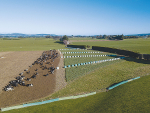
Central Otago District Council (CODC) has voted against a plan to spread treated sewage sludge from Cromwell and Alexandra on farmland near Lauder, a decision Federated Farmers says reflects strong opposition from rural residents.
Federated Farmers has called on Central Otago District Council (CODC) to drop or vote down a plan to truck sludge from Alexandra and Cromwell to farmland near Lauder, warning it would compound an "outrageous" situation created by a separate council's decision weeks earlier.
Federated Farmers says new legislation replacing the Resource Management Act will cut red tape, unlock investment and help grow New Zealand's export-led economy, after the Planning Bill and Natural Environment Bill passed their third reading in Parliament yesterday.
Leading figures from the major political parties will be questioned on their primary sector policies at the Rural Issues Debate at Mystery Creek Events Centre, Hamilton, on 30 September.


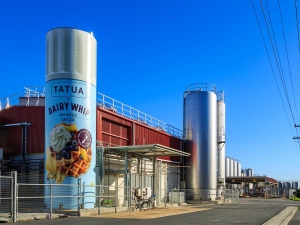
Waikato milk processor Tatua has again declared a record milk payout to farmer shareholders, leaving other processors in the dust.

A Labour-led Government won’t be bringing back the controversial freshwater rules of 2020.
National’s much-touted free trade deal with India featured in the Rural Issues Debate at Mystery Creek, Hamilton on Wednesday night.
New Zealand's 2026-27 freshwater fishing season has opened, with anglers encouraged to head to rivers and lakes over the coming days as conditions look favourable across much of the country.
Central Otago District Council (CODC) has voted against a plan to spread treated sewage sludge from Cromwell and Alexandra on farmland near Lauder, a decision Federated Farmers says reflects strong opposition from rural residents.
Pāmu has released its FY26 Integrated Annual Report, reporting a Net Operating Profit of $113 million, more than double the $49 million recorded in FY25.