PC1 Pause Looms as Coalition Targets Waikato Farm Rules
A pause on Waikato Regional Council's (WRC) plan change that sets new freshwater rules for farming could be announced in the coming weeks.
 increase font size
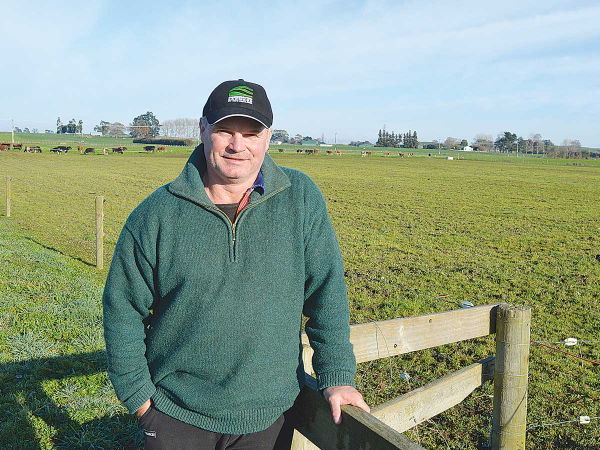 Waikato farmer Andrew McGiven says the positive result reflects the great work farmers have been doing around environmental sustainability.
Dairy farmers are getting positive reviews from regional councils when it comes to managing effluent on farms.
Waikato Regional Council is the latest local body to heap praise on the dairy sector after recording a significant drop in non-compliance.
Over the 2020/21 financial year, the council's rural compliance team monitored 1,172 farms. Of these, 81 (just 7%) were found to be significantly non-compliant, compared to the previous year when the council inspected 820 farms and found 102 (12%) with significant compliance issues.
"We call it as we see it, and we are very happy to say that our farm inspections over the last year show a significant drop in non-compliance relating to dairy effluent management in the Waikato," council regional compliance manager Patrick Lynch says.
"This year's results clearly indicate a real improvement, and we would like to acknowledge all of the hard work being carried out across the dairy sector to achieve this," says Lynch.
"The risk to the environment has undoubtedly been greatly reduced on individual farms by the investment in effluent infrastructure."
Waikato farmer Andrew McGiven says the positive result reflects the great work farmers have been doing around environmental sustainability.
"Looking at the water flowing through the creeks on my farm, I reckon you can see the improvements as well, even after heavy rainfall the water is still pretty clear, whereas normally it is very brown with sediment," McGiven told Rural News.
"It appears that farmers around the country have stepped up around effluent compliance and intensive winter grazing being two examples.
"It would be great to have these good news stories being promoted more through other media outlets, instead of the normal farmer papers."
McGiven says it's unfair that the sector is still being judged by the 1-2% who can't meet the required standards.
"Imagine if we judged society by the 2% who were criminals, or even better, all politicians on the 1-2% who can't meet the standards required by voters?"
Last month, a Tasman District Council survey of effluent management on the 124 dairy farms in the Tasman region gave thumbs up to farmers and dairy companies.
The survey dound 98% of farms fully compliant, 1% non-compliant and another 1% significantly non-compliant.
A council report says all farms that hold resource consents fully complied with all conditions of their respective consents. All farms in Tasman district were inspected at least once over the 2020-21 season.
The report says a considerable amount of work has been done since 2012 by the dairy industry - DairyNZ, Fonterra, and Westland Milk by working one-on-one with farmers with respect to system and wet weather contingencies.
"The council and industry are actively promoting to farmers the benefits of engaging professionals who have gained accreditation through the Farm Dairy Effluent Accreditation Scheme."
A pause on Waikato Regional Council's (WRC) plan change that sets new freshwater rules for farming could be announced in the coming weeks.

OPINION: Staying on Plan Change 1, NZ First deputy leader Shane Jones took to social media to gain some political points.
OPINION: All eyes are on the Government as Waikato farmers seek urgent help to fend off the controversial Plan Change 1 (PC1), designed to manage nutrient discharges into waterways in the region.
Waikato farmers have been told that the Government’s new planning system legislation and the region’s Plan Change 1 (PC1) “won’t mesh together very well”.
The Government is looking at intervening on behalf of Waikato farmers who face new regulations around agricultural land use while Resource Management Act (RMA) reforms are underway.


An Auckland gelato shop and an established New Zealand ice cream maker have both been named Supreme Champions at the NZ Ice Cream & Gelato Awards 2026.

As the cost-of-living crisis continues to put pressure on household grocery budgets, new figures show pork remains one of the most affordable fresh meat options for New Zealand families.
OPINION: In politics, credibility is and should be big. It must surely rank higher than charisma, which is quite trite and superficial. Yet, voters nowadays are often wooed and influenced by how someone looks or talks at a superficial level. TV plays a huge role in this.
Farmers can spend less time on paperwork, thanks to a new data sharing agreement between DairyNZ’s DairyBase and LIC’s MINDA software.
Kaikōura families affected by July's severe storm have found a practical solution to a problem that's kept some children away from regular schooling for weeks: a washed-out section of Inland Kaikōura Road, which has stopped the local school bus from running its usual route.
Rural New Zealand is welcoming the Government’s recent package of rural healthcare initiatives.