Red Meat Farmers Welcome Labour's Emissions Pricing Pledge
Red meat farmers are welcoming Labour’s plan to review the Emissions Trading Scheme and not to campaign on pricing agricultural emissions.
 increase font size
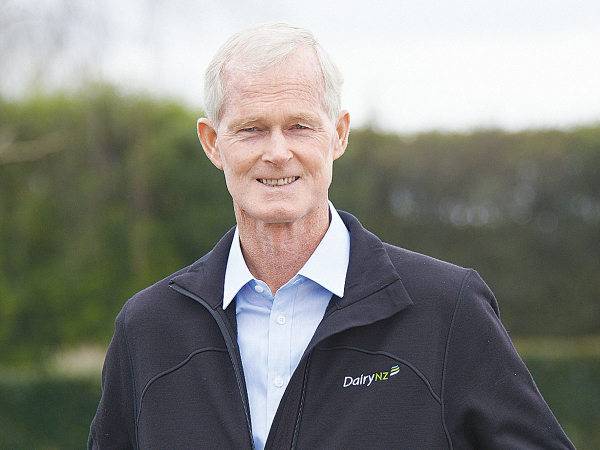 DairyNZ chair Jim van der Poel.
Two emissions pricing options for farmers, as alternatives to being included in the Government’s emissions trading scheme (ETS) have been released for discussion.
Released by the Primary Sector Climate Action Partnership – He Waka Eke Noa the discussion document is to be considered by farmers over the next three months.
Option one is based on a farm-level levy and option is around a processor-level hybrid levy.
The cross agrisector partnership includes Beef+Lamb New Zealand (B+LNZ), DairyNZ and Federated Farmers, as well as Government and iwi.
“It’s critical we grab this opportunity and develop a credible alternative framework as the Government has already legislated to put agriculture into the NZ ETS if we don’t,” says DairyNZ chair Jim van der Poel.
“The NZ ETS pricing would be out of farmers control and they would face a broad-based tax. Also, farmers wouldn’t get recognition for on-farm work to reduce emissions. We’re working to get a better deal for farmers while still meeting environmental goals,” he says.
The farm-level levy and processor-level hybrid levy options in the discussion document take a split-gas approach. They acknowledge short-lived gases like methane have a different warming impact to long-lived gases like carbon dioxide, and the price for methane will be separate and delinked from the carbon price.
“We want the framework farmers select to incentivise work underway on-farm including sequestration and riparian planting. The two options would ensure any revenue raised by the pricing system would go back into R&D for innovative solutions and support farmers’ on-farm work to mitigate their warming impact,” says B+LNZ chair Andrew Morrison.
Farmers will have the opportunity to have a say in February when B+LNZ, DairyNZ and Federated Farmers take a nationwide roadshow to the regions.
“We’re releasing the draft discussion document now so farmers have time to consider the options. At the roadshow meetings, we’ll explain what the options mean for different farming systems, and most importantly answer questions and hear farmers’ views,” says Morrison.
A more detailed information pack on the options will be released by the partnership early next year ahead of the roadshow.
“It’s hugely important farmers get involved and tell us what they think in February. We’re committed to finding a solution that works for farmers and keeps the sector in control of where and how it uses funds for the benefit of farmers,” says van der Poel.
He Waka Eke Noa consists of ten primary sector organisations, as well as the Federation of Māori Authorities, the Ministry for Primary Industries and Ministry for the Environment.
The partnership formed in 2019, after the Government proposed legislation to put agriculture into the NZ ETS. DairyNZ, B+LNZ, Federated Farmers and others negotiated to set up the partnership to identify an alternative that would be fairer, meet environmental objectives and enable farmers to continue running successful businesses.
Feedback from engagement including the February roadshow and farmers’ online feedback will form part of the partnership’s recommendations to the Ministers of Climate Change and Agriculture in late April 2022.
The Agriculture Emissions Pricing Options:
Option 1: Farm-level levy: This would calculate emissions using farm-specific data, and the farm would then pay a price for its net emissions. This option would reward eligible on-farm sequestration additional to that currently included in the ETS that could offset some of the cost of the emissions levy. Any additional revenue raised through the levy above the scheme costs would be invested back into the agricultural sector for further emissions reductions work and research and development.
Option 2: Processor-level hybrid levy: This levy would calculate emissions at the meat, milk, and fertiliser processor level, based on the quantity of product received from farms, or in the case of fertiliser, sold to farms. It would be paid at a processor level, and likely collected by the processor charging through to farmers based on the quantity of product processed, or fertiliser supplied. Farms (individually or in collectives) could choose to enter into an Emissions Management Contract (EMC) to get a payment for reducing emissions and/or for recognising sequestration on-farm.
NZ Emissions Trading Scheme: Within the NZ ETS, agricultural emissions would be calculated at a processor level initially, to create a financial incentive for farms to reduce their emissions. Short-lived gases like methane, and long-lived gases such as carbon dioxide and nitrous oxide, would be treated the same using a carbon equivalence metric (CO2e). Methane emissions would be priced on the prevailing carbon price, multiplied by a factor of 28 to reflect its carbon dioxide equivalence. Costs for farmers would continue to increase each year alongside increases in the carbon price, despite work to reduce emissions. Also, most on-farm vegetation is not currently recognised in the NZ ETS, e.g. riparian areas, shelter belts and small woodlots, which farmers would not receive recognition for.
Red meat farmers are welcoming Labour’s plan to review the Emissions Trading Scheme and not to campaign on pricing agricultural emissions.
The New Zealand Institute of Forestry (NZIF) says unnecessary changes to New Zealand’s Emissions Trading Scheme (NZ ETS) will seriously erode investor confidence and result in significant reductions in forest planting rates.
New Zealand's Emissions Trading Scheme (NZ ETS) encourages afforestation while not achieving climate goals, says a new report released by the Parliamentary Commissioner for the Environment, Simon Upton.
Conversions of sheep and beef farms to forestry have slowed, however new research from Beef + Lamb New Zealand (B+LNZ) suggests land of value for food production remains at risk.
Dairy industry leader Jim van der Poel didn't make much of the invitation he received to the recent New Zealand Dairy Industry Awards in Rotorua.



Kiwifruit growers are watchful but remain optimistic as concerns around the potential effects of the El Niño weather pattern this season.

Almond hulls sourced from Australian orchards may have the potential to help New Zealand cows reduce emissions, boost milk yield and lower input costs.
Striking a balance between meeting the needs of industry to speed up approval time for products but on the other hand ensuring that risks are properly assessed.
Surprised, humbled and quite thrilled. That’s the reaction of James Allen, one of the founding partners and now chief executive of AgFirst, on being made a life member of the Institute of Rural Professionals.
It was billed as a chance for all the political parties to woo the rural vote, but question marks hang over just how effective this was.
Minister of Conservation Hon Tama Potaka has appointed Susan O'Regan as Chair of the Queen Elizabeth II National Trust (QEII) for a three-year term.