
NZ Rural Contractors Push for Urgent VDAM Rule Reform
While the Government has moved quickly to make commercial hauliers' lot easier during the current fuel crisis, they appear to be stuck in the creep box when it comes to the agricultural industry.
 increase font size
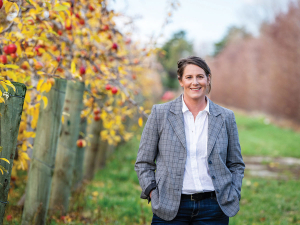
 RCNZ president Helen Slattery is asking farmers to be patient with their contractors who have an enormous workload and limited staff.
The shortage of skilled agricultural machinery operators is reaching a crisis point.
Many rural contractors around the country are unable to meet farmer requirements and there are increasing fears for their health and safety.
Rural Contractors NZ (RCNZ) chief executive Andrew Olsen says an urgent meeting was held in the Waikato in November with Federated Farmers to discuss the escalating impacts on contractors and farmers.
Olsen says one outcome of the meeting was an urgent joing appeal to the Minister of Immigration to approve more skilled machinery operators to come in for this season.
"We are asking to see Kris Faafoi early next week. We warned this would come to a head unless more skilled workers could come in, and now," Olsen says. "Mr Faafoi needs to hear directly about the emerging consequences for farm production and workers increasingly at risk."
He says a particular factor in the Waikato is that farmers are enjoying top spring conditions, causing them to seek to plant or harvest more crop than initially planned with contractors.
"We've got contractors arriving to crop six hectares of crop only to have a farmer desire 10ha. This is pushing contractors' mental and physical limits and the meeting was called to find respite and solutions that accommodate both parties."
Rural Contractors NZ president Helen Slattery says messages now being sent to its members by Federated Farmers may provide some relief.
"Farmers are being asked by Feds to be patient with their contractors as we have an enormous workload with some of the best growing conditions in November seen for some years, but limited experienced staff," Slattery explains.
"There needs to be better and earlier communication about an area to be worked - farmers can't just let a mower driver arrive to be told its 30ha not 20ha."
Slattery says farmers are also being asked to help where they can - dropping fences where practical, having access away from stock or agreeing to wait a week.
"Ringing around contractors to see who can get there first adds pressure we just don't need and is only at best a short-term fix."
Olsen says RCNZ has been petitioning the Government for months for more approved skilled workers from overseas.
"In each of those submissions we have emphasised that a shortfall in overseas skilled operators will result in the very things that are happening right now."
He says the entire primary sector is short of the skilled labour it needs.
"It's in Minister Faafoi's hands to approve some further skilled workers - or let this crisis take an increasing toll on people and farm production."
While the Government has moved quickly to make commercial hauliers' lot easier during the current fuel crisis, they appear to be stuck in the creep box when it comes to the agricultural industry.

Rural contractors are getting guidance on how to deal with recent rising fuel prices.
Rural contractors will be able to play a role in the revamped agricultural plastic recycling scheme with new regulations due for Cabinet signoff before this year’s election.
Rural Contractors NZ have launched a campaign today against the risks of fatigue in their industry.
Concern about fatigue impacts during a busy season prompted Rural Contractors New Zealand to launch a campaign about the risks. Chief executive Andrew Olsen explains.



National’s pledge to introduce 19 new national standards shows the party is serious about getting Wellington out of farming, Federated Farmers says.
The National Party’s policies to make it easier to grow fresh vegetables, secure reliable water and energy and simplify farm planning are practical changes that will give growers the confidence to invest, according to Horticulture New Zealand (HortNZ).
Fonterra Co-operative Group chief financial officer Andrew Murray has resigned to take up a role outside the dairy giant.
A major move is about to get underway to improve the quality and viability of dairy beef and cattle in NZ.
Veterinarians say changes to the code of welfare for dairy cattle provides a positive foundation for improved cattle welfare across the country.
Today, 15 October, is the International Day of Rural Women, which recognises rural women’s contribution to farming, communities and the environment.