Farm Safety Improves Through 'Incremental Gain', Says Birkett
Improving health and safety is about incremental gain rather than a sudden decision, says Leeston farmer and Federated Farmers health and safety spokesman David Birkett.
 increase font size
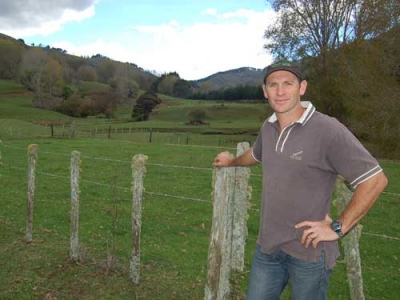 James Parsons.
Health and safety and the environment will play a bigger part in Beef + Lamb NZ’s proposed mandate, according to chairman James Parsons.
Sheep, beef and dairy farmers all over NZ must now decide whether to renew BLNZ’s mandate to collect levies for a further six years.
The previous levy vote was in 2009, when farmers supported raising levies from $3.60 to $4.60 per head of beef and 40c to 60c per head of sheep slaughtered. No levy increases are proposed in this round of voting.
Parsons says BLNZ will need to focus on two relatively new subjects. “We have reallocated about $1.2 million of our $28m budget to assisting farmers with the environment in the last 24 months and we envisage needing to increase this.”
With health and safety reform legislation in its final readings in Parliament, Parsons says BLNZ and Federated Farmers have worked hard to help MPs better understand the consequences of overly prescriptive elements of the proposed legislation.
As a result the bill is more practical, allowing farmers to work towards improving safety in the workplace.
“Farmers want to reduce the number of fatalities and improve the safety onfarm; we just need to consider the practicalities of modern day farming.
“When the average beef and sheep farm has just 1.5 – 2 full time labour unit equivalents, [legislating for a farm to have] a health and safety officer is simply nonsense.
“We are totally on board with improving our safety outcomes as a sector. However, with limited staff and resources we need to put our efforts where they will deliver the greatest return. Bogging farmers down with red tape and prescriptive rules is not the answer.”
Parsons says BLNZ doesn’t intend to go over commercial providers’ ground by producing guides and templates for farmers to use to set up health and safety systems, but will help farmers make more informed decisions on necessary farm safety moves.
“We are trialing a programme in Hawkes Bay to help farmers [understand] the requirements of the act and regulations. Some health and safety providers seem to be trading on fear to get farmers to sign up; we want to make sure our farmers can make informed decisions.”
On environmental matters BLNZ is likely to shift into a support role, says Parsons.
It has no plans to increase meat levies soon; the proposed levies will stay below the maximum of 75c per sheep and $5.50 per cattle beast.
“If farmers saw an area they wanted more investment in down the track we have the flexibility, as a last resort, to lift levies, but it would require strong farmer support.”
Improving health and safety is about incremental gain rather than a sudden decision, says Leeston farmer and Federated Farmers health and safety spokesman David Birkett.
A safety push across New Zealand has revealed significant gaps in hazardous substances management, farm vehicles, tractors, quad bikes and side-by-sides.
Keeping healthy and safe during vintage 2026
Following a side-by-side rolling into a gully, Safer Farms has issued a new Safety Alert.
Farmers are welcoming new Government proposals to make farm health and safety rules more practical and grounded in real-world farming.


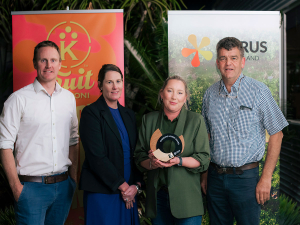
New Zealand's citrus growers were challenged to build their future on the value embedded in their fruit rather than the volume they produce, at Citrus New Zealand's annual gathering in Gisborne on 17 September.
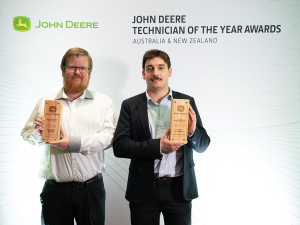
Leading John Deere technicians and apprentices from New Zealand and Australians were recognised at the recent sixth annual JD Technician of the Year Awards, held in Brisbane.
In Dacre, near Invercargill in New Zealand’s South Island, Bruce Dinnington is running a dairy operation unlike any other.
A free online platform aggregating governance vacancies across rural and regional New Zealand has been launched.
Environment Minister Nicola Grigg has announced details of a new rural plastics recycling scheme.
Agricultural drone operators say that a government decision to allow lower-risk drone work without certification won’t lower standards but drive innovation and efficiency.