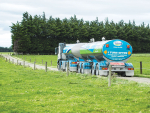
Fonterra FY26 Results: $9.69 Milk Price, $3.4bn Profit
Fonterra has unveiled its annual results for the 2026 financial year, posting $27 billion in revenue and close to $20 billion returned to New Zealand farmer owners and unit holders.
 increase font size

Fonterra director Colin Armer has resigned.
In a statement released this morning, the corporate farmer gave no reason for his decision. He was reportedly on a shortlist for the Fonterra chairmanship, which becomes vacant when Henry van der Heyden retires in December. However, last week Fonterra announced John Wilson as the chairman-elect.
Armer says for many years he has been a strong supporter of the New Zealand dairy industry and an advocate for Fonterra's important work.
"I will continue to be," he says.
Armer thanked shareholders that have supported him in the past and says he will continue to support the cooperative model in the future.
He says he has nothing but praise for the Fonterra chief executive and the management team. He made no mention of the board.
Armer says he will not be available for further comment.
Recently Armer's company Armer Farms (NI) entered a guilty plea in Tauranga District Court to a charge of unlawful discharge of dairy effluent at a Maketu farm two years ago and was fined $72,000.
Fonterra has unveiled its annual results for the 2026 financial year, posting $27 billion in revenue and close to $20 billion returned to New Zealand farmer owners and unit holders.
Fonterra Co-operative Group has confirmed the independently assessed candidates standing for election to its board in 2026.
Fonterra has revised its Farmgate Milk Price forecast for the 2026/27 season, lifting the midpoint and narrowing the range on the back of improving global dairy commodity prices.
Outgoing Fonterra Co-operative Council chair John Stevenson says that it has been a privilege to represent the co-op's farmer shareholders.
OPINION: Succession and long-term planning are perennial topics because it is perpetually sidelined on busy farms.


Federated Farmers says it welcomes Labour's commitment to reviewing the Sharemilking Agreements Act, calling on other major parties to do the same.
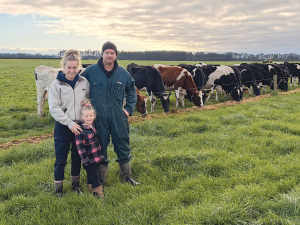
For Canterbury dairy farmers Sian Meijer and Rick Wobben, wearable technology has become one of their most valuable on-farm tools - helping manage 1850 cows across an expansive, high-performing dairy operation while improving efficiency, mating outcomes and day-to-day decision making.
Fonterra has unveiled its annual results for the 2026 financial year, posting $27 billion in revenue and close to $20 billion returned to New Zealand farmer owners and unit holders.
The first major update to the Dairy Cattle Code of Welfare in more than a decade has been released, marking what DairyNZ describes as an important step in ensuring animal welfare standards continue to evolve alongside scientific evidence and on-farm realities.
Ravensdown shareholders have elected Jane Montgomery and Kate Acland to the Ravensdown Board for three-year terms, following a closely contested director election.
Federated Farmers says new legislation replacing the Resource Management Act will cut red tape, unlock investment and help grow New Zealand's export-led economy, after the Planning Bill and Natural Environment Bill passed their third reading in Parliament yesterday.