What Would Synlait Be Worth to Fonterra or a2 Milk?
Speculation of a possible joint move by Fonterra and a2 Milk to buy Synlait raises a much bigger strategic question, says agribusiness expert Dr Nic Lees.
 increase font size
 Lincoln University Professor of Livestock Pablo Gregorini.
Animal foods can form part of a healthy, sustainable and ethical lifestyle, despite increasing claims to the contrary, says Lincoln University Professor of Livestock Pablo Gregorini.
His recent article, “Animal source foods in healthy, sustainable and ethical diets – An argument against drastic limitation of livestock in the food system”, argues that animal foods are evolutionarily appropriate and healthy for humans.
Gregorini’s article points to evidence that livestock farming is integral to the overall agricultural system, contributing to biodiversity and improved plant food production while creating food security and a path out of poverty for some.
However, many in the urban West deem animal foods universally unhealthy, unsustainable and unethical, something Gregorini says ignores the complexity of the food system.
“Whether any food production system is harmful or benign is extremely nuanced and depends on differing geographical and cultural factors. But mainstream – and mostly Western – narratives seem to want to simplify the global reality,” he says.
According to the paper, animal foods “offer a wide spectrum of nutrients that are needed for cell tissue development, function, health and survival”.
“Various public health institutions worldwide are now advocating moderate to heavy restriction of red meat, processed meats and saturated fats, but the scientific debate is not settled,” Gregorini says.
“The evidence has been challenged by various scientists, both for red meat and saturated fat, the latter of which is not exclusive to animal foods.”
High red meat consumption in the West is associated with several forms of chronic disease, but these associations remain weak in other cultures or when red meat is part of a wholesome diet, he says.
“The link between red meat and disease is especially obvious in North America and other modern Western countries, where meat is often consumed as fast food and where high-meat consumers also tend to have less healthy diets and lifestyles in general.
“In a Canadian study, eating more meat was only associated with higher cancer rates for people eating the lowest amount of fruits and vegetables.”
Speculation of a possible joint move by Fonterra and a2 Milk to buy Synlait raises a much bigger strategic question, says agribusiness expert Dr Nic Lees.

Lynnette Hudson's 30-year obsession with Pinot Noir was sparked working vintage in Burgundy, seeing how subtle changes in terroir were expressed in the glass. It was, she says, "an elightening moment in every way".
A four year trial has reaffirmed that mixing plantain into dairy pastures can help reduce nitrogen losses to freshwater while maintaining milk production and profitability, say researchers.
Twenty five secondary school students from around New Zealand recently completed a three day residential programme designed to explore career opportunities across the food and fibre production supply chain.
A Lincoln University student is set to become the first person to contest both the Young Viticulturist and the Young Winemaker national titles in one year.


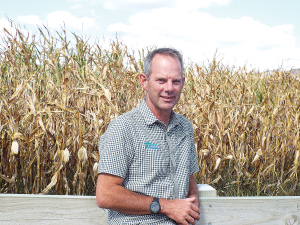
Surprised, humbled and quite thrilled. That’s the reaction of James Allen, one of the founding partners and now chief executive of AgFirst, on being made a life member of the Institute of Rural Professionals.
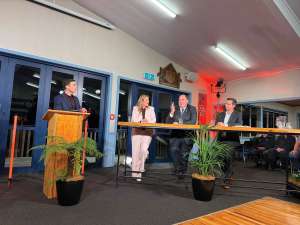
It was billed as a chance for all the political parties to woo the rural vote, but question marks hang over just how effective this was.
Minister of Conservation Hon Tama Potaka has appointed Susan O'Regan as Chair of the Queen Elizabeth II National Trust (QEII) for a three-year term.
Red meat farmers are welcoming Labour’s plan to review the Emissions Trading Scheme and not to campaign on pricing agricultural emissions.
Where any worker in the kiwifruit industry is mistreated, we expect the authorities to take action.
Mid Canterbury Federated Farmers arable chair, Bevan Lill, said Beef + Lamb NZ data indicated that for the last six years, the average arable return on investment was about 0.8% while inflation ran about 4% - so the average arable farm was going backwards at about 3% a year.