What Would Synlait Be Worth to Fonterra or a2 Milk?
Speculation of a possible joint move by Fonterra and a2 Milk to buy Synlait raises a much bigger strategic question, says agribusiness expert Dr Nic Lees.
 increase font size
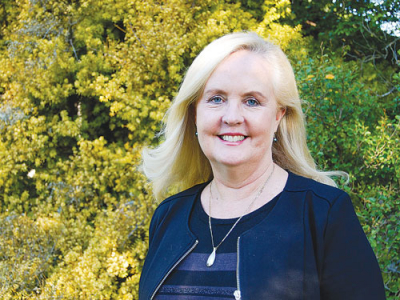 Toni Laming, the recently-appointed chief executive of the Lincoln Hub.
Never mind the bricks and mortar, the Lincoln Hub is now open for business, says its recently appointed chief executive Toni Laming.
The Hub, or He Puna Karikari, brings several agricultural research and commercial entities together, to collaborate on basic and applied agricultural science.
It has five founding shareholders – Lincoln University, AgResearch, Landcare Research, Plant & Food Research and DairyNZ – and expects to attract others as it grows and develops.
Laming, in the job since March, says she took it on for the great opportunity to make a difference for New Zealand’s primary industries.
Several projects are already in the pipeline, said Laming at the Hub’s temporary premises, the converted foyer of a building at the sprawling Canterbury Agricultural and Science Centre at Lincoln.
But she revealed frustration that previous media coverage of the Hub project had concentrated on the proposed $206 million stage 1 building planned by partners AgResearch and Lincoln University for completion by late 2019.
While that building is intended to house staff from various organisations – in line with the Hub’s collaborative model – Laming emphasises that it will be only one building in a wider redevelopment. The Hub’s own staff might never be housed there.
She says the Hub is already working in its role as “facilitator and connector”, pulling together bespoke teams of scientists from various organisations, for specific projects.
“We’re essentially a front door to organisations saying ‘we want to solve this’,” Laming says.
“We look across the science system and our five shareholders, and ask, ‘what’s the best team we can put on that, to make that work’?”
Laming says the Hub acts as “almost an outsourced R&D provider”. There is a “huge amount” of interest offshore to come and access NZ’s innovation system, she says.
“There are very few places in the world where you can access everybody -- from the consumer to the farmer to the regulator to the government to the whole supply chain -- and innovate and develop your system in a safe country.”
Laming says NZ is “a pragmatic country” where it is easy to do business and has an innovative edge.
Raised in a farming family in South Africa and with a degree in applied chemistry, Laming comes to Lincoln with 25 years experience as an executive in global companies, including Australian mining giant Orica and Fonterra, where she managed international strategies.
She was inspired to take on the Lincoln Hub role partly because of her time at Fonterra, where “you can see that [Fonterra supplier] number at the end of the gate and know that what you do is contributing straight back to NZ farmers”.
She says NZ is a high adopter and user of technology.
“So what’s it going to take? What kind of technology is useful and how do we support the development of usable technology that allows farmers to manage their licence to operate, work productively and work efficiently?”
Speculation of a possible joint move by Fonterra and a2 Milk to buy Synlait raises a much bigger strategic question, says agribusiness expert Dr Nic Lees.

Lynnette Hudson's 30-year obsession with Pinot Noir was sparked working vintage in Burgundy, seeing how subtle changes in terroir were expressed in the glass. It was, she says, "an elightening moment in every way".
A four year trial has reaffirmed that mixing plantain into dairy pastures can help reduce nitrogen losses to freshwater while maintaining milk production and profitability, say researchers.
Twenty five secondary school students from around New Zealand recently completed a three day residential programme designed to explore career opportunities across the food and fibre production supply chain.
A Lincoln University student is set to become the first person to contest both the Young Viticulturist and the Young Winemaker national titles in one year.


Decades piloting planes has ensured vet and farmer David Hayes is focused on safety. So, after a serious accident while welding on farm, he is sharing his experience so others can learn from it.
Canterbury milk processor, Synlait Milk has confirmed Leon Fung as its chief executive officer.
OPINION: Making it easier to collect rainwater and use it to grow crops and livestock is a no brainer.
As part of its Election 2026 coverage, Rural News asked political parties how they would help pull the arable sector out of the doldrums. Here's what they said:
Farmers are being encouraged to rethink how they manage waste on farm with the launch of ruralwastesorted.co.nz, a new website bringing together practical tips, real farmer experiences and resources.
New Zealand Winegrowers (NZW) is celebrating the India-New Zealand Free Trade Agreement (FTA) coming into force today, bringing New Zealand wine improved access to one of the world’s fastest-growing economies.