Rural Contractors Urged to Renegotiate Contracts as Fuel Prices Surge
Rural contractors are getting guidance on how to deal with recent rising fuel prices.
 increase font size
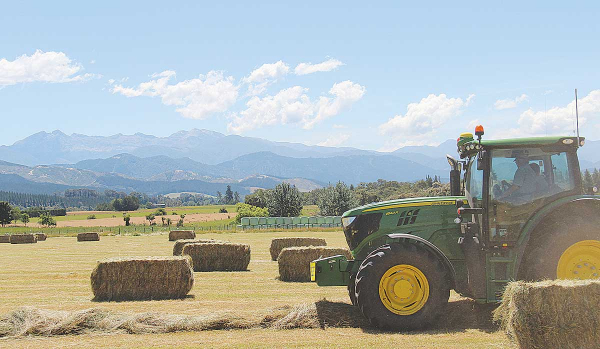 Rural contractors around the country tackling a number of weather and labour issues.
New Zealand's rural contractors are facing a mixed bag of weather conditions, from drought in Northland to a cracker season in Southland.
They’re also reporting some labour issues with inexperienced Kiwis causing damage to machinery and pumping up insurance claims.
The Rural Contractors NZ board met recently and members reported they and their farmer clients are dealing with a very diverse range of climatic conditions.
Waikato-based Helen Slattery represents Zone 1, which extends to Northland from northern Taranaki and northern Hawkes Bay. She says Northland was in near drought conditions and while the Waikato was dry, the conditions were perfect for maize. The grass harvest for the season had also been good with a lot more hay made than last year. This had meant Waikato farmers hadn’t needed to buy in feed though this was now starting to change.
Wairarapa-based Clinton Carroll told the RCNZ Board that things had been similar in his area.
While it had been a good season in the end, he’d found it the toughest ever after a cold, wet start. Barley harvesting was just starting, with some above average yields reported. Grass growth had been good but conditions were now beginning to dry out.
Canterbury member Martin Bruce says it’s still relatively green compared to other seasons and cereal and maize crops were also doing well. The harvest was in full swing. Staffing remained an issue with many rural contractors forced to hire people from other industries who often had no real idea about the work involved.
Wanaka-based Richard Woodhead says Otago had experienced all sorts of weather from drought conditions on the eastern coast to snow to torrential rain annihilating cherry crops. “There’s lots of sad stories there.” Crops had also been affected with one recent harvest of rye corn recording 0.6 tonne per hectare rather than the usual 3-4 tonnes.
RCNZ president David Kean, who is based near Winton, said Southland had been experiencing a “cracker season” after 200m of rain in January.
“The crops are jumping out of the ground. Everyone’s got enough work.”
The downside was finding skilled workers.
Kean says Agriculture Minister Damien O’Connor had encouraged rural contractors to hire more Kiwis and the industry had responded. However, while some recruits were good, others simply did not have the necessary skills. As a result, insurance claims were on the rise for damaged machinery.
Kean says some managers were at their wits’ end dealing with issues – such as men in their 60s or even 70s who’d perhaps had skills in their day to drive tractors but found dealing with today’s hi-tech machines a real challenge.
He says some rural contracting managers had left their jobs because of the “horrible pressures” created by having to deal with issues arising after leaving people working alone operating machinery in paddocks.
Rural contractors are getting guidance on how to deal with recent rising fuel prices.

Rural contractors will be able to play a role in the revamped agricultural plastic recycling scheme with new regulations due for Cabinet signoff before this year’s election.
Rural Contractors NZ says members are frustrated at having to work through more layers to get visas approved for skilled seasonal machinery operators ahead of the imminent season start. Andrew Olsen comments.
Rural contractors deserve to be listened to on safety issues created by new roading developments which don’t allow motorists to pass slow-moving vehicles, says Associate Agriculture Minister Andrew Hoggard.
When the new National-led government is finally formed there will be a long list waiting for it to action from the primary industries sector.


Synlait has swung to second-half profit as operations stabilise, but the dairy processor still posted a $75.4m annual loss.

LIC shareholders have elected a new North Island representative to the co-operative's Board, along with five representatives to its Shareholder Reference Group (SRG), following the company's Annual Meeting held in Invercargill.
Farmers across parts of Southland and South Otago are continuing to deal with difficult conditions after a prolonged run of wet weather, with pressure building around feed supply, stock management, pasture damage, farm infrastructure and everyday workloads.
Federated Farmers says it welcomes Labour's commitment to reviewing the Sharemilking Agreements Act, calling on other major parties to do the same.
For Canterbury dairy farmers Sian Meijer and Rick Wobben, wearable technology has become one of their most valuable on-farm tools - helping manage 1850 cows across an expansive, high-performing dairy operation while improving efficiency, mating outcomes and day-to-day decision making.
Fonterra has unveiled its annual results for the 2026 financial year, posting $27 billion in revenue and close to $20 billion returned to New Zealand farmer owners and unit holders.