Pouarua Water Storage Scheme Gets Government Backing
The Government is backing work on a community-led water storage scheme that could irrigate up to 11,000 more hectares of the Poverty Bay flats, Agriculture Minister Todd McClay says.
 increase font size
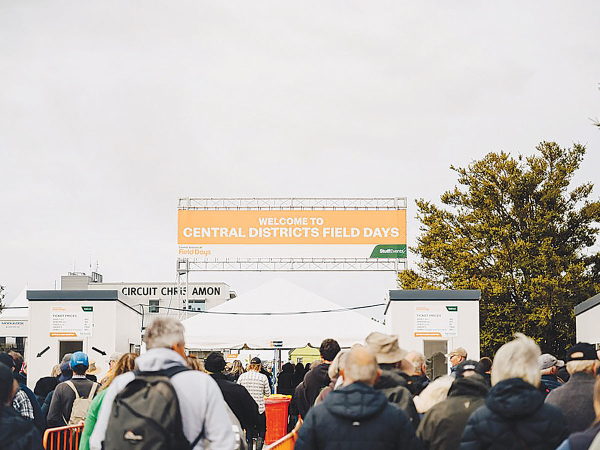 The FE partnership – jointly funded by Beef + Lamb NZ, the Government and the primary sector – was announced at this year’s Central Districts Field Days.
Government and the red meat sector are teaming up to help eradicate the significant impact of facial eczema (FE) on farmed animals.
The $20 million partnership - jointly funded by Beef + Lamb NZ, the Government, and the primary sector - aims to save farmers an estimated NZ$322 million per year on FE losses, as well as reduce their reliance on zinc dosing as a preventative measure.
FE can reduce animal growth rates, fertility and production while significantly impacting animal health.
At present, there is no cure for the disease, with limited management tools available.
FE causes an estimated $332 million impact annually to farmers through slower livestock growth rates and can cause the loss of a significant amount of stock during severe outbreaks.
The disease, associated with a toxin-producing fungus, not only affects the financial bottom line for farmers but is a pressing animal health issue. With climate change, the disease is expected to spread more widely across New Zealand.
Agriculture Minister Todd McClay says the program will support multiple approaches, building on research, and bringing together many of the country's top researchers.
"Prevention solutions such as early detection, mitigation and management options are key to the programme. Decision support tools will also be collaboratively developed with farmers and rural professionals."
McClay added that this will be complemented by the FE breeding value for dairy cows recently announced by the Livestock Improvement Corporation.
Beef + Lamb New Zealand (BLNZ) says it welcomes the Government's $8.3 million commitment to combat FE.
It says the Eliminating Facial Eczema Impacts (EFEI) programme is valued at $20.75 million over a seven-year period and is a collaborative effort.
B+LNZ has committed $9 million, alongside the Government's $8.3 million funding commitment through the Sustainable Food and Fibre Futures fund with the remaining in-kind funding coming from contributions from 13 industry partners.
"Recognising the severe impact of this disease on farm productivity, profitability and animal health, the collaboration between B+LNZ, the Ministry for Primary Industries (MPI), and partners marks the most significant step forward in decades towards managing a disease that has been impacting sheep, beef and dairy farmers for over 100 years," the industry body says.
The funding announcement was made earlier this month by Minister for Agriculture, Todd McClay and B+LNZ board chair, Kate Acland at the Central Districts Field Days in Fielding, with Prime Minister, Christopher Luxon in attendance.
“This announcement is timely, giving a confidence boost to our sector as we grapple with the impact of two years of poor returns coupled with recovery from major weather events and a challenging summer for many,” Acland says. “The EFEI programme will undoubtedly improve farm productivity and profitability overtime.”
She adds that by eliminating the impact of FE, will see improvements in both the physical health of livestock, increased productivity and better returns for our farmers.
The Government is backing work on a community-led water storage scheme that could irrigate up to 11,000 more hectares of the Poverty Bay flats, Agriculture Minister Todd McClay says.

A Labour-led Government won’t be bringing back the controversial freshwater rules of 2020.
The first major update to the Dairy Cattle Code of Welfare in more than a decade has been released, marking what DairyNZ describes as an important step in ensuring animal welfare standards continue to evolve alongside scientific evidence and on-farm realities.
Bovine Viral Diarrhoea (BVD) is sometimes viewed as a dairy industry issue, but the reality is that the disease can have serious consequences for beef breeding herds as well.
It was billed as a chance for all the political parties to woo the rural vote, but question marks hang over just how effective this was.


National’s pledge to introduce 19 new national standards shows the party is serious about getting Wellington out of farming, Federated Farmers says.
The National Party’s policies to make it easier to grow fresh vegetables, secure reliable water and energy and simplify farm planning are practical changes that will give growers the confidence to invest, according to Horticulture New Zealand (HortNZ).
Fonterra Co-operative Group chief financial officer Andrew Murray has resigned to take up a role outside the dairy giant.
A major move is about to get underway to improve the quality and viability of dairy beef and cattle in NZ.
Veterinarians say changes to the code of welfare for dairy cattle provides a positive foundation for improved cattle welfare across the country.
Today, 15 October, is the International Day of Rural Women, which recognises rural women’s contribution to farming, communities and the environment.