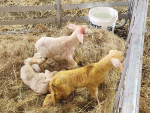
Beef + Lamb NZ's Lambing Kit Checklist for a Tough Season
With lambing underway in many regions, Beef + Lamb New Zealand is encouraging farmers to put together a wellequipped lambing kit to help minimise lamb losses, particularly in bad weather.
 increase font size
 No more flystrike?
An Australian research project has identified compounds in Merino sheep wool that are attractive to blowflies.
This could help sheep breeders develop fly-resistant flocks, which would improve animal welfare and productivity.
The discovery was recently published in Medical and Veterinary Entomology.
The study is led by The University of Western Australia with the Department of Primary Industries and Regional Development Western Australia.
Professor Phil Vercoe, from the UWA Institute of Agriculture and UWA School of Agriculture and Environment, says the findings may help to prevent flystrike, a disease caused by blowflies and one that poses significant health risks to sheep.
“This research is a step towards developing more clean, green and ethical approaches to preventing flystrike.
“If future studies find that the wool odour is inherited, then the compounds we’ve identified could lead to a more effective way to breed sheep resistant to flystrike.”
This would improve animal welfare and productivity and address the cost of flystrike, estimated to cost the Australian sheep industry $280 million annually.
Dr Johan Greeff, at the Department of Primary Industries and Regional Development, says the discovery could lead to a simple test – based on the presence of certain volatile compounds in sheep’s wool – that determines whether flies will be attracted to the sheep or not.
With lambing underway in many regions, Beef + Lamb New Zealand is encouraging farmers to put together a wellequipped lambing kit to help minimise lamb losses, particularly in bad weather.

New Zealand wool is reaching new heights as air filtration companies move away from synthetic products to biodegradable alternatives.
Will a stronger, more coordinated voice help rebuild confidence and improve returns in the wool sector?
OPINION: Confidence in the wool sector is rebounding as prices hit levels not seen in more than 15 years.
The recently signed free trade agreement with India is an invitation to strengthen relationships between the New Zealand and Indian strong wool industries, says Wool Impact chief executive Andy Caughey.


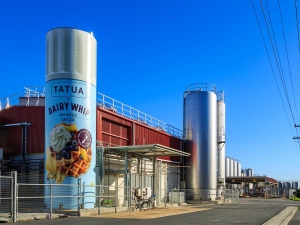
Waikato milk processor Tatua has again declared a record milk payout to farmer shareholders, leaving other processors in the dust.

A Labour-led Government won’t be bringing back the controversial freshwater rules of 2020.
National’s much-touted free trade deal with India featured in the Rural Issues Debate at Mystery Creek, Hamilton on Wednesday night.
New Zealand's 2026-27 freshwater fishing season has opened, with anglers encouraged to head to rivers and lakes over the coming days as conditions look favourable across much of the country.
Central Otago District Council (CODC) has voted against a plan to spread treated sewage sludge from Cromwell and Alexandra on farmland near Lauder, a decision Federated Farmers says reflects strong opposition from rural residents.
Pāmu has released its FY26 Integrated Annual Report, reporting a Net Operating Profit of $113 million, more than double the $49 million recorded in FY25.