BCS Targets: Why Body Condition Score Matters at Calving
Body Condition Score (BCS) is a critical element in managing the health and reproduction of the dairy herd.
 increase font size
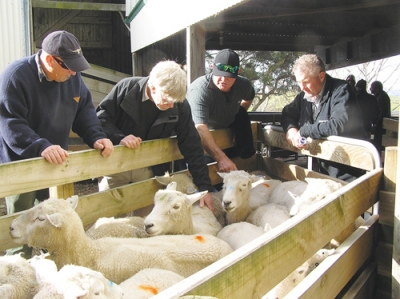 Ram breeders attending last month’s Beef + Lamb NZ Genetics sheep breeder forum.
A breeding value for ewe body condition score (BCS) will be available to ram breeders by the end of September.
At last month’s Beef + Lamb NZ Genetics sheep breeder forum in Napier, SIL advisor Sharon McIntyre updated ram breeders on new breeding value traits now in the pipeline, including one dedicated to BCS.
BCS is becoming an increasingly popular management tool, because of the positive effect it has on so many key outcomes.
Studies show that a ewe’s body condition directly affects scanning percentage, lamb birthweight and survival, mothering ability, colostrum production and milking ability, lamb growth rates and weaning weights.
Until now, SIL has estimated feed costs for adult ewes on the basis of genetic merit for adult weight. Adding in BCS will improve this estimate of what a ewe will eat.
Over the past five years, about 50 SIL flocks have been submitting BCS data, some as a by-product of their involvement in an Ovita project looking at ewe efficiency. This data has allowed SIL to investigate the workability of a condition score breeding value.
McIntyre says the breeding value is being developed in direct response to breeder feedback that ewe weight does not fully describe all aspects of ewe size.
“Adult size describes one, but not all, aspects of a ewe that impact her production. BCS is a way of getting more information about adult size and performance. It’s a quick, easy and low-cost tool.”
While scores can be recorded at any of four key management times – mating, scanning, lambing and weaning – analysis shows there is a strong correlation between those scores. That means a particular ewe that has an above average BCS at one point in the year is likely to record an above average score at other times. This means breeders need only submit one BCS annually, ideally at mating time and alongside the ewe’s liveweight.
Body Condition Score (BCS) is a critical element in managing the health and reproduction of the dairy herd.

For Taupiri dairy farmers Logan and Sian Dawson, their involvement in the NZ Dairy Industry Awards has been a key catalyst in the growth of their business - the experience helping shape how they approach the farm ownership pathway they are pursuing today.
An LIC bull, Tronnoco AR Sadio-ET S3F, bred by Tony and Keri O'Connor of Tronnoco Farming Co Ltd near Timaru, has won the 2026 Mahoe Trophy.
In the past, a bull could sit comfortably in a breeding team for several years with little change, but today, that’s no longer the case.
Genetics plays a central role in helping farmers lift per-cow productivity over time.


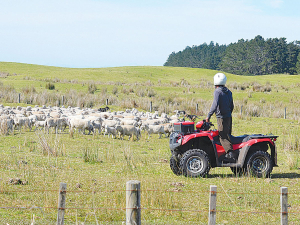
Farmers across parts of Southland and South Otago are continuing to deal with difficult conditions after a prolonged run of wet weather, with pressure building around feed supply, stock management, pasture damage, farm infrastructure and everyday workloads.

Federated Farmers says it welcomes Labour's commitment to reviewing the Sharemilking Agreements Act, calling on other major parties to do the same.
For Canterbury dairy farmers Sian Meijer and Rick Wobben, wearable technology has become one of their most valuable on-farm tools - helping manage 1850 cows across an expansive, high-performing dairy operation while improving efficiency, mating outcomes and day-to-day decision making.
Fonterra has unveiled its annual results for the 2026 financial year, posting $27 billion in revenue and close to $20 billion returned to New Zealand farmer owners and unit holders.
The first major update to the Dairy Cattle Code of Welfare in more than a decade has been released, marking what DairyNZ describes as an important step in ensuring animal welfare standards continue to evolve alongside scientific evidence and on-farm realities.
Ravensdown shareholders have elected Jane Montgomery and Kate Acland to the Ravensdown Board for three-year terms, following a closely contested director election.