BVD Control Begins Long Before You See A Problem
Bovine Viral Diarrhoea (BVD) is sometimes viewed as a dairy industry issue, but the reality is that the disease can have serious consequences for beef breeding herds as well.
 increase font size
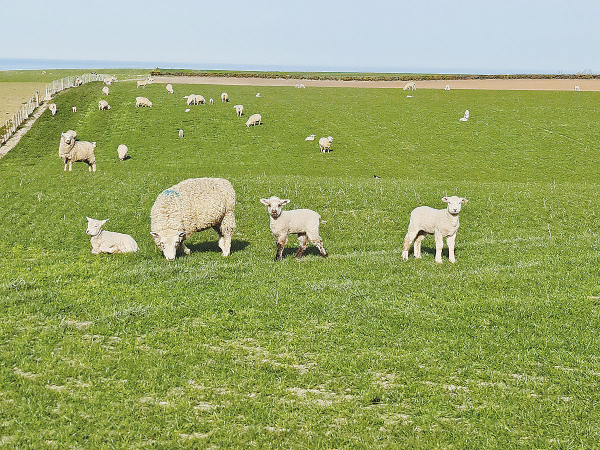 The research is investigating whether lambs born to hoggets can be bred as ewe lambs and that their lifetime performance will be similar to ewe lambs born to mixed-age ewes.
Should twins born to ewe hoggets and grown out to heavy weights be retained as replacements and mated as ewe lambs?
A Beef + Lamb NZ and Massey University research project seeks to understand the long-term impact of this practice following the lifetime performance of single and twin ewe lambs born in 2017 from a hogget mating.
The project, which will finish early next year, has two objectives.
The first is to demontrate that both single and twin lambs born to hoggets can be bred as ewe lambs and that their lifetime performance will be similar to ewe lambs born to mixed-age ewes. Farmers may also benefit from improved genetic gain generated from a younger ewe flock.
The second is to determine whether ewe lambs grown to heavy pre-mating weights achieve heavier mature weights and what this means for ewe efficiency.
Led by Professor Hugh Blair, the project follows four treatment groups, all born in 2017 and now run at Massey University's Keeble Farm, near its Manawatu campus.
These groups are:
All the lambs in the trial were identified and weighed at birth. The 'fast' group of ewe lambs were supplementary fed to meet the 48kg target mating weight. All lambs were combined into one mob at eight-months-old for mating at the same time and to the same ram team.
This cycle has been repeated over four years with all lambs weaned in either December or early January. All the groups are farmed as one mob except at lambing.
The variables being measured each year include the number of lambs born and weaned to each group, ewe liveweight and Body Condition Score (BCS) at weaning, percentages of lambs born and weaned, lamb survival to birth, lamb birth weight, lamb birth weight and lamb weaning weight.
In his most recent project report, Blair stresses that because this is a lifetime study, data will not be fully analysed until the end of the project in February 2023. However, he says initial findings look encouraging, particularly around potential efficiency gains.
As four and a half-year-olds, the ewe's retained from the hoggets (and themselves mated as hoggets) remained lighter than the control groups, particularly the twins which were about 7kg lighter, but this lack of size doesn't appear to have hindered reproductive performance.
There were no differences in BCS between the four groups at weaning in December and all groups recorded similar weaning rates (135-147%) and weaning weights (30.48 to 32.2kg).
The report notes that it was encouraging that the ewes born as twins from hoggets weaned a similar proportion of lambs to the control group – even with their liveweight handicap.
The project builds on previous research carried out at Massey University which demonstrated that while twin lambs from hoggets were smaller at birth, they produced the same weight of lamb weaned as ewes from mixed-age dams.
This hinted at potential efficiency gains, but unlike this project, those trials did not mate ewe lamb off-spring until they were 18-months-old.
How Big is Too Big?
Hogget mating is now a widespread practice.
Especially on farm systems can grow ewe lambs to suitable mating weights and then support them through pregnancy and lactation, so they can be successfully mated again as two-tooths.
Specialist forages such as red clover, lucerne and plantain play a role in helping farmers grow out their ewe lambs to achieve mating weights, but sometimes these are in excess of 50kg.
Farmer experience suggest that these animals may grow to excessive mature weights which then erodes their lifetime profitability due to their increased feed consumption.
An important part of this trial is to determine whether there is potentially an optimal pre-mating growth strategy for ewe lambs.
This is so they don’t grow out to be excessively heavy mature ewes while still achieving good hogget breeding performance.
This part of the project will show whether very heavy ewe lambs at breeding have heavier mature weights. If they do, data will be used to determine what effect this heavier mature weight has on ewe production efficiency.
The results of this project will be released next year.
More. www.beefandlambnz.com
Bovine Viral Diarrhoea (BVD) is sometimes viewed as a dairy industry issue, but the reality is that the disease can have serious consequences for beef breeding herds as well.

Animal health company Bovonic is gearing up for its next stage of growth after increasing New Zealand sales of QuadSense by more than 50% in the last 12 months, including a record quarter for the business this year.
With lambing underway in many regions, Beef + Lamb New Zealand is encouraging farmers to put together a wellequipped lambing kit to help minimise lamb losses, particularly in bad weather.
Researchers at Massey University are using a special piece of scientific equipment to improve the measurement of greenhouse gas emissions from pasture soils.
Bovine Viral Diarrhoea (BVD) remains one of the most significant infectious diseases affecting New Zealand dairy herds.


New Zealand's citrus growers were challenged to build their future on the value embedded in their fruit rather than the volume they produce, at Citrus New Zealand's annual gathering in Gisborne on 17 September.
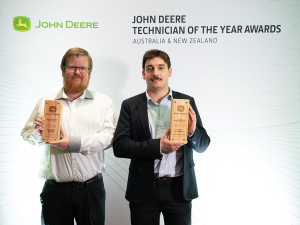
Leading John Deere technicians and apprentices from New Zealand and Australians were recognised at the recent sixth annual JD Technician of the Year Awards, held in Brisbane.
In Dacre, near Invercargill in New Zealand’s South Island, Bruce Dinnington is running a dairy operation unlike any other.
A free online platform aggregating governance vacancies across rural and regional New Zealand has been launched.
Environment Minister Nicola Grigg has announced details of a new rural plastics recycling scheme.
Agricultural drone operators say that a government decision to allow lower-risk drone work without certification won’t lower standards but drive innovation and efficiency.