DairyBase and MINDA Link Up to Cut Farmer Paperwork
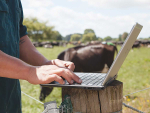
Farmers can spend less time on paperwork, thanks to a new data sharing agreement between DairyNZ’s DairyBase and LIC’s MINDA software.
 increase font size
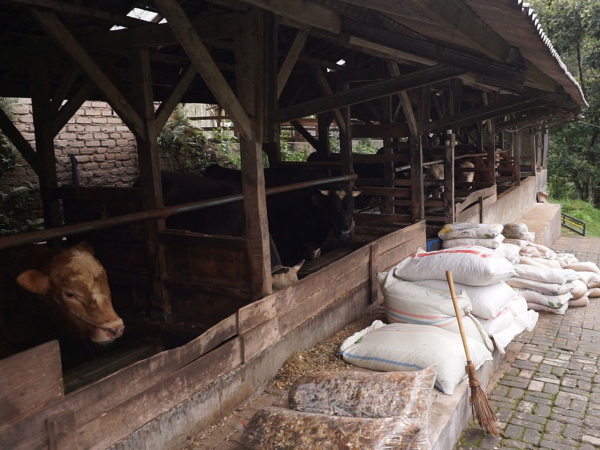 Cows housed on a Lembang smallholder farm, south-east of Jakarta.
Herd improvement company LIC has entered the Indonesian market.
The farmer-owned co-operative has confirmed a distributor in Indonesia and secured its first genetics sale.
The agreement comes as Indonesia looks to increase domestic milk production, supported by a government-backed programme to provide nutritious meals, including milk, to school children.
LIC’s general manager of international, Paul Dunbar, says the distributorship reflects growing demand to support Indonesia’s dairy industry through improved herd performance.
“Indonesia has clear ambitions for its dairy sector, and LIC genetics provide a proven pathway to help lift productivity.”
Dunbar says expanding into international markets allows LIC to stay close to emerging global trends while also delivering value back to New Zealand farmers.
“Our focus is on producing the best pasture-based genetics in the world. Where there’s a clear fit, we can deliver value for farmers offshore while continuing to support our farmer shareholders at home.”
Indonesia is the fourth most populous country in the world with more than 287 million people, and a dairy industry on the rise. Milk production exceeded 550 million litres in 2025, with further growth expected in 2026.
Farmers can spend less time on paperwork, thanks to a new data sharing agreement between DairyNZ’s DairyBase and LIC’s MINDA software.
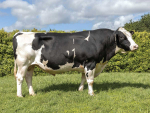
An LIC bull, Tronnoco AR Sadio-ET S3F, bred by Tony and Keri O'Connor of Tronnoco Farming Co Ltd near Timaru, has won the 2026 Mahoe Trophy.
Bovine Viral Diarrhoea (BVD) is estimated to cost New Zealand's dairy and beef industries more than $150 million every year, yet many of the tools needed to control it are already well understood. After more than 25 years in veterinary practice, Andrew Weir, animal health technical specialist at LIC, has seen firsthand the impact BVD can have on herd performance. We asked him about the role of persistently infected (PI) animals and the practical steps farmers can take to reduce their risk.
In the past, a bull could sit comfortably in a breeding team for several years with little change, but today, that’s no longer the case.
Paynes Titus Excelsior ET, an LIC bull bred by Brad Payne and Claire Brodie in the Waikato, has won the JT Thwaites Sire of the Season 2026 Award.


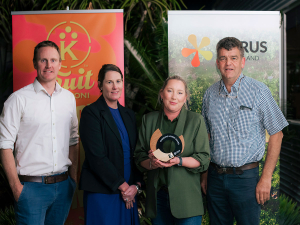
New Zealand's citrus growers were challenged to build their future on the value embedded in their fruit rather than the volume they produce, at Citrus New Zealand's annual gathering in Gisborne on 17 September.
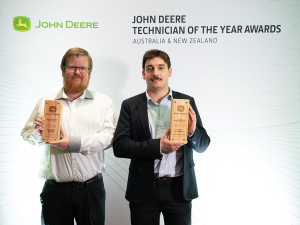
Leading John Deere technicians and apprentices from New Zealand and Australians were recognised at the recent sixth annual JD Technician of the Year Awards, held in Brisbane.
In Dacre, near Invercargill in New Zealand’s South Island, Bruce Dinnington is running a dairy operation unlike any other.
A free online platform aggregating governance vacancies across rural and regional New Zealand has been launched.
Environment Minister Nicola Grigg has announced details of a new rural plastics recycling scheme.
Agricultural drone operators say that a government decision to allow lower-risk drone work without certification won’t lower standards but drive innovation and efficiency.