
NZ Milk Price Could Hit $10/kgMS as Global Supply Eases
A 'tsunami' of milk from key exporting countries is winding down and this may be good news for New Zealand dairy farmers.
 increase font size

Dairy
October commodity prices were generally firmer. Oceania FOB powder prices rallied more than 10% for the month on the back of less favourable milk production signals in New Zealand.
Butter prices also firmed through the month, but cheese prices fell again in October as a weak US wholesale market dragged prices lower.
Grey clouds continue to build over the production outlook in New Zealand. For the key month of September, milk production was 0.4% below the same month last year on a volume basis (but higher on a milksolids basis).
This means that the volume of production for the season-to-date is trailing the previous season by 1%. Challenging seasonal conditions in the North Island have been the culprit. The outlook for milk supply offshore softens.
US milk producton has been in decline for the past few months, with a smaller herd driving the slowdown. Across Europe, milk supply growth remains sluggish.
In key export regions in Europe, farmgate prices are showing signs of stabilisation.
Beef
North Island bull price rose a small but steady 2% over the four weeks to 27 October to NZ$6.15/kg.
This rise in prices has been stronger than average for this time of year. Prices, after being close to average back in September, are now 5% higher than the five-year average.
The continued rise in New Zealand prices may reflect the seasonally lower volumes of cows and bulls in the system and the desire of processors to attract numbers with the anticipation of the US prices remaining strong.
Total beef slaughter volumes for the full 2022/23 production season (ending 30 September) were largely similar to the prior period. Beef export volumes for September were lower by 5% YOY.
Volumes to China declined by close to 30%, and value dropped by a significant 46% compared to September 2022. However, shipments to the US jumped by 35% to 8,884 tonnes.
Sheepmeat
There was not much good news over the month of October for lamb prices.
The slight lift in farmgate prices exhibited over September and into October had disappeared by the end of last month, with the SI lamb price dropping back down below NZ$ 7/kg on 27 October 2023. Farmgate prices are nwo 25% lower than this time last year and almost 20% below the five-year average when comparing the same week's prices received.
Lamb prices continue to hover at levels similar to 2020 - some of the lowest farmgate prices received over the last 10 years. Provisional export slaughter data for the 2022/23 season shows lamb slaughter (17.7m) was steady versus 2021/22 volumes.
Sheepmeat export data reflects the challenging market conditions in China. Export receipts received were lower by 17% over the same period, driven by the weaker value of shipments to China and the US - down 11% and 15%, respectively, compared to last September.
Farm Inputs
The farm inputs price structure in Q4 2023 will have a heavy impact on farmers' budgets next season.
This is due to retailers' procurement time frame, which can be several months long for some products.
On the fertiliser side, we expect price stability with a small bearish potential for major overseas exporters, assuming the Israel-Hamas war does not disrupt supply chains or boost crude oil prices. For the next five months, we forecast international urea prices to be down 11% in US dollar terms compared to the period between November 2022 and March 2023, with DAP prices down 26% and potash down 41%.
This is a very encouraging outlook for farmers. However, currency and energy costs will adversely impact farmers' input budgets.
Meanwhile, the diesel terminal gate price is another headwind that will make operations more costly.
Interest and Exchange Rates
Third quarter inflation for New Zealand was lower than expected at 5% YOY.
That compares to a consensus forecast of 5.9% and the RBNZ's forecast of 6% made in the August Monetary Policy Statement. So, after we had confirmation last month that New Zealand was doing better than many thought on economic growth, we now know that it is also doing better than we thought on fighting inflation.
We've been saying for some time that we believe the OCR has peaked at 5.5%, but the futures market had been gradually pricing in more hikes.
The lower inflation figures saw the New Zealand dollar come in for some punishment during October.
The currency fell as low as 0.55 74 after opening the month at 0.6004.
The sharp falls in the New Zealand dollar and the continued high rates of net inward migration are providing support to the economy, even as individual consumers remain under pressure and New Zealand's trade performance gradually recovers from its very weak position.
A 'tsunami' of milk from key exporting countries is winding down and this may be good news for New Zealand dairy farmers.

Chinese beef trade quotas and a looming suspension of Brazilian beef imports into the European Union are expected to reshape global beef trade flows over the remainder of 2026, with implications for New Zealand exporters, according to Rabobank's Q3 Global Beef Quarterly report.
New Zealand consumers are paying more for beef mince than ever before, with the average retail price now sitting above $24 per kilogram, according to Rabobank.
West Otago dairy farmer Luke Kane has been awarded the 2026 Rabobank Dr John Morris Business Development Prize.
Twenty five secondary school students from around New Zealand recently completed a three day residential programme designed to explore career opportunities across the food and fibre production supply chain.


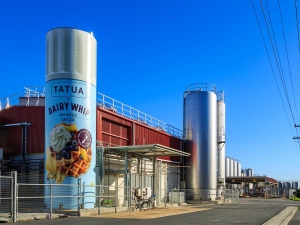
Waikato milk processor Tatua has again declared a record milk payout to farmer shareholders, leaving other processors in the dust.

A Labour-led Government won’t be bringing back the controversial freshwater rules of 2020.
National’s much-touted free trade deal with India featured in the Rural Issues Debate at Mystery Creek, Hamilton on Wednesday night.
New Zealand's 2026-27 freshwater fishing season has opened, with anglers encouraged to head to rivers and lakes over the coming days as conditions look favourable across much of the country.
Central Otago District Council (CODC) has voted against a plan to spread treated sewage sludge from Cromwell and Alexandra on farmland near Lauder, a decision Federated Farmers says reflects strong opposition from rural residents.
Pāmu has released its FY26 Integrated Annual Report, reporting a Net Operating Profit of $113 million, more than double the $49 million recorded in FY25.