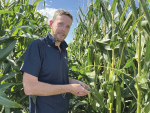
Fall Armyworm in NZ Maize: Four Years of Research
Four years since it was first detected in New Zealand, researchers and growers now know much more about management of maize pest fall armyworm (FAW).
 increase font size
 Arable farmer Andrew Darling wants to see how far he can go in reducing nitrogen applications without impacting on yield.
South Canterbury arable farmer Andrew Darling is looking to be more sustainable in how he manages his farm, particularly in terms of nitrogen management.
Darling is one of the first to participate in a new Foundation for Arable Research (FAR) initiative.
As nitrogen fertiliser, his biggest spend, has at least doubled in price in the last two years, he wants the confidence to cut back and do more to utilise nutrients already in the soil.
“We want to understand more about what we are doing. We also want to know how far we can go in reducing nitrogen applications without impacting on yield, as yield is always key,” says Darling, who farms just south of Timaru.
He also wants to learn more about the beneficial insects available on his farm to reduce reliance on foliar insecticides.
The FAR initiative, called Growers Leading Change (GLC), provides a farmer-led framework for arable farmers to develop, test and introduce new ideas, technologies, and ways of working, in order to improve their farm, industry and community sustainability.
As part of this, Darling’s farm is the South Island’s first GLC Pathfinder, or demonstration farm, aimed at growers who are ready to embrace new ideas and technologies and identify sustainable pathways for the rest of the sector.
The Pathfinder concept and ways the farm plans to transition, particularly in its nitrogen management over the next 12 to 18 months.
Andrew and his wife Amy lease Poplar Grove Farm from his parents Warren and Joy Darling. Andrew is the fourth generation on the farm, made up of a 250-hectare home block and a 250ha leased neighbouring property.
The rolling downs farm is fairly typical for an arable farm south of Timaru in the type of crops it grows.
The biggest area is grown in feed wheat and barley. Sunflowers and oil seed rape are supplied to Rolleston-based Pure Oil for processing into highvalue cooking oil. Turf ryegrass for seed and fava beans are also grown.
The farm is all crop, with no livestock, as the heavy clay soils are not suitable for dairy grazing.
In 2015, the farm attracted headlines when Warren Darling set a world record yield for barley of 13.8 tonnes/ ha. The record was overtaken last year by a Lincolnshire grower in the United Kingdom, Tim Lamyman, with a yield of 14.2t/ha.
The family has been unable to replicate the record yield since.
“The year we tried, it happened to be a perfect year for growing feed barley,” the younger Darling explains.
This has led him to question the farm’s highcost, high-input cropping programme in favour of an approach which is less prescriptive, more responsive to the season and better utilises the soil nutrients and beneficial insects already available on the farm.
The Darlings have already moved to adopt this approach, using 1ha grid soil sampling for the last seven years and using this information to apply nutrients at variable rates across paddocks. Dual sensor cameras installed last season on the roof of their tractor automatically varies nitrogen application rates depending on a crop’s density and greenness.
The cameras are calibrated to the type of crop and growth stage. This, along with soil nitrogen testing reduced nitrogen applications by 15% last year, compared to the blanket rate, with no impact on yields.
Four years since it was first detected in New Zealand, researchers and growers now know much more about management of maize pest fall armyworm (FAW).
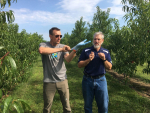
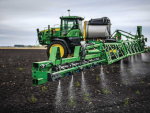
Two Canadian spraying experts, Tom Wolf and Jason Deveau, are visiting New Zealand in early August to ensure that arable growers are hitting the target with this key piece of equipment.
Tickets are now available for the 2026 Arable Awards, set to be held in Christchurch on 20th August.
Some of New Zealand’s best-loved food brands have been quick to sign up for a new campaign which reinforces their home-grown status.
With arable farmers heading into the busy planting season, increasing fuel and fertiliser prices, driven by the Iranian conflict, are a daily and ongoing concern.

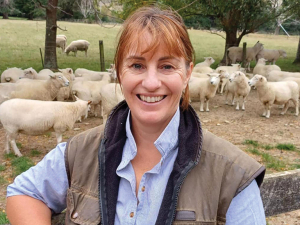
B+LNZ's Wormwise veterinarian Mary Bowron has won the Best Sheep and Beef Vet of the Year Award in recognition of her outstanding contribution to New Zealand’s sheep and beef sector.
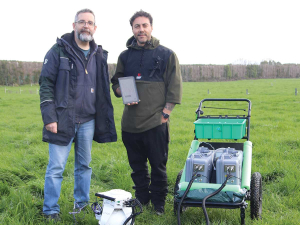
Researchers at Massey University are using a special piece of scientific equipment to improve the measurement of greenhouse gas emissions from pasture soils.
More signs of a booming kiwifruit sector.
OPINION: David Seymour and James Meager's plan to make it easier for farmers and orchardists to operate drones can best be described a 'courageous' move.
New Zealand wool is reaching new heights as air filtration companies move away from synthetic products to biodegradable alternatives.
Opuha Dam's ability to protect South Canterbury communities from major flooding has taken a significant step forward, with Opuha Water Limited (OWL) successfully commissioning a new outlet valve capable of releasing record volumes of water from the dam ahead of a weather event.