
NZ Milk Price Could Hit $10/kgMS as Global Supply Eases
A 'tsunami' of milk from key exporting countries is winding down and this may be good news for New Zealand dairy farmers.
 increase font size
 Report author Emma Higgins says 2023 risks being characterised by margin pressure for many operators.
A new report by Rabobank suggests that 2023 will prove to be an uphill climb for New Zealand agriculture, with the difficulty of the climb hinging on four main ‘wildcard’ factors.
In the bank’s February New Zealand Agribusiness Outlook flagship report, it says the industry traversed a mountain of challenges in 2022 and a testing climate confronts the sector as it begins its 2023 journey.
It cites these contributing factors: continuing Covid aftershocks hampering exports to China, the war in Ukraine disrupting market access and creating a surge in farm input costs, and La Nina weather patterns returning for the third year in a row bringing floods across the country.
Report co-author and senior agricultural analyst Emma Higgins says government policy impacting the sector continues to be a major source of concern, with weakening market prices across multiple sectors further contributing to already low confidence levels.
“All of this exists amidst a potent background of climate change urgency, a cost-of-living crisis, geopolitical fragmentation and extremely tight labour markets,” Higgins explains.
“The first quarter in particular looks tough, and we anticipate low profitability will push some businesses to assess income diversification streams and explore complementary revenue options over the course of the year ahead.”
With the report saying many of these challenges look likely to linger, it says 2023 runs the risk of being characterised by margin pressure for many operators.
Within this challenging outlook for the sector, Higgins says several divergent paths are possible, largely shaped by four ‘wild cards’.
The first of these is the re-opening of China after the country’s Covid U-turn.
“With the Covid-19 wave now spreading rapidly in China, adverse short-term impacts will likely be felt on supply chains via temporary labour shortages along with a light recession.
“We think the journey might still be a bit bumpy, but there remains a chance that demand could improve earlier than forecast, with food services picking up after long lockdowns providing a boost for commodity prices and New Zealand farmer bank accounts.”
Global and domestic inflation shows up as the next wildcard, with policy makers across the globe trying to keep inflation under control, but with interest rates still having a ways to go.
The third wildcard indicated in the report is market push for low or zero emissions products.
“New Zealand has an early-mover advantage to supply low-emissions produce into these supply chains and countries with opportunities to leverage our emissions pricing framework to unlock further value.
“The direction of travel for change in New Zealand agriculture is largely set – so we must act quickly to leverage the opportunities presented locally and globally,” Higgins says.
Finally, the report highlights the 2023 election as another variable to influence the year ahead for agriculture.
While 2023 is expected to test the industry’s resolve, Higgins says New Zealand’s farmers and growers have shown the drive to successfully tackle the challenges that come their way.
“This isn’t the first time commodity cycles or regulation have changed,” she adds.
Rabobank's 2023 Outlook
Dairy - Commodity prices near-term headwinds likely to continue before returning to more promising levels in the second half of 2023.
Beef - RaboResearch anticipates that the North Island bull price will track above the five-year average price range in 2023, supported by tight global beef supplies.
Sheepmeat - Lamb and mutton schedules face headwinds in all key markets. Import demand from China likely to improve from mid-2023.
Venison - Despite challenging economic conditions in all key markets, venison schedule is expected to continue to recover.
Farm Inputs - Overall supply and demand is adjusting itself to the new normal and the price soars are dissipating.
FX - The Reserve Bank shows no sign of backing off with inflation still high. Higher interest rates and inflation are driving down consumer confidence.
Regulation - More regulation milestones loom ahead for farmers, from freshwater environment plans to the fate of the Three Waters reform programme.
A 'tsunami' of milk from key exporting countries is winding down and this may be good news for New Zealand dairy farmers.

Chinese beef trade quotas and a looming suspension of Brazilian beef imports into the European Union are expected to reshape global beef trade flows over the remainder of 2026, with implications for New Zealand exporters, according to Rabobank's Q3 Global Beef Quarterly report.
New Zealand consumers are paying more for beef mince than ever before, with the average retail price now sitting above $24 per kilogram, according to Rabobank.
West Otago dairy farmer Luke Kane has been awarded the 2026 Rabobank Dr John Morris Business Development Prize.
Twenty five secondary school students from around New Zealand recently completed a three day residential programme designed to explore career opportunities across the food and fibre production supply chain.


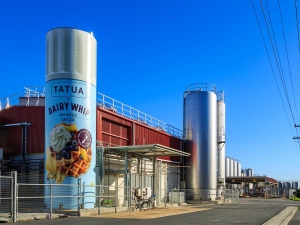
Waikato milk processor Tatua has again declared a record milk payout to farmer shareholders, leaving other processors in the dust.

A Labour-led Government won’t be bringing back the controversial freshwater rules of 2020.
National’s much-touted free trade deal with India featured in the Rural Issues Debate at Mystery Creek, Hamilton on Wednesday night.
New Zealand's 2026-27 freshwater fishing season has opened, with anglers encouraged to head to rivers and lakes over the coming days as conditions look favourable across much of the country.
Central Otago District Council (CODC) has voted against a plan to spread treated sewage sludge from Cromwell and Alexandra on farmland near Lauder, a decision Federated Farmers says reflects strong opposition from rural residents.
Pāmu has released its FY26 Integrated Annual Report, reporting a Net Operating Profit of $113 million, more than double the $49 million recorded in FY25.