One of the country's major horticulturists warns that if commercial growers don't get a reasonable price for their product, the may turn to more profitable options.
There has been much debate about the rising cost of some fresh vegetables at various times in recent months and concern about the high prices these are fetching in supermarkets. The weather, rising costs and inflation are all part of the equation.
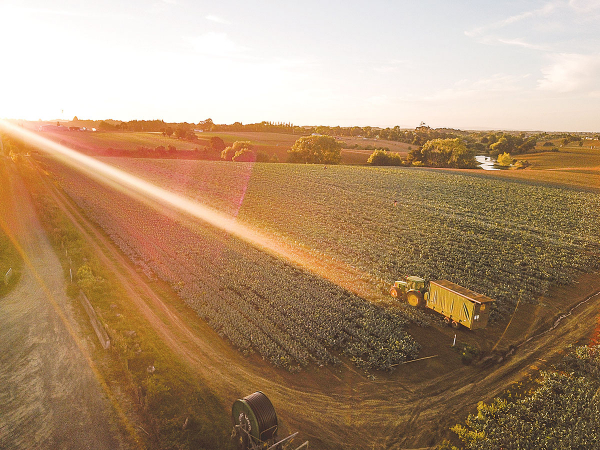
But Richard Burke, chief executive of the large commercial vegetable growing company Leaderbrand, says if growers don't get a fair return, there may end up being a shortage of some fresh items. He says there is a risk that it may simply become uneconomic to be a grower.
"What has really happened is that all of us have seen our costs increased and pressure come on," Burke told Hort News. "But there have been some real changes in some key resources."
Burke says land is a classic example.
"Export crops like kiwifruit and apples have come in and soaked up the best land, the best water and sometimes the better people - because they are making the higher returns than what we do supplying the domestic market."
Burke says many growers are looking at other options, including going into kiwifruit or apples themselves or looking at selling their land for housing. He syas this then raises the issue of food security for NZ.
Burke adds that a whole range of factors start to come into play, including the cost of meeting the new environmental regulations.
"I don't think consumers see that and it's not their job to - it's our job to make sure we can find a way to supply at a value that works for a consumer," he explains. "But the realit is those costs are affecting our ability to do that."
Burke says Leaderbrand's aim is to sell really good volumes for really fair values. "Because when we do that, consumers get a good quality product," he adds. "They get it for a value that works for them and the supermarkets get it for a value that works them as well."