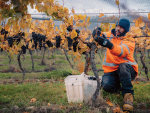
SWNZ Strengthens People Pillar for Global Markets
With ethical employment practices a "hot topic" in key markets, Sustainable Winegrowing New Zealand (SWNZ) is strengthening its People Pillar.
 increase font size
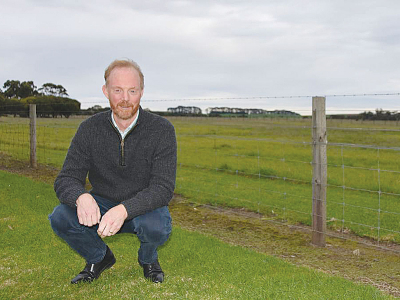 David Nation.
The Australian dairy industry will need 800 extra workers on farms by 2023.
And youngsters are the key to this, says Dairy Australia managing director Dr David Nation.
The workforce statistic aligns with a rise in farms with six or more employees from 4% to 20% by 2025, he says. Attracting skilled labour and career dairy workers is a priority for the industry, but getting and keeping workers on dairy farms is a big challenge.
“The evolution of the industry and the trend towards larger farms places greater demand on labour, but also provides opportunities for people interested in agriculture to forge a successful career,” said Nation.
“The need for skilled labour is also increasing with the use of technology, the need to monitor farm inputs, animal care, milk quality, managing environmental credentials and other aspects of dairy.”
Farmers are clear about needing to attract more young people to dairy, Nation says, commenting on farmers’ feedback on the Australian Dairy Plan, a five-year strategic plan for the industry.
He says the key to this is getting high schoolers to start thinking about dairy. At least 15,000 high schoolers in regional Australia have seen Dairy Australia’s ‘Cows Create Careers’ presentation on careers in dairy.
“It’s important that we show the diversity of career pathways and highlight the opportunity to be successful working in dairy,” said Nation.
“And people who choose to develop skills or build on existing skills in dairy can study at TAFEs and with other registered training providers. Dairy Australia contributes to course development.”
Courses include milking, farm systems, animal care, farm management, etc.
And when young people have joined the industry they must be kept connected and supported via strong networks and skills building, Nation says.
“Over 2,500 young people have been able to connect through the Dairy Australia Young Dairy Network, providing access to training for both the technical and non-technical aspects of dairy,” he says.
“People are at the heart of our industry and are what make the industry a great one – attracting people to the industry by presenting the many career pathways and providing opportunity to build skills, is a continued priority.”
With ethical employment practices a "hot topic" in key markets, Sustainable Winegrowing New Zealand (SWNZ) is strengthening its People Pillar.

OPINION: Farmers have been clear: it is getting harder, not easier, to find and keep good people.
OPINION: Your old mate hears an international incident is threatening to blow up the long-standing Anzac alliance as Kiwis and Aussies argue over who wants new Australian resident and former NZ Prime Minister Jacinda Ardern.
The way we manage livestock is constantly changing, and the advent of virtual fencing and herding technologies represents a significant advance for pasture-based dairy farming, offering flexibility, efficiency, and improved animal welfare.
OPINION: Your old mate hears that at a recent China Business Summit, PM Christopher Luxon delivered a none-too-subtle "could try harder" report card on the red meat industry regarding its exports to China - particularly when compared to Australia.


National’s pledge to introduce 19 new national standards shows the party is serious about getting Wellington out of farming, Federated Farmers says.
The National Party’s policies to make it easier to grow fresh vegetables, secure reliable water and energy and simplify farm planning are practical changes that will give growers the confidence to invest, according to Horticulture New Zealand (HortNZ).
Fonterra Co-operative Group chief financial officer Andrew Murray has resigned to take up a role outside the dairy giant.
A major move is about to get underway to improve the quality and viability of dairy beef and cattle in NZ.
Veterinarians say changes to the code of welfare for dairy cattle provides a positive foundation for improved cattle welfare across the country.
Today, 15 October, is the International Day of Rural Women, which recognises rural women’s contribution to farming, communities and the environment.




