Diplomatic Incident
OPINION: Your old mate hears an international incident is threatening to blow up the long-standing Anzac alliance as Kiwis and Aussies argue over who wants new Australian resident and former NZ Prime Minister Jacinda Ardern.
 increase font size
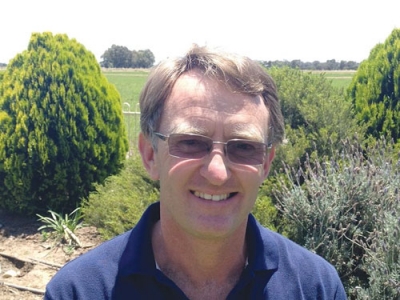 Geoff Akers.
Building an Australian dairy industry that is sustainable and profitable should assure long-term success, says Dairy Australia chair Geoff Akers.
He was speaking at the launch of the ‘Sustainable Farm Profitability 2015’ report in Victoria this month.
The report is a tactical and strategic management guide to enabling dairy farmers to make ‘more money from milk, than milk from money’, Akers says.
“It defines what ‘profit’ means and gives advice on how farmers can make their businesses more successful – as shown by practical examples from data provided by farmers and experts.”
For ten years Australian dairy farmers’ profits have been under pressure. Except for Tasmania, the industry has not consistently grown.
Yet better-performing dairy farms in all regions have profited, making as much or more money than other farming sectors and many other industries.
Australian dairying goes on in all sorts of climate zones: subtropical Queensland and Northern NSW; temperate, oceanic ‘cold’ Tasmania and Southern Victoria; and the inland river regions of Northern Victoria and southern/central NSW with a more continental weather pattern.
Production systems can range from mostly (>85%) grazed pasture to full confinement/zero grazing. And there is a variety of milk processor pay structures and seasonal price incentives.
As a result, there is no single silver bullet that ensures profitability, says Dairy Australia. But though sustaining farm profits long term may be challenging, it can be done.
Australian Dairy Industry Council chairman Noel Campbell says profit does not depend entirely on expansion and size – especially not if expanding means spending more to increase output.
The report recognises that dairy farms are much more successful when farmers manage well across the board, balancing technical and financial skills so as to allow business to flourish and better mitigate risks.
State politicians and Federal Minister for Agriculture Barnaby Joyce endorsed the industry’s initiative.
Said Joyce, “With volumes and values of global dairy trade expected to grow, driven by increasing demand, our opportunities in overseas markets will depend on doing what we’ve always done well – but more effectively.
“Dairy producers looking to build their farming and business management skills and identify opportunities to improve their on-farm business operations will find advice and ideas here,” he added.
What farmers can’t control
Macro effects farmers mostly cannot control:
OPINION: Your old mate hears an international incident is threatening to blow up the long-standing Anzac alliance as Kiwis and Aussies argue over who wants new Australian resident and former NZ Prime Minister Jacinda Ardern.

The way we manage livestock is constantly changing, and the advent of virtual fencing and herding technologies represents a significant advance for pasture-based dairy farming, offering flexibility, efficiency, and improved animal welfare.
OPINION: Your old mate hears that at a recent China Business Summit, PM Christopher Luxon delivered a none-too-subtle "could try harder" report card on the red meat industry regarding its exports to China - particularly when compared to Australia.
Twenty four young farmers from South Australia, Western Australia and Tasmania have returned from a recent study tour of Ireland with practical insights, fresh thinking and an expanded network of peers.
More Australian states are embracing virtual fencing technology, opening growth opportunities for Kiwi companies like Halter.
Farms across the upper North Island are trialling different pasture mixes as part of a research programme that aims to build greater resilience into farming systems.
Election years are always a concerning time for farmers, according to DairyNZ chair Tracy Brown.
The Ballance Farm Environment Awards are coming to the West Coast of the South Island.
Most dairy regions around the country have had a pretty good season so far says Tracy Brown.
Rural leader Mark Hooper has been appointed as an independent director to the NZPork board, bringing extensive farming, governance and advocacy experience to the role.
Opportunity says its land value tax (LVT) is unlikely to force farmers into a position where asset sales or increased debt are required.