Arla Foods delivers $15b revenue as Co-op turns 25
European dairy giant Arla Foods celebrated its 25th anniversary as a cross-border, farmer-owned co-operative with a solid half-year result.
 increase font size
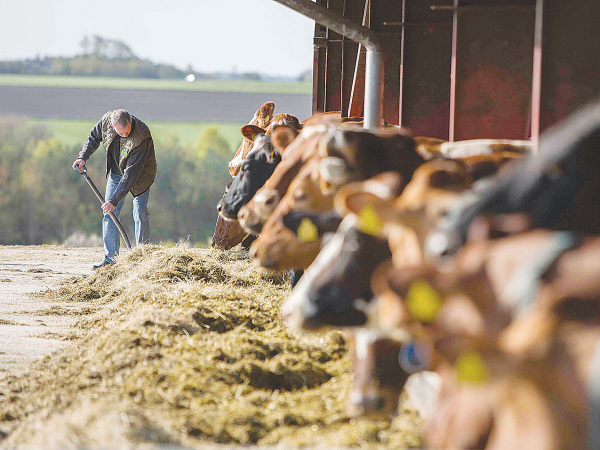 The trial will involve 10,000 cows owned by Arla Foods in three countries.
European dairy co-operative Arla Foods has become the second global milk processor to trial the methane-reducing feed additive Bovaer.
The large-scale on-farm pilot will involve 10,000 dairy cows across three European countries.
Bovaer - made by global science company Royal DSM - claims to reduce methane emissions by 30%.
Last month, Friesland-Campina announced it will be trialling Bovaer on 200 of its shareholder farms.
Fonterra has been trialling Bovaer on some of its Waikato shareholder farms for nearly two years. Arla Foods says 40% total emissions from its shareholder farms come from their cows' digestion of feed.
The co-op says its farmer owners are among the most climate efficient dairy producers in the world with an average CO2e emission of 1,15kg per kg of raw milk.
They are committed to reducing greenhouse gas emissions in this decade, and in line with Arla Foods ambitious sustainability targets across its value chain.
Bovaer will be trialled across more than 50 farms in Denmark, Sweden and Germany.
"Climate change requires urgent action, and we believe that dairy is part of the solution," says Arla executive vice president and head of agriculture and sustainability, Hanne Sondergaard.
"The results from our initial trials with Bovaer at both a research facility and one of our Danish farms are very promising.
"Together with DSM, we are now gaining practical on-farm experience by applying the feed additive in one of its largest pilot programmes to date, and one of Arla's biggest climate projects overall, with 10,000 cows.
"This is a great example of innovative scientific solutions and actions we are taking to create a sustainable and resiliet future for dairy and I am excited to see how far this will take us," he says.
DSM vice president of Bovaer, Mark van Nieuwland, points out that leaders of more than 100 countries recognise the urgency of cutting methane emissions as they pledged to make a difference at the UN Climate Change Conference, COP26, few months ago.
He says the recent IPCC report on the impact of climate change tells us there's no time to lose when it comes to reducing greenhouse gas emissions.
"Transforming livestock farming will be key to this and forward-thinking companies like Arla Foods are already working on sustainable dairy.
"Through our scientific innovation and collaboration, we can help achieve a sizeable reduction in emissions by changing the feed that animals eat every day and in doing so, support the health of animals, people and planet," he says.
Bovaer is a feed additive for cows and other ruminants. DSM has researched and developed this additive over 10 years and extensively tested in 14 countries around the world. Bovaer is available for sale in the EU, Brazil, Chile, and Australia. In the EU, it is the first ever approved feed additive with environmental impact, confirming its impact on methane emissions and its safety for animals, consumers and the environment.
It works by suppressing the enzyme that triggers methane production in a cow's digestive system. It takes effect immediately, is safely broken down into compounds already naturally present in a cow's stomach and is scientifically proven to not affect the milk quality.
European dairy giant Arla Foods celebrated its 25th anniversary as a cross-border, farmer-owned co-operative with a solid half-year result.
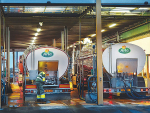
The creation of Europe's largest dairy co-operative should be complete by early 2026.
OPINION: The fate of methane inhibitor Bovaer in NZ farming is still up in the air.
OPINION: In the last few weeks of 2024 there was a lot of noise in the UK and Europe about the methane inhibitor, Bovaer, and concerns raised as to its safety.
OPINION: Still on Bovaer, a wave of misinformation is circulating online wrongly linking Microsoft co-founder Bill Gates to the feed additive.


Now in its fourth year, the 2026 Fencing Industry Awards, formed part of the proceedings of the FCANZ Conference, held in Nelson during August.
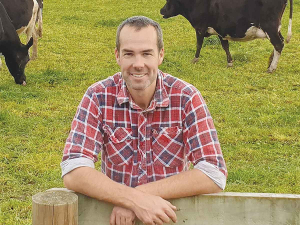
DairyNZ deputy chair Cameron Henderson has been re-appointed unopposed for another term.
OPINION: The stats speak for themselves.
Farms across the upper North Island are trialling different pasture mixes as part of a research programme that aims to build greater resilience into farming systems.
Election years are always a concerning time for farmers, according to DairyNZ chair Tracy Brown.
The Ballance Farm Environment Awards are coming to the West Coast of the South Island.