Why Now Is the Time to Plan Farm Succession, Findex Says
OPINION: Succession and long-term planning are perennial topics because it is perpetually sidelined on busy farms.
 increase font size
 The resilience of Maori agribusiness is back in with the announcement of the finalists in this year's Ahuwhenua trophy competition to find NZ's top Maori dairy farm.
The resilience of Maori agribusiness is back in with the announcement of the finalists in this year's Ahuwhenua trophy competition to find NZ's top Maori dairy farm.
The competition was inaugurated 83 years ago and the fact that every year top Maori farms step up shows clearly the determination and desire in Maoridom to showcase their success and build capability.
During this bad patch for the dairy sector it is interesting to see excellent Maori farms unafraid to put themselves forward and show what they are doing well.
They are displaying great leadership to the whole dairy sector and demonstrating that this is not a time to retreat and hunker down; rather it's a time to showcase the Maori agribusiness model – a long term vision of providing benefits for future, not just the present, generation. Maori have a history of managing adversity and coming back stronger and better.
Not widely known is that entering the contest and making the finals requires a lot of time to provide complex data to two judging panels and run a large field day. The farms are required not only to prove they are financially successful but also that they are leaders in the kaitiakitanga (guardianship of the land) and their whanau.
Few NZer's have much idea about farming, and even fewer have any idea of the scale and efficiency of many Maori farms. Maybe that's because they are tucked away in heartland NZ and not on SH1, or perhaps people just don't believe Maori are capable of success.
This year the Ahuwhenua competition has two finalists from the South Island – Ngai Tahu and Rakaia. This is perhaps a further sign that Maori are starting to rise their profile, showing just how big and good is their vision and ability.
Maori agribusiness, including forestry contributes $3.5 billion to the New Zealand economy. Maori agribusiness is doing extremely well and Miraka Dairy Company won the Maori Excellence in Export Award at the 2015 New Zealand International Business Awards.
The Awuwhenua Trophy competition is hugely important not only for Maori but also for the primary sector as whole.
If they don't celebrate success in the primary sector, no one else is going to do it for them.
Maori agribusiness is no longer an adjunct to the NZ economy; it is now an integral part of it and over time its contribution will grow to new heights – not just in dairying, but in all primary production.
OPINION: Succession and long-term planning are perennial topics because it is perpetually sidelined on busy farms.

OPINION: One of the privileges of judging the Ballance Farm Environment Awards for more than a decade is the opportunity to spend time on farms and orchards across New Zealand and hear from people constantly looking for ways to improve their businesses.
OPINION: It appears to be difficult for people who haven’t tried to run a business to understand the difference between assets and cash.
OPINION: David Seymour and James Meager's plan to make it easier for farmers and orchardists to operate drones can best be described a 'courageous' move.
OPINION: In politics, credibility is and should be big. It must surely rank higher than charisma, which is quite trite and superficial. Yet, voters nowadays are often wooed and influenced by how someone looks or talks at a superficial level. TV plays a huge role in this.


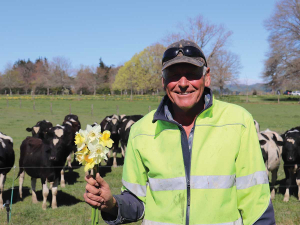
South of the central Hawke’s Bay town of Waipukurau is Taniwha Station – a highly successful 550ha bull beef farming operation.
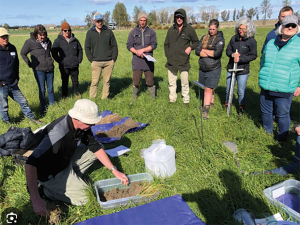
Beef + Lamb NZ funded research has shown that some simple changes to pasture management could help farmers make better use of rainfall and build resilience before dry conditions hit.
OPINION: There could hardly be a more appropriate theme for a conference than the one chosen by the red meat sector - Navigating Volatility.
When Northland leather worker Vernon Suckling started making horse saddles 50 years ago, quad bikes and side-by-side vehicles were unheard of.
Alliance Group has confirmed that eligible farmer-shareholders who supply and continue to back the business will receive up to $20 million later this year, following the strategic investment partnership with Dawn Meats.
With a general election under five weeks away, Rural News is asking major political parties about their policies and positions on key issues facing the primary sector. We will run their responses to each question over the next four weeks. The ACT Party and the Greens didn't respond in time.