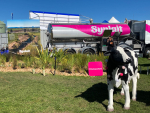
What Would Synlait Be Worth to Fonterra or a2 Milk?
Speculation of a possible joint move by Fonterra and a2 Milk to buy Synlait raises a much bigger strategic question, says agribusiness expert Dr Nic Lees.
 increase font size
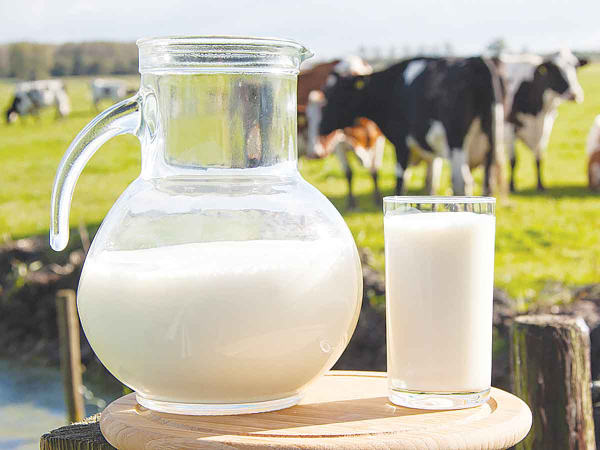 Fonterra’s latest announcement – bringing the season’s mid-point down to $6.25/kgMS – is a worrying sign.
OPINION: Not so long ago, a payout starting with a six would have been happily accepted by the dairy sector.
Today – with input inflation running rife and interest rates showing no signs of abating – a payout starting with eight is the new norm.
That’s why Fonterra’s latest announcement – bringing the season’s mid-point down to $6.75/kgMS – is a worrying sign.
Last season, dairy farmers produced 1.39 billion kgMS, so with the midpoint dropping $1.25 that is almost $1.8 billion not coming into the country’s economy. And this doesn’t just affect Fonterra suppliers. Other milk processors are also facing the heat. NZ’s peak milk season could make things worse.
The key driver of the weak short-term price outlook is weak Chinese demand, noting that China is comfortably our largest dairy market.
Unlike most economies post their Covid lockdowns, China’s post lockdown bump in economic activity has underwhelmed expectations.
Analysts have cut their outlook for Chinese economic growth for 2023 from 6.2% in June, to 5.7%, and then to 5.2%.
Many dairy farmers are bracing for losses and making changes to the way they farm, and hoping the market will rebalance.
Global milk supplies are subdued and very likely to contract further as farmers globally are not making money at current farmgate prices.
Any tightening in supply will help rebalance the market, but we are now heading into peak seasonal supply for the Southern Hemisphere dairy-exporting nations.
New Zealand’s spike in milk supply in the coming months means there will be more product to sell in the near term, while the market is still weak.
Ironically, this could lock in a payout starting with a six.
Speculation of a possible joint move by Fonterra and a2 Milk to buy Synlait raises a much bigger strategic question, says agribusiness expert Dr Nic Lees.

In the past, much has been made of the concept of farm to fork, but an Australian expert in food science and marketing with experience in the dairy industry, Dr Angeline Achariya, says the reverse of this slogan is critical to win modern day consumers.
A four year trial has reaffirmed that mixing plantain into dairy pastures can help reduce nitrogen losses to freshwater while maintaining milk production and profitability, say researchers.
Fonterra has opened its upgraded Chengdu Application Centre, bringing New Zealand dairy expertise closer to customers in one of China's fastest-growing regions.
Tatua chair Stephen Allen says he leaves the co-op with a deep sense of gratitude for the people who have contributed to its success.

More signs of a booming kiwifruit sector.
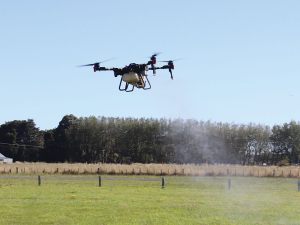
OPINION: David Seymour and James Meager's plan to make it easier for farmers and orchardists to operate drones can best be described a 'courageous' move.
New Zealand wool is reaching new heights as air filtration companies move away from synthetic products to biodegradable alternatives.
Opuha Dam's ability to protect South Canterbury communities from major flooding has taken a significant step forward, with Opuha Water Limited (OWL) successfully commissioning a new outlet valve capable of releasing record volumes of water from the dam ahead of a weather event.
There's been widespread support from the primary sector for the Government's announcement on changes to freshwater farm plans that come under the Natural Environment Bill, which is now set to replace the existing RMA.
A partnership between state-owned enterprise Pāmu (Landcorp Farming Limited) and charity Meet the Need is putting more than quality New Zealand beef into food bank parcels this year.