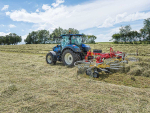
Farmers Warned Over Track Dangers After Wairarapa Floods
The terrible floods that hit the Wairarapa may have subsided, but the danger to farmers still exists, according to local Federated Farmers president Rob Hickson.
 increase font size

OPINION: The Government needs to act now to address consenting issues faced by farmers throughout the country.
Some regional councils are charging exorbitant amounts to process consents. On top of that farmers are forking out thousands of dollars on consultants. Also, some consents, applied five years ago are still being processed.
A recent survey by Federated Farmers shows a consenting process in disarray - farmers facing long delays, excessive costs and unreasonable requests for information.
It's fair to say the results of that survey make sobering reading and highlight the true scale and seriousness of the problem. 38% of respondents applied for a resource consent in the past year, indicating frequent engagement, while 31% applied over five years ago, suggesting varied consent durations.
The average spend on regional councils for consents was $17,400 with Auckland ($24,300) and Canterbury ($25,000) being the most expensive regions.
District council costs averaged $9,000 with Canterbury districts ($15,800) the most expensive.
Those numbers paint a damning picture of a system that simply isn't working. Farmers are losing faith in a process that seems to prioritise paperwork over environmental outcomes.
Farmers welcome the Government's intention to reform the Resource Management Act - but that won't happen overnight. Farmers need solutions now.
With thousands of resource consents due to expire over the coming months, the Government needs to act quickly and decisively to give farmers certainty.
Farmers believe a practical solution would be to roll over all existing resource consents to help bridge the gap between the current rules and their soon-to-be-revealed replacement.
This makes sense and let's hope the Government thinks the same.
The terrible floods that hit the Wairarapa may have subsided, but the danger to farmers still exists, according to local Federated Farmers president Rob Hickson.

Will a stronger, more coordinated voice help rebuild confidence and improve returns in the wool sector?
New Zealand's pest problem has reached crisis point, according to Federated Farmers' second National Pests Survey, which shows farmers are spending more money and effort on control — yet pest numbers keep climbing faster than they were two years ago.
Despite political shenanigans in Wellington, farmers are confident that Resource Management Act (RMA) reforms will get over the line in this term of Parliament.
The Government has announced it will pause key parts of Waikato Plan Change 1 (PC1) in a decision that is set to give Waikato farmers a reprieve from new consenting and farm-planning requirements while the wider resource management system is overhauled.


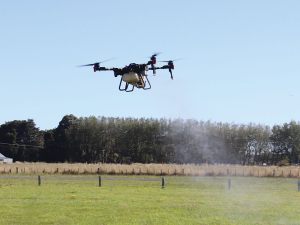
OPINION: David Seymour and James Meager's plan to make it easier for farmers and orchardists to operate drones can best be described a 'courageous' move.

New Zealand wool is reaching new heights as air filtration companies move away from synthetic products to biodegradable alternatives.
Opuha Dam's ability to protect South Canterbury communities from major flooding has taken a significant step forward, with Opuha Water Limited (OWL) successfully commissioning a new outlet valve capable of releasing record volumes of water from the dam ahead of a weather event.
There's been widespread support from the primary sector for the Government's announcement on changes to freshwater farm plans that come under the Natural Environment Bill, which is now set to replace the existing RMA.
A partnership between state-owned enterprise Pāmu (Landcorp Farming Limited) and charity Meet the Need is putting more than quality New Zealand beef into food bank parcels this year.
The Opportunity Party has faced criticism during the election campaign that its policies are too urban-focused and offer little for rural communities.