
Federated Farmers Welcomes ACT’s New Farming Policies
Federated Farmers has welcomed new rural policies released by ACT, saying they align closely with its own election priorities.
 increase font size
 The Fair Pay Agreements (FPAs) bill proposed by Government is causing alarm in the farming sector.
OPINION: The Fair Pay Agreements (FPAs) bill proposed by Government is causing alarm in the farming sector.
That's why farmer organisations are joining forces with Business New Zealand and business groups to launch a national campaign against it.
Federated Farmers is calling FPAs "an unnecessary, inflexible, one-size-fits-all legislation".
Dairy farmers, in particular, feel there's nothing fair about FPAs.
They see it as a straitjacket that lock employers and employees into a national set of pay and conditions rules. FPAs might suit a minority but remove all ability of businesses and staff to agree on terms that suit their own needs and local conditions.
The Government says FPAs are part of its wider work programme focused on lifting the wages of those on low to medium incomes.
The threshold for initiating an FPA is 10% of workers of 1000 workers in the identified group - whichever is less. Once an FPA is agreed, all employers and employees across an entire industry or occupation are locked into the conditions of that FPA.
Feds rightly point out that there's little or no collective bargaining in the agriculture sector, yet workers' pay is well above the minimum wage, above the living wage and, in most areas, above the median wage.
The 2022 Federated Farmers-Rabobank Farm Remuneration report shows 13.5% average growth in pay packages for farm workers over the last two years. Average reported hours worked fall below the International Labour Organisation recommended maximum standard working time of 48 hours per week (for full-timers - dairy 47.2 hours, sheep/beef 44.8 and arable 46.2).
Feds claims this is off the back of farm and business owners' negotiating with their staff about what will work to retain those workers in a competitive marketplace and keep the business profitable.
Farmers admit their industry isn't perfect but it's working hard to get it right with a slew of programmes.
They are unhappy with FPAs claiming these will reduce flexibility, raise costs and destroy productivity.
All food sector stakeholders are being urged to back BusinessNZ in opposing the proposed regulation.
Collective bargaining is currently almost unknown in the farm sector - except in ancillary occupations like dairy process workers and drivers. Not being bogged down in collective bargaining has helped contribute to NZ farming's great economic success. That could soon be in jeopardy.
Federated Farmers has welcomed new rural policies released by ACT, saying they align closely with its own election priorities.

Federated Farmers is backing Feilding High School’s call to keep Agriculture and Horticultural Science as a standalone subject in Year 11.
National’s pledge to introduce 19 new national standards shows the party is serious about getting Wellington out of farming, Federated Farmers says.
Mobile phone coverage and reliability are deteriorating in rural areas, and farming families are bearing the cost, according to a Federated Farmers survey.
Central Otago District Council (CODC) has voted against a plan to spread treated sewage sludge from Cromwell and Alexandra on farmland near Lauder, a decision Federated Farmers says reflects strong opposition from rural residents.


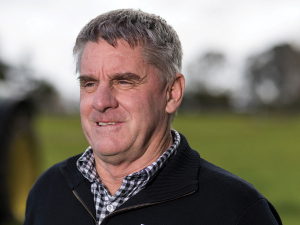
Federated Farmers has welcomed new rural policies released by ACT, saying they align closely with its own election priorities.

Rural Contractors NZ says proposed changes to land transport rules for agricultural vehicles are a welcome response by the Government to out of date regulations which have seen members hit with huge fines.
Alliance is calling for final applications for its 2027 Graduate Programme, with applications closing on Sunday 25 October.
Decades piloting planes has ensured vet and farmer David Hayes is focused on safety. So, after a serious accident while welding on farm, he is sharing his experience so others can learn from it.
Canterbury milk processor, Synlait Milk has confirmed Leon Fung as its chief executive officer.
OPINION: Making it easier to collect rainwater and use it to grow crops and livestock is a no brainer.