DairyNZ's Tracy Brown Flags El Nino Risk for Dairy Farms
Most dairy regions around the country have had a pretty good season so far says Tracy Brown.
 increase font size
In many parts of the country, dairy farmers have enjoyed favourable growing conditions throughout winter and spring, leading to reduced use of stored and imported feed and higher-than-expected production to date.
Combined with an improved milk payout forecast and falling interest rates, the outlook is more favourable compared to this time last year.
Interestingly, 12 months ago we discussed navigating a drop in payout in our “Feed for Thought” podcast (Navigating a drop in payout – Feed for Thought).
The key message then was to stick with the fundamental principles that make your system successful—an approach that remains relevant today.
Building on early season momentum
One of the key principles that applies now is setting your farm up for the summer season. Dairy farmers have an opportunity to build on early season momentum, transitioning from a pasture deficit to a surplus. Proper management of this period can help mitigate the effects of low pasture production during the summer, directly impacting the farm’s bottom line.
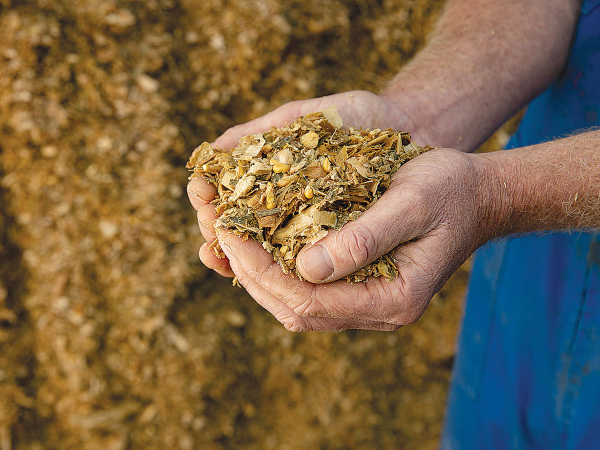
While harvesting pasture silage is a natural solution for managing surplus pasture, incorporating a maize crop into the rotation is another option that offers multiple benefits. Maize is a reliable feed crop, capable of producing over 25t DM/ha under optimal conditions, making it one of the highest-yielding crops available to farmers. In comparison, ryegrass typically yields between 12 to 18t DM/ha annually . This extra feed supply can be achieved with minimal disruption to the grazing system, balancing the need for both pasture and stored supplementary feed.
Managing summer variability with maize
Despite the favourable early season conditions, some farmers are cautious that these conditions may not last. If we experience a more traditional, dry summer, maize is well-positioned to thrive, thanks to its excellent water-use efficiency. Maize typically requires around 400–600mm of water per growing season, which is significantly less than pasture and many alternative crops. Additionally, maize’s deeprooting system—often extending 1.5 meters into the soil—enables it to access deeper water reserves during dry periods.
Considering the economic environment
Although the dairy outlook is more positive than a year ago, farmers are still feeling the effects of high inflation and rising on-farm costs. This economic pressure is leading many farmers to focus on cost-effective solutions this season.
One practical solution is growing maize on effluent-treated paddocks, which provides an opportunity to utilise on-farm nutrients and reduce input costs. Dairy farm effluent is rich in nitrogen, phosphorus, and potassium—essential nutrients for plant growth. Because maize produces high yields, it has a demand for nutrients and can remove up to 240kg of nitrogen and potassium per hectare when yielding a 20t DM/ ha maize crop . By growing maize in areas where effluent has been applied, farmers can reduce the need for synthetic fertilisers, saving up to $1,000 per hectare . This not only lowers input costs but also ensures more sustainable nutrient management on the farm.
Balancing maize with alternative feed strategies
Another factor currently influencing farmers’ decision-making is the falling price signals for some imported feeds. These are leading some farmers to take a “wait and see approach” to supplying summer feed, as it can be purchased when needed, without the upfront costs associated with growing maize.
However, relying solely on imported feed comes with potential risks. If summer conditions turn dry and demand for supplementary feed increases, the price of these feeds could spike, making it less affordable than it appears now. In contrast, growing maize on-farm provides a more stable, reliable feed source that is not subject to market fluctuations. While the current price signals may tempt some farmers to reduce their maize planting, it’s important to balance this decision against the long-term security maize silage offers.
Strategic cropping for a resilient summer
By planting maize, farmers can effectively manage surplus pasture, reduce reliance on imported feed, mitigate risk and efficiently utilise on-farm nutrients. Maize’s drought tolerance, high yield potential, and ability to recycle nutrients from effluenttreated paddocks make it a valuable addition to the farm system. Even in a season with favourable pasture growth to date, maize can provide a reliable future feed source that helps mitigate risks and maintain consistent production.
Wade Bell is Genetic Technologies farm systems manager. Contact him at This email address is being protected from spambots. You need JavaScript enabled to view it.
Most dairy regions around the country have had a pretty good season so far says Tracy Brown.
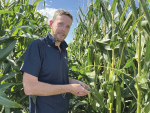
Four years since it was first detected in New Zealand, researchers and growers now know much more about management of maize pest fall armyworm (FAW).
Walking around the Fieldays this year, expected most of the conversations to be about machinery purchases and farm infrastructure upgrades. Instead, one topic seemed to keep cropping up more frequently with farmers – the price of PKE.
A warning to dairy farmers not to expect the same good conditions that they experienced last season, has been issued by a leading farm consultant.
The transition period (typically defined as the three weeks prior to and the three weeks immediately after calving) sets the biological and productive trajectory for the entire lactation by determining how well the cow adapts from pregnancy to peak milk production.


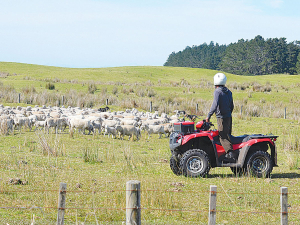
Farmers across parts of Southland and South Otago are continuing to deal with difficult conditions after a prolonged run of wet weather, with pressure building around feed supply, stock management, pasture damage, farm infrastructure and everyday workloads.

Federated Farmers says it welcomes Labour's commitment to reviewing the Sharemilking Agreements Act, calling on other major parties to do the same.
For Canterbury dairy farmers Sian Meijer and Rick Wobben, wearable technology has become one of their most valuable on-farm tools - helping manage 1850 cows across an expansive, high-performing dairy operation while improving efficiency, mating outcomes and day-to-day decision making.
Fonterra has unveiled its annual results for the 2026 financial year, posting $27 billion in revenue and close to $20 billion returned to New Zealand farmer owners and unit holders.
The first major update to the Dairy Cattle Code of Welfare in more than a decade has been released, marking what DairyNZ describes as an important step in ensuring animal welfare standards continue to evolve alongside scientific evidence and on-farm realities.
Ravensdown shareholders have elected Jane Montgomery and Kate Acland to the Ravensdown Board for three-year terms, following a closely contested director election.