HortNZ helps growers rebuild, recover
Horticulture New Zealand (HortNZ) chief executive Nadine Tunley says the industry-good body’s support for growers has proven to be multifaceted.
 increase font size
 Barbara Kuriger says the agriculture sector will never be the sunset industry predicted in the 1980s.
OPINION: New Zealand is a trading station. We are respected by the world and the best at what we do.
Despite a pandemic, disruption to global supply chains, rapidly rising inflation, Russia's invasion of Ukraine and a lack of RSE workers, our food and fibre exports have outperformed expectations. In fact, by June 30 they will have brought in $52.2 billion in revenue.
I recently returned from a Parliamentary trip to Europe. Zoom is a wonderful invention, but nothing can beat sitting at a table face-to-face with farming representatives to discover areas of collaboration and where we differ.
With the Russian/Ukrainian situation, food and energy security were to the fore, given Ukraine is Europe's second-largest supplier of corn and wheat to the European Union, as well as countries in Asia and Africa. Growers and their lands will take a long time to recover from the devastating assault they are being subjected to.
Soil structures were the main topic of discussion in Ireland.
While New Zealand agriculture is at the front of the global pack according to 2021's Net Zero Readiness Index, to stay there we must look to science to help us reduce methane and further develop the carbon sequestration of our soils.
We must also understand more accurately the sequestration of indigenous planting and reduce food waste which adds to emissions.
He Waka Eke Noa is now in the hands of the Government and the Climate Commission.
This is the food and fibre industry's chance to take control of its destiny in the climate space rather than become part of the ETS. National will be engaging with interest in the process throughout the next six months.
But any transitions we make from this must be fair and workable. Because there are overseas examples where doing it by decree has gone horribly wrong.
None more so than in Sri Lanka, where the government ruling that all farmers (tea, rubber, coconut, rice etc) go organic was a disaster, causing an economic and humanitarian crisis.
Regenerative practices are coming to the fore in most countries, but there is still some confusion about what this means. It's about understanding how the biology of our soils can be restored and the methods needed to achieve this.
Despite the challenges of the past few years, our farmers and growers have shown resilience and adaptability. For example, they are hiring students in place of the RSE workers in the horticulture industry, selling frozen rather than chilled meat in response to shipping delays, and successfully implementing cross-industry freight sharing operations.
It hasn't all been rosy. 2022's export revenue could have been higher if RSE workers had been allowed into the country in time for areas like Hawke's Bay.
Thousands of apples were left to rot on trees, with industry experts estimating more than $100 million down in revenue and three million fewer cartons sent overseas.
We know more challenges are on their way, but with this year's record export revenue and a predicted rise to $56.8 billion by 2026, there is much hope for the future.
Our agriculture sector will never be the sunset industry predicted in the 1980s because our food and fibre producers do such a great job.
And every time we eat, we should thank them for it.
Barbara Kuriger is National's agriculture spokesperson and Taranaki/King Country MP.
Horticulture New Zealand (HortNZ) chief executive Nadine Tunley says the industry-good body’s support for growers has proven to be multifaceted.

Agriculture Minister Damien O’Connor says the Government is not to blame for on-farm pressures.
New Zealand has signed up to an agreement designed to improve supply chains in the Indo Pacific region.
After two years of Covid chaos, many growers and wineries will have entered 2022 hoping for a better, more ‘normal’ 12 months ahead.
OPINION: The consultation period for the Government’s emissions pricing plan for agriculture is closing as I write this.
New Zealand dairy farmers are set to be the first in the world to receive access to a new digital physical milk pricing tool that enables them to fix the price for their physical milk.
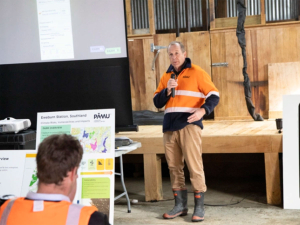
State farmer Pāmu is opening its farm gates this summer in an effort to give the rural sector the opportunity to see how large-scale, multi-system farming is delivering productivity and profitability across New Zealand.
A five-year study has found that the cost of reducing emissions without technology may be significant and unsustainable for Northland dairy farmers.
DairyNZ says Waikato farmers need certainty on Plan Change 1, but they say that certainty must be matched with practical, workable rules and a clear transition that doesn't get ahead of the new resource management system currently under review.
While the Government has moved quickly to make commercial hauliers' lot easier during the current fuel crisis, they appear to be stuck in the creep box when it comes to the agricultural industry.
Waikato farmers have been told that the Government’s new planning system legislation and the region’s Plan Change 1 (PC1) “won’t mesh together very well”.