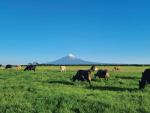
Southerly Winds Hit Taranaki Dairy Pasture Growth
A spate of southerly winds bringing cold temperatures has presented challenges for Taranaki dairy farmers.
 increase font size

Taranaki ‘people power’ is modelling how all Kiwis should get out there and do stuff, says the regional council.
Seventeen Taranaki Environmental Award 2019 winners were applauded this month by TRC’s chair David MacLeod.
They included a bushman helping re-home kiwi; students using drones to monitor stream health, habitat and predators; and farmers helping plant and fence 13,000km of stream bank to support water health.
Said MacLeod, “I am in awe of the fantastic work carried out by our environmental award winners” -- individuals, industry, business, and community organisations.
“They are helping make large-scale improvements to Taranaki’s freshwater health and other ecosystems, contributing to the region’s best freshwater ecological health in 24 years.”
An expert in ecological restoration, professor Bruce Clarkson, Waikato University, says Taranaki’s “people power” shows the rest of the country how to restore ecosystem health at landscape scale.
Said Clarkson, “Taranaki is on a trajectory which puts it at the forefront of a more sympathetic and intergenerational approach to land and water management.
The Taranaki model has three steps: 1. identify a shared community goal i.e. improving freshwater ecosystems and biodiversity; 2. Support individuals in voluntary work and financial giving enabling work to progress e.g. providing free plans, plants at cost, project management and scientific evidence; 3. Bring on board community groups, council, industry, influencers, etc to help meet targets.
The region’s projects included riparian planting; killing possums, rats and stoats (led by TRC and Wild for Taranaki); and Taranaki Mounga Project (an ecological restoration project on Mt Taranaki).
Clarkson says Taranaki’s shows how large-scale improvements can be made to freshwater health, wetlands, coastal environments, native plants and wildlife, with restorative work suited to each region’s unique environmental blue-print.
The movement began at least 20 years ago and had gained momentum, restoring the health of landscapes and ecosystems, he said.
“A good number of the sites I documented at the beginning of my career (40 years ago) are now in better condition than previously and many of our native birds have been returned to areas they have been absent from for decades.
“The past 20 years have seen a significant improvement in the protection and enhancement of indigenous ecosystems in Taranaki, partly through changes in law and policy, and partly through the increasing endeavours of farmers and the community in general,” Clarkson said.
Rivers, streams healthier
Taranaki region has again recorded no rivers or streams deteriorating in ecological health this year; 47 % were improving and 53% showed no obvious trend.
Organic contamination, such as nutrient concentrations, is largely stable: 81% with no obvious trend, 16 % deteriorating, and 3% improving.
TRC chair David MacLeod says the council and others, including NIWA scientists, have found that ecological health is improving even where nitrogen levels are increasing.
“The relationship between nutrient levels and stream health is not as simplistic and straightforward as often suggested, but work is underway to achieve more improvements and fewer declines for organic contamination.”
Taranaki’s riparian planting has seen 5.6 million natives planted along streambanks on private and public land, and 13,756km (87% of ringplain waters) are fenced and regionally-significant wetlands are protected.
A spate of southerly winds bringing cold temperatures has presented challenges for Taranaki dairy farmers.
There's been widespread support from the primary sector for the Government's announcement on changes to freshwater farm plans that come under the Natural Environment Bill, which is now set to replace the existing RMA.
With forecasters advising El Niño conditions will develop through winter and strengthen into spring and summer, Ballance Agri-Nutrients is encouraging farmers and growers to think ahead about nutrient planning and be prepared to work around challenging weather conditions.
Halter has announced the six winners of its 2026 One Year Free competition, marking the biggest year yet for the annual award and the first time the company has expanded the field beyond its usual line-up.


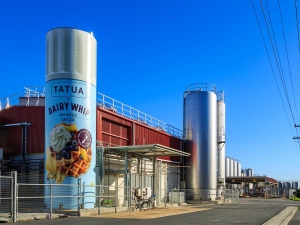
Waikato milk processor Tatua has again declared a record milk payout to farmer shareholders, leaving other processors in the dust.

A Labour-led Government won’t be bringing back the controversial freshwater rules of 2020.
National’s much-touted free trade deal with India featured in the Rural Issues Debate at Mystery Creek, Hamilton on Wednesday night.
New Zealand's 2026-27 freshwater fishing season has opened, with anglers encouraged to head to rivers and lakes over the coming days as conditions look favourable across much of the country.
Central Otago District Council (CODC) has voted against a plan to spread treated sewage sludge from Cromwell and Alexandra on farmland near Lauder, a decision Federated Farmers says reflects strong opposition from rural residents.
Pāmu has released its FY26 Integrated Annual Report, reporting a Net Operating Profit of $113 million, more than double the $49 million recorded in FY25.