Otago Regional Council to launch winter flyovers
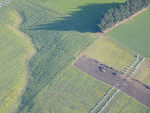
Otago Regional Council is set to begin its annual winter farm flyovers in the next three weeks.
 increase font size
 National Animal Identification and Tracing, originally thought to be a hindrance, has turned out to be a beneficial planning tool.
Think again about the benefits to be gained from farm environmental planning, says consultant Charlotte Glass.
Glass, who this week will lead Ravensdown’s ‘getting started with farm environmental planning’ workshop at the South Island Dairy Event (SIDE), says many regional councils have chosen to use farm environmental plans (FEPs) to ensure farmers meet environmental obligations.
“FEPs are increasingly becoming mandatory conditions for resource consent for particular land uses or practices,” Glass says.
“But if you take time, plan ahead and understand the FEP process, you will see opportunities to optimise your business. Look at it as a successful way to manage environmental risk and future-proof your farm. You can add real value now and in future.”
Glass comments that, for example, GST and National Animal Identification and Tracing, originally thought to be a hindrance, have turned out to be beneficial planning tools.
“When GST returns were first required, it seemed like there would be no benefit, but in fact it helped farmers focus on budget and variance reporting and for many, provided the necessary prompt to focus more regularly on the financial side of the business.”
The SIDE takes place at Lincoln University from June 22 to 24. Ravensdown’s workshop, presented by Glass and Ravensdown farm environmental consultant Anna McLachlan, will walk farmers through the nutrient management and irrigation sections of DairyNZ’s Sustainable Milk Plan (SMP).
The SMP, now being developed, is designed to be a nationwide standard template that meets the requirements of regional councils and milk companies. It is the same as a FEP.
The FEP process is new territory for the industry and only a few professionals have the knowledge and training required to produce plans. Regional councils are also at different stages in deciding how to monitor environmental obligations. “It’s a complex picture, so it will take time to develop and refine,” Glass says.
Otago Regional Council is set to begin its annual winter farm flyovers in the next three weeks.
Annual farmer gathering, the South Island Dairy Event (SIDE), is set to make history as it heads to Timaru for the first time.
Registrations for South Island Dairy Event (SIDE) 2024 are now open.
Despite some earlier confusion around the exact timing, the new Government is moving to reform the way local bodies implement Significant Natural Areas (SNAs) rules on farmland.
The South Island Dairy Event (SIDE) is returning to Lincoln University next year.
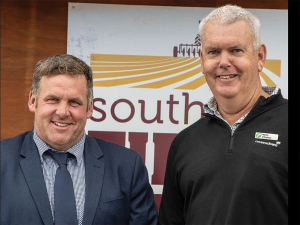
Matt McRae, a farmer from Mokoreta in Southland who runs a sheep, beef and dairy support business alongside a sheep stud, has been elected to the Beef +Lamb NZ Board as a farmer director.
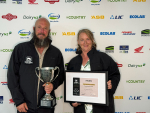
Ravensdown's next evolution in smart farming technology, HawkEye Pro, was awarded the Technology Section Award at the Southern Field Days Farm Innovation Awards in February 2026.
While mariners may recognise a “dog watch” as a two-hour shift on a ship, the Good Dog Work Watch is quite a different concept and the clever creation of Southland siblings Grace (9) and Archer Brown (7), both pupils at Riverton Primary School.
Philip and Lyneyre Hooper of the Hoopman Family Trust have tonight been named the Taranaki Regional Supreme Winners at the Ballance Farm Environment Awards.
We are not a bunch of sky cowboys. That was one of the key messages from the chairperson of the NZ Agricultural Aviation Association (NZAAA) Kent Weir, speaking at an education day at Feilding aerodrome for 25 policymakers and regulators from central and local government and other rural professionals.
New Zealand's dairy and beef industries say they welcome the announcement that the Government will invest $10.49 million in the Dairy Beef Opportunities (DBO) programme.