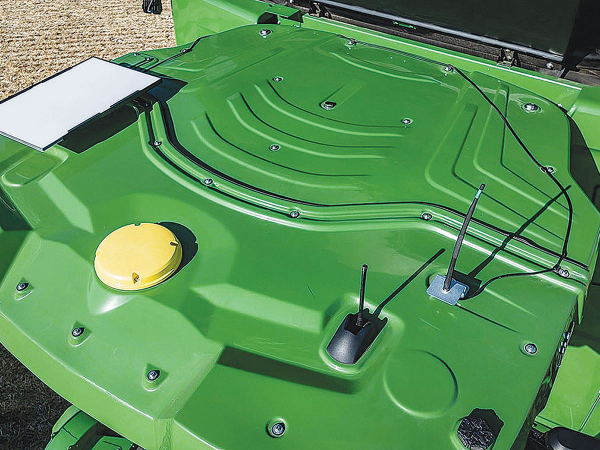
John Deere has started the New Year with the release of JDLink Boost, using a satellite connectivity solution to ensure customers continue seamless work in fields with little to no cellular coverage.
The new JDLink Boost option supports the partnership, announced a year ago, between John Deere and Starlink by SpaceX network, providing farmers who face rural connectivity challenges with the opportunity to fully leverage precision agriculture technologies.
JD Link Boost will especially benefit farmers when they are operating in fields where cellular coverage is limited or unreliable. A secure and faster connection in the field provides farmers real-time access to their machine and agronomic data. Improved connectivity allows for timely decision-making regarding irrigation, fertilisation, pest control and harvesting.
Precision ag technologies that benefit from improved connectivity include:
- In-Field Data Sharing in real time can lead to more efficient application processes and reduced waste. AutoPath automates the creation of paths based on field boundaries to reduce setup time for more efficient field work, while remote mionitoring alerts help to identify inefficiencies as they occur to help ensure equipment is running at optimal levels.
- Faster and more reliable connectivity helps farmers and dealers more quickly diagnose machine issues, helping reduce downtime and ultimately boosting operational efficiency.
“With real-time access to data on machine usage and performance, John Deere can provide predictive maintenance recommendations, which helps farmers schedule maintenance activities at convenient times, reducing unexpected breakdowns and ensuring equipment is always operational,” said Stien, JD go-to manager for digital technologies.
“JDLink Boost enables secure transmission to Connected Support, allowing technicians to remotely diagnose issues with equipment, speeding up repairs and reducing the need for on-site visits, saving farmers time and money.”
JDLink Boost adds the next layer to John Deere’s precision technology strategy to enhance connectivity on the farm to increase productivity and efficiency for farmers.
Visit deere.com or your local John Deere dealer for information.