Fieldmaster joins Ag Attachments
Following its sale in December 2020, Pukekohe-based Fieldmaster’s products have been added to the already extensive range of brands offered by Hamilton-based Ag Attachments.
 increase font size
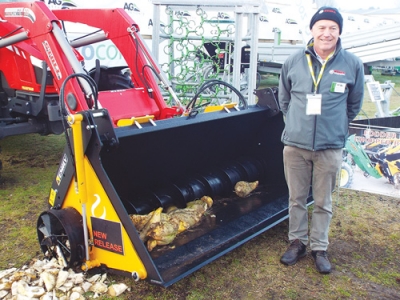 Martin Gray, Ag Attachments, with the new auger bucket.
Given the popularity of fodder beet in NZ, particularly in the South Island, it was no surprise to see auger/chopper buckets on Fieldays exhibitor sites.
One such machine from French specialist Emily was on the Ag Attachments site.
These are designed for front mounting on loaders or telescopic handlers, and may be mounted on the three point linkage of larger tractors.
The auger bucket is based on the standard Vega bucket which uses a uniform diameter auger without a central support, said to be best suited to maize, corn and concentrates.
The addition of a chopper rotor and frame to the end of the body structure allows chopping of beet, potatoes, squash and even kiwifruit; a choice of three alternative chopping rotors for different particle sizes depends on feeding regime or type of livestock.
The standard machine is 2.2m wide and holds 1.3 cu.m; other sizes up to 2.6m wide and 2.3 cu.m capacity are available on indent.
Following its sale in December 2020, Pukekohe-based Fieldmaster’s products have been added to the already extensive range of brands offered by Hamilton-based Ag Attachments.
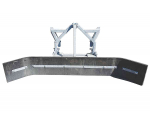
Many familiar, straightforward items of kit do a good job day in, day out. For example, the Zocon modular rubber scraper from importer Ag-Attachments.
Making their debut at Northland Field Days was a new range of trailers from Dutch manufacturer Zocon.
In the early days of self-propelled forage harvesters, power seemed to be 350-400hp and they chopped a lot of grass or maize.



Now in its fourth year, the 2026 Fencing Industry Awards, formed part of the proceedings of the FCANZ Conference, held in Nelson during August.
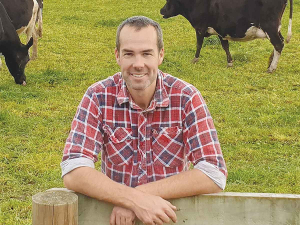
DairyNZ deputy chair Cameron Henderson has been re-appointed unopposed for another term.
OPINION: The stats speak for themselves.
Farms across the upper North Island are trialling different pasture mixes as part of a research programme that aims to build greater resilience into farming systems.
Election years are always a concerning time for farmers, according to DairyNZ chair Tracy Brown.
The Ballance Farm Environment Awards are coming to the West Coast of the South Island.