Farmland security
OPINION: Paranoia about foreigners is at an all-time high in the US and attention is now turning to foreign-owned farmland.
 increase font size
 Why isn't New Zealand following the US trend of increasing maize plantings?
New Zealand's recommended maize planting rates have flatlined, while in the US, these continue to increase on an annual basis.
So, why isn’t New Zealand following the US trend?
For the last 15 years, recommended planting rates for medium to long maturity maize silage hybrids in New Zealand have remained static at between 105,000 and 110,000 a hectare. Maize grain planting rates have lifted marginally to just above 95,000/ ha. In comparison, US Department of Agriculture data shows that maize planting rates have increased on average by 900 seeds/ha a year since the 1960s, doubling from 40,000 to 80,000/ha. Over the same timeframe, maize grain yield has continued to increase on average at a rate of about 125 kg/ha/year. Many in the US believe that this increasing trend in plant population will continue well into the future.
The US yield increase is attributed to genetic gain, agronomic improvements and increasing plant population. Maize grain is a massive crop in the US, with 32 to 36 million hectare planted each year.
Foundation for Arable Research senior maize researcher David Densley told growers at a series of winter maize workshops that maize silage and grain seeding rates have more or less remained static since the inception of maize production in New Zealand in the early 1990s.
“Some research and commercial observations suggest that under current management practices and climatic conditions, seeding rates may be about right.”
David Densley asked those attending the workshops as to why they believed recommended seeding rates have more or less remained flat despite increases overseas.
Some suggested that in the US they were starting from much lower densities and are only catching up to New Zealand seeding rates, while some thought farmers are possibly deterred by the cost of the additional seed required. Higher planting rates mean a higher yield is required just to break even on costs.
Factors in New Zealand that support higher populations include a maritime climate, which results in lower overnight temperatures than those experienced in the US. New Zealand’s soils also contain much higher organic matter.
OPINION: Paranoia about foreigners is at an all-time high in the US and attention is now turning to foreign-owned farmland.
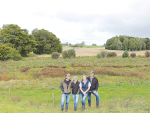
Te Awamutu dairy farmers Doug, Penny, Josh and Bayley Storey have planted more than 25,000 native trees on the family farm, adding to a generations-old native forest.
A lethal form of avian influenza has been confirmed in US dairy cattle in Texas and Kansas, the US Department of Agriculture says.
The Ministry for Primary Industries (MPI) have released a handbook offering guidance on how to plant strategically to feed bees.
German farm machinery manufacturer Horsch says it is at an advanced stage with developing its aptly named Robo autonomous planter and will release more details soon.


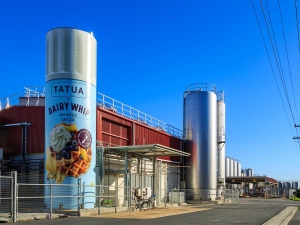
Waikato milk processor Tatua has again declared a record milk payout to farmer shareholders, leaving other processors in the dust.

A Labour-led Government won’t be bringing back the controversial freshwater rules of 2020.
National’s much-touted free trade deal with India featured in the Rural Issues Debate at Mystery Creek, Hamilton on Wednesday night.
New Zealand's 2026-27 freshwater fishing season has opened, with anglers encouraged to head to rivers and lakes over the coming days as conditions look favourable across much of the country.
Central Otago District Council (CODC) has voted against a plan to spread treated sewage sludge from Cromwell and Alexandra on farmland near Lauder, a decision Federated Farmers says reflects strong opposition from rural residents.
Pāmu has released its FY26 Integrated Annual Report, reporting a Net Operating Profit of $113 million, more than double the $49 million recorded in FY25.