Removing Grapevines Safely: Disposal Options Compared
I am often asked by industry people, what are the options for removing a grapevine without producing a phytosanitary problem? Can it be done sustainably? What will it cost me?
 increase font size
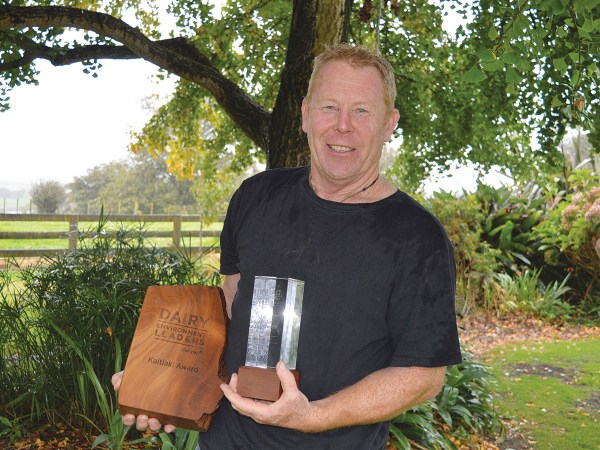 Farmer Stu Muir received the inaugural Kaitiaki Award as part of the Dairy Environment Leaders Forum last month.
Fifth generation farmer Stu Muir believes dairy farming and conservation can go hand in glove.
To prove this, Muir has transformed the 500-cow fifth-generation family farm at Aka Aka, south of Auckland - from degraded waterways full of willows to a mecca for bird and marine life.
Last month Muir received the inaugural Kaitiaki Award during an event at Parliament as part of the Dairy Environment Leaders Forum.
The award recognises his leadership, commitment to kaitiakitanga, and immense contribution to the Dairy Environment Leader network and wider sector.
The journey to nurse the farm back to its current state has been challenging, but Muir says he's done it with the support of neighbouring iwi, environment groups, family and friends.
Today, kereru, tui, kaka and kotuku grace the home farm; bittern and fernbird are increasing at the swamp; the waters of Mangati Stream are home to whitebait, freshwater mussels, crayfish, eels and mullet.
He says that as a youngster he heard stories about the streams when he was whitebaiting and duck shooting with his grandparents.
"They were all keen white baiters and duck shooters and hunters and fishermen and being brought up alongside Māori neighbours and community, you get a strong sense of what it was.
"But you also got a sense that things were going downhill, especially with our whitebait and various species it had come to a state where there was no current left."
The first stage of his plan was unblocking the streams - removing the willows blocking the stream.
The restoration also included retiring 40ha of swamp from farming use and restoring it to a native wetland, creating ponds with grasses, flaxes and native trees. With a grant from the Waikato River Authority - a joint iwi-Crown organisation that supports projects to clean up the river and tributaties - Muir has planted over 90,000 plants around the property.
Pest control is another key feature. Over 2000 pest stations dot the Waikato River delta islands and surrounding farms.
Muir told Dairy News that as possum and rat numbers dropped, birds and marine life returned.
"That's made a major impact in terms of the regeneration of the individual indigenous plants and native plants down there, hitherto they just never got a chance, the seeds would be eaten by rats and if something did actually germinate the possum would come along to eat it, so you really notice now on those islands down the river been doing a massive difference."
With the native trees and plants returning so to have the birds, he says.
"We never had kererū or tui here for years, it was quite a big thing if one would turn up, now they're common as, you know, they've increased the numbers nine to tenfold."
The farm is visited by schools and farmer groups. Over one kilometre of boardwalk, again build with funding support from the Waikato River Authority, makes it easier for people to experience the unique environment surrounding Mangati stream on the farm.
"I thought it was an important way of getting people down here, you know, when you can hear the harakeke rustle in the wind, the sound of all the different manu here, and seeing the fish coming up through the current... that's tangible, and when it's tangible, it sticks with people and resonated with them," says Muir.
The Muir family has a long association with nearby wshanua and the local iwi.
Muir, who speaks Māori, believes his family's close connections with Tainui and local iwi - Ngāti Tiipa and Ngāti Te Ata - have helped the journey.
"We've been very close throughout all of those generations, and really quite proud of that relationship," he says.
Think About Future Generations
Stu Muir's advice to farmers is that sustainability isn't an impossible thing to do.
He adds that farmers must "think intergenerationally".
"It's about the doing the little, marginal things giving your kids some place to go and catch eels and build huts."
Doing nothing is not an opton and don't be overwhelmed by the magnitute of what's coming to farmers, he says.
Farms have different challenges and solutions. Talking to one another is important.
"Talk to your neighbours, go and have a cup of tea with your Māori neighbours, or the people at the rugby club.
"There's a lot of knowledge here and if we work together, we can come up with some really good solutions."
I am often asked by industry people, what are the options for removing a grapevine without producing a phytosanitary problem? Can it be done sustainably? What will it cost me?
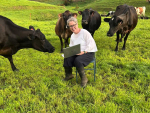
Today, 15 October, is the International Day of Rural Women, which recognises rural women’s contribution to farming, communities and the environment.
Pāmu has released its FY26 Integrated Annual Report, reporting a Net Operating Profit of $113 million, more than double the $49 million recorded in FY25.
The first major update to the Dairy Cattle Code of Welfare in more than a decade has been released, marking what DairyNZ describes as an important step in ensuring animal welfare standards continue to evolve alongside scientific evidence and on-farm realities.
Have a plan in place for your cows and staff.


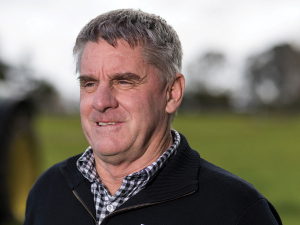
Federated Farmers has welcomed new rural policies released by ACT, saying they align closely with its own election priorities.

Rural Contractors NZ says proposed changes to land transport rules for agricultural vehicles are a welcome response by the Government to out of date regulations which have seen members hit with huge fines.
Alliance is calling for final applications for its 2027 Graduate Programme, with applications closing on Sunday 25 October.
Decades piloting planes has ensured vet and farmer David Hayes is focused on safety. So, after a serious accident while welding on farm, he is sharing his experience so others can learn from it.
Canterbury milk processor, Synlait Milk has confirmed Leon Fung as its chief executive officer.
OPINION: Making it easier to collect rainwater and use it to grow crops and livestock is a no brainer.