Milk Powder Prices Prop Up Farmgate Milk Price
Milk powder prices are keeping farmgate prices up, helping processors offset the dip in milk fat prices.
 increase font size
 ANZ agriculture economist Susan Kilsby.
Strong demand for milkfats - anhydrous milkfat (AMF) and butter - is helping boost the farmgate milk price, according to ANZ agriculture economist Susan Kilsby.
She says the current strength of milk fat products is boosting the milk price by 80c/kgMS. However, the hey days of strong milk fat prices could be coming to an end.
Writing in the ANZ Agri Focus June issue, Kilsby notes that AMF is trading at a record price. At the last Global Dairy Trade event, AMF was priced at US$7317/metric tonne, compared to US$4579/MT a year ago. Butter prices rose to US$7350/MT in the last GDT auction, compared to US$4842/MT in July last year.
Kilsby says futures prices indicate the strength in AMF and butter prices may be relatively short-lived, with the forward curve showing prices falling away relatively quickly.
“That said, even if prices drop somewhat, they will still be relatively strong,” she says.
“The contribution of butter and AMF to NZ’s farmgate milk price is not nearly as significant as that of milk powder. That said, the current strength of milk fat products is worth an additional 80c/kgMS compared to a year ago.”
AMF is basically pure fat that is sold in 200 litre and 1,000 litre containers. It is a liquid when heated but solidifies at lower temperatures, making it a versatile product for the manufacture of goods such as ice cream, pastries, chocolate, processed cheese and recombined dairy products.
Kilsby says New Zealand is the largest exporter of AMF. Many dairy producing nations have strong domestic demand for dairy fats so tend to export non-fat products such as skim milk powder. Dairy factories set up to produce butter and cheese don’t manufacture AMF.
New Zealand supplies 85% of the AMF exported from the five largest dairy exporting regions, the other four being the EU, US, Australia and Argentina. New Zealand supplies about 50% of globally traded butter and 75% of the WMP.
Southeast Asia took just over 25% of New Zealand’s AMF exports in the past year, according to Kilsby. The next-largest markets are China 20%, North Africa 20% and the Middle East 15%. These four regions are also the largest markets for butter. China is still the largest market overall.
Kilsby says both the EU and US are big producers and consumers of butter.
“Sometimes tariffs mean prices in these markets differ considerably from product traded globally, limiting the flow of imports. At present, however, the price of butter is similar in the global market to the EU and US domestic markets.”
Milk powder prices are keeping farmgate prices up, helping processors offset the dip in milk fat prices.

Case IH has unveiled its redesigned next generation Puma Series tractors, said to offer improvements in connectivity, operator comfort, fuel efficiency and drivability.
Cameron Reed lives between two worlds.
A milk glut around the world shows no sign of easing, putting downward pressure on farmgate milk prices for the next few months.
The new dairy season is kicking off with plenty of risks to the forecast farmgate price, both upside and downside, says ANZ agricultural economist Matt Dilly.



Entries opened on Monday, 5 October 2026 for the 2027 New Zealand Dairy Industry Awards (NZDIA), which organisers describe as the nation's biggest celebration of excellence in the dairy sector.
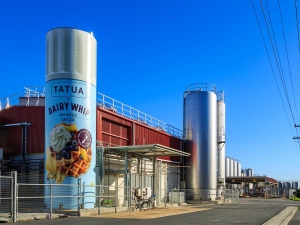
Waikato milk processor Tatua has again declared a record milk payout to farmer shareholders, leaving other processors in the dust.
A Labour-led Government won’t be bringing back the controversial freshwater rules of 2020.
National’s much-touted free trade deal with India featured in the Rural Issues Debate at Mystery Creek, Hamilton on Wednesday night.
New Zealand's 2026-27 freshwater fishing season has opened, with anglers encouraged to head to rivers and lakes over the coming days as conditions look favourable across much of the country.
Central Otago District Council (CODC) has voted against a plan to spread treated sewage sludge from Cromwell and Alexandra on farmland near Lauder, a decision Federated Farmers says reflects strong opposition from rural residents.