Why Now Is the Time to Plan Farm Succession, Findex Says
OPINION: Succession and long-term planning are perennial topics because it is perpetually sidelined on busy farms.
 increase font size

THE GLOBAL dairy industry is seeing a reversal of fortune; after a lacklustre 2012, this year is shaping up to be an exceptional year, according to the International Dairy Federation.
In its World Dairy Situation report released last week, the IDF says weather is playing a crucial role and 2013 seems to be a "reverse portrait of 2012, with a sluggish start and a dynamic finish."
"First in 2012, adverse weather conditions were concentrated mostly in the second half-year, while conditions were rather favourable during the first six months," it says.
"Unlike 2012, the first half of 2013 was not a bonanza time."
Many countries in Europe were still recovering from adverse weather conditions and this affected the forage quality given to cows. The animals were also released to pasture a month later than usual in most European countries.
The report says a severe drought in New Zealand earlier this year resulted in "massive culling and a severe milk production decline" compared to the first half of last year.
While the report stops short of predicting the weather for the remainder of this year, it says the July to September period appears to be more favourable than 2012.
"No severe drought has occurred in the US and Russia; and weather patterns seems to be returning to normal in Europe, South America and New Zealand."
Cow's milk still represents 83% of the total world milk production. The 2012 milk yield grew 2.1% compared to 2.7% the year before. India, the world's biggest milk producer, and Pakistan helped Asia lead the way with a 4.4% increase in production. Oceania was a mixed bag; New Zealand's production rising 8.5% and Australia's declining 3%.
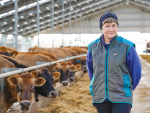
The report was prepared by IDF's standing committee on dairy policies and economics, chaired by Sarah Paterson (pictured), Fonterra. In their foreword, Paterson and IDF director general Nico van Belzen say market volatility remains a constant for the global dairy industry.
"Weather remains a key driver of variability in milk supply," the say.
The long term prospects for dairy products are encouraging and driven by demand out of Asia, Middle East and Latin America. But they warn that while dairy commodity prices have recovered, farmers are under pressure in many regions due to rising input costs.
*Sudesh Kissun attended the 2013 World Dairy Summit in Yokohama, Japan with the assistance of the Asia New Zealand Foundation.
OPINION: Succession and long-term planning are perennial topics because it is perpetually sidelined on busy farms.
Farms across the upper North Island are trialling different pasture mixes as part of a research programme that aims to build greater resilience into farming systems.
Election years are always a concerning time for farmers, according to DairyNZ chair Tracy Brown.
Matt Collier, Probiotic Revolution, says calves will drink a lot of milk once-a-day with their probiotic Calf Xtreme.


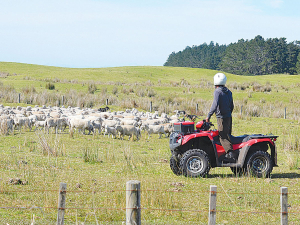
Farmers across parts of Southland and South Otago are continuing to deal with difficult conditions after a prolonged run of wet weather, with pressure building around feed supply, stock management, pasture damage, farm infrastructure and everyday workloads.
Federated Farmers says it welcomes Labour's commitment to reviewing the Sharemilking Agreements Act, calling on other major parties to do the same.
For Canterbury dairy farmers Sian Meijer and Rick Wobben, wearable technology has become one of their most valuable on-farm tools - helping manage 1850 cows across an expansive, high-performing dairy operation while improving efficiency, mating outcomes and day-to-day decision making.
Fonterra has unveiled its annual results for the 2026 financial year, posting $27 billion in revenue and close to $20 billion returned to New Zealand farmer owners and unit holders.
The first major update to the Dairy Cattle Code of Welfare in more than a decade has been released, marking what DairyNZ describes as an important step in ensuring animal welfare standards continue to evolve alongside scientific evidence and on-farm realities.
Ravensdown shareholders have elected Jane Montgomery and Kate Acland to the Ravensdown Board for three-year terms, following a closely contested director election.