Synlait CEO Resignation Highlights Deeper Challenges Facing Dairy Processor
A revolving door of chief executives at milk processor Synlait is a warning sign, says Lincon University senior lecturer in agribusiness Nic Lees.
 increase font size
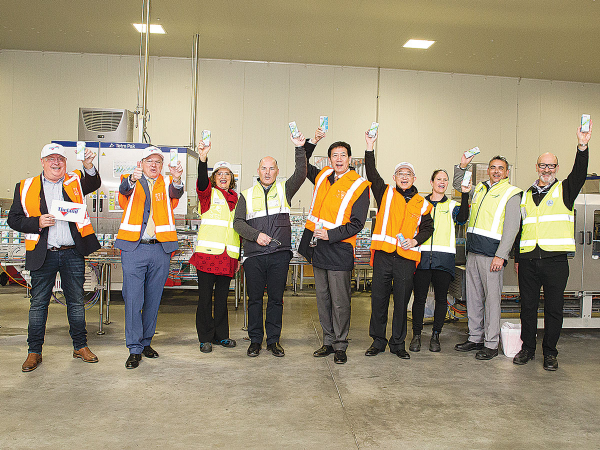 Miraka chief executive Richard Wyeth (fourth from left) celebrates the milestone with guests.
Taupo-based Māori dairy company, Miraka, celebrated a major milestone last week – the production of the billionth pack of UHT milk.
The so-called UHT bricks are in fact 250ml Tetra Packs, which Miraka produces exclusively for the Chinese market.
Chief executive Richard Wyeth says UHT production for China began on August 20, 2014 and it has taken just under six years to produce the billionth pack.
“We had a fantastic celebration to mark the occasion with special guests including the Mayor of Taupo, a representative of Terry Lee, and the Chinese Consul from Auckland coming along for the occasion,” he says.
Wyeth says this is an outstanding result for the production team at Miraka. He says, according to Tetra Pack, the Miraka production line is the top performer in Australasia. UHT is an important product for Miraka accounting for 20% of their total milk supply.
Miraka has two production lines producing UHT milk and Wyeth says they plan to put in a third line to produce concentrated milk.
A revolving door of chief executives at milk processor Synlait is a warning sign, says Lincon University senior lecturer in agribusiness Nic Lees.

Troubled milk processor Synlait has lost its third chief executive in five years.
Canterbury milk processor Synlait is blaming what it calls "a perfect storm" of setbacks for a big loss in its half year result for the six months ended January 31, 2026.
Farmers supplying milk to Taupo-based processor Miraka are getting a 2024-25 season base milk price of $10.16/kgMS.
Open Country Dairy has finalised a deal to acquire 100% of Miraka.


Safer Farms is urging farmers to make sure everyone working on farm has safe, suitable footwear for the job.

The Government is backing work on a community-led water storage scheme that could irrigate up to 11,000 more hectares of the Poverty Bay flats, Agriculture Minister Todd McClay says.
Agri-tech company Herd-i has become a new all-region sponsor of the New Zealand Dairy Industry Awards (NZDIA), the largest nationwide celebration of excellence in the dairy sector.
Four candidates have been confirmed for two director positions on Fonterra’s board.
Returning to the family dairy farm after playing 20 years of professional rugby around the world is no easy task.
After delivering another record farmgate milk price to 100 supplying farms, independent milk processor Tatua is entering thee new financial year with a positive outlook.