Turning data into dollars
If growing more feed at home adds up to $428 profit per tonne of dry matter to your bottom line, wouldn’t it be good to have a ryegrass that gets you there quicker?
 increase font size

Metabolisable energy (ME) is still the best feed quality descriptor for New Zealand dairy farmers, says DairyNZ's principal scientist, Dr John Roche.
"When I hear people telling farmers that 'all energy is not equal' and they should 'focus on non-fibre carbohydrate instead of ME' when feeding their cows, I get quite frustrated," he says.
"It shows me that a little knowledge out of context can be a dangerous thing."
Dr Roche says the main reason the recommendation to focus on non-fibre carbohydrate is wrong for New Zealand farmers is that pasture-based cows are rarely short of protein.
"Management to produce more microbial protein, without providing additional energy when cows are not deficient in protein, will not increase milksolids production," he says.
"Fibre can produce the same amount of microbial protein as non-fibre carbohydrate, provided it is digestible in the rumen. For example, a cow eating the same amount of energy from pasture or pasture plus a high (60% DM) or low (30% DM) non-fibre carbohydrate supplement, produces the same amount of microbial protein. That cow also has the same amount of metabolisable protein reaching the small intestine and as a result of the similar metabolisable energy intake and metabolisable protein, produces the same amount of milksolids," says Dr Roche.
"With the current milk price and relative value of milk fat and milk protein, I would advise farmers to focus on the ME content of the feed and the price/MJ of ME."
If growing more feed at home adds up to $428 profit per tonne of dry matter to your bottom line, wouldn’t it be good to have a ryegrass that gets you there quicker?
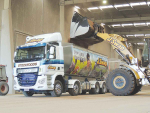
When buying supplementary feeds, farmers need to consider the entire package on offer – service, freight and all the components in a feed mix – not just focus on the price of the cheapest component – palm kernel meal, according to J. Swap Stockfoods sales manager Joe Hardman.
Two high producing Canterbury dairy farmers are moving to blended stockfeed supplements fed in-shed for a number of reasons, not the least of which is to boost protein levels, which they can’t achieve through pasture under the region’s nitrogen limit of 190kg/ha.
OPINION: Few things are more stressful for dairy farmers than running out of feed when cows need it most.
Now is not the time to stop incorporating plantain into dairy pasture systems to reduce nitrogen (N) loss, says Agricom Australasia brand manager Mark Brown.


Pāmu has released its FY26 Integrated Annual Report, reporting a Net Operating Profit of $113 million, more than double the $49 million recorded in FY25.

Meat Industry Association data, released alongside the Red Meat Sector conference in Wellington, shows export value climbing across the US, China, UK and Canada.
Applications are set to open for the 2027 Zanda McDonald Award, a trans-Tasman award recognised for identifying and fast-tracking talented young leaders in agriculture and agribusiness.
The Royal New Zealand College of General Practitioners (the College) and Hauora Taiwhenua Rural Health Network are calling for investment in a proposed new training pathway for rural GPs, warning that many rural practices are struggling to recruit while a large share of the existing workforce nears retirement.
Federated Farmers has called on Central Otago District Council (CODC) to drop or vote down a plan to truck sludge from Alexandra and Cromwell to farmland near Lauder, warning it would compound an "outrageous" situation created by a separate council's decision weeks earlier.
Synlait has swung to second-half profit as operations stabilise, but the dairy processor still posted a $75.4m annual loss.