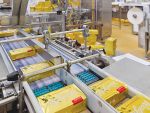
Westgold Butter Ranked Best Supermarket Butter in Consumer NZ Blind Taste Test
Westgold butter has been named New Zealand's tastiest in a blind tasting conducted by Consumer New Zealand.
 increase font size
Does the $9.9 million loan to Westland Milk fall within New Zealand’s World Trade Organisation commitments?
Trade expert Stephen Jacobi says he would be very surprised if the Government hadn’t made sure it does.
“But we need to consider both the letter of the law and the spirit,” he told Dairy News. He knows no details of the loan.
“It would be concerning if this were to undermine New Zealand’s long-standing advocacy for the elimination of trade-distorting subsidies and domestic support,” he says.
These were recently reaffirmed at a meeting of the Cairns Group involving NZ and 18 other countries on November 30.
The low-interest loan will be made from the Provincial Growth Fund.
It has come under attack by Opposition MPs. National’s economic and regional development spokesman Paul Goldsmith says the minister in charge of the Provincial Growth Fund, Shane Jones, couldn’t tell Parliament what terms he had in mind when he undercut commercial lenders to provide debt funding for a new processing plant.
“I wouldn’t blame any business like Westland Milk for accepting a cheap loan from a secure lender.
“But that’s no excuse for sloppy process when it comes to taxpayer money. Jones said the full terms of the loan were ‘yet to be settled’ but that it would be for a longer term than its existing private sector bank lenders would offer.
“That would be of interest to Westland’s rivals, particularly for milk pools in Canterbury, and underlines why such proposals need rigorous scrutiny,” says Goldsmith.
Westland welcomed the investment to help build a $22m plant at Hokitika. The specifically designed facilities for made-to-order segregation of milk types will have wide-ranging benefits for the West Coast region, Westland says.
The plant will allow Westland to separately process (segregate) multiple types of special quality milks into high-value products.
Chief executive Toni Brendish says segregated production of specialty milks is a key component of Westland’s five-year strategy.
“Westland needs to reduce its dependency on bulk dairy commodities with their volatile pricing cycles,” says Brendish.
“We’ll do this by expanding our capacity to produce high-value products, differentiated by the special qualities of the milk used to make them. This will include A2 milk and our new Ten Star Premium Standard milk.
“There is also potential, in later stages of the project, for other segregated products such as grass-fed, pure Jersey, goat or sheep milk, or even plant-based nutrition.”
Brendish says the Provincial Growth Fund investment allows the company to bring forward development of its segregation capacity -- bringing the benefits back to the company, its shareholders and the regional economy far sooner.
The new plant will also allow the co-operative to produce high value segregated product even during the peak milk season.
“Currently, while we can produce some segregated product on the shoulders of the season, at peak our existing plant capacity forces us to process low-value bulk commodities just to get the milk volume through.”
The plant will be operating in time for the 2019-20 season. It will create an additional eight to 10 jobs at Hokitika, but the benefits to the West Coast economy will go far beyond that.
Westgold butter has been named New Zealand's tastiest in a blind tasting conducted by Consumer New Zealand.
Yili's New Zealand businesses have reported record profits following a major organisational and strategic transformation.
Former Fonterra executive Alex Turnbull has been appointed CEO to lead all five Yili Oceania Business Division companies in New Zealand.
OPINION: Westland Milk may have won the contract to supply butter to Costco NZ but Open Country Dairy is having the last laugh when it comes to cashing in on NZ grass-fed butter.
Chinese dairy giant Yili Group says its New Zealand operations are on track for strong revenue growth in 2025 after recording significant year-on-year growth for the first half of the year.


An Auckland gelato shop and an established New Zealand ice cream maker have both been named Supreme Champions at the NZ Ice Cream & Gelato Awards 2026.

As the cost-of-living crisis continues to put pressure on household grocery budgets, new figures show pork remains one of the most affordable fresh meat options for New Zealand families.
OPINION: In politics, credibility is and should be big. It must surely rank higher than charisma, which is quite trite and superficial. Yet, voters nowadays are often wooed and influenced by how someone looks or talks at a superficial level. TV plays a huge role in this.
Farmers can spend less time on paperwork, thanks to a new data sharing agreement between DairyNZ’s DairyBase and LIC’s MINDA software.
Kaikōura families affected by July's severe storm have found a practical solution to a problem that's kept some children away from regular schooling for weeks: a washed-out section of Inland Kaikōura Road, which has stopped the local school bus from running its usual route.
Rural New Zealand is welcoming the Government’s recent package of rural healthcare initiatives.