Ah Tatua, You've Done It Again!
Waikato milk processor Tatua has again declared a record milk payout to farmer shareholders, leaving other processors in the dust.
 increase font size
 Fonterra chief financial officer Marc Rivers.
Fonterra is selling its troubled China Farms business.
The farms, carrying 31,000 milking cows housed in a feedlot system, are now worth $500 million.
Over the past 10 years the co-op has invested over $1 billion in the farms with very little returns.
In its interim results announced last week, the co-op wrote down another $61m from the farms’ value. Last year it wrote down $200m.
Fonterra chief financial officer Marc Rivers says “new information” led to the latest writedown.
“Clearly as you go through a sales process, you get new information: this has to be considered as you look at value of assets on your book.
“The writedown reflects that, as we closed out the half year.”
Fonterra is also reviewing its joint China farming venture with Abbotts.
Rivers says it is continuing to look for opportunities to improve the performance of the business: the joint venture suffered a $65 million impairment to align with China Farms’ sale process and ongoing animal management costs.
Fonterra is also selling its joint venture stake in DPA Brazil: the co-op wrote down $31m in DPA’s value.
Waikato milk processor Tatua has again declared a record milk payout to farmer shareholders, leaving other processors in the dust.
Fonterra has unveiled its annual results for the 2026 financial year, posting $27 billion in revenue and close to $20 billion returned to New Zealand farmer owners and unit holders.
Fonterra Co-operative Group has confirmed the independently assessed candidates standing for election to its board in 2026.
Fonterra has revised its Farmgate Milk Price forecast for the 2026/27 season, lifting the midpoint and narrowing the range on the back of improving global dairy commodity prices.
Outgoing Fonterra Co-operative Council chair John Stevenson says that it has been a privilege to represent the co-op's farmer shareholders.


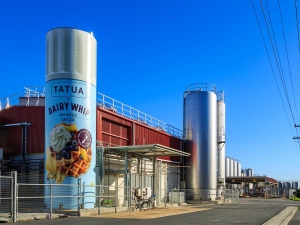
Waikato milk processor Tatua has again declared a record milk payout to farmer shareholders, leaving other processors in the dust.

A Labour-led Government won’t be bringing back the controversial freshwater rules of 2020.
National’s much-touted free trade deal with India featured in the Rural Issues Debate at Mystery Creek, Hamilton on Wednesday night.
New Zealand's 2026-27 freshwater fishing season has opened, with anglers encouraged to head to rivers and lakes over the coming days as conditions look favourable across much of the country.
Central Otago District Council (CODC) has voted against a plan to spread treated sewage sludge from Cromwell and Alexandra on farmland near Lauder, a decision Federated Farmers says reflects strong opposition from rural residents.
Pāmu has released its FY26 Integrated Annual Report, reporting a Net Operating Profit of $113 million, more than double the $49 million recorded in FY25.




