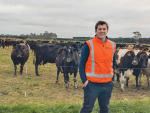
New Dairy Holdings CEO Backs Self-Contained Model
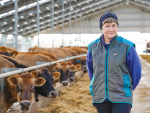
Running a tight and self-contained ship is the key to the success of the country's largest dairy farmer, says Blair Robinson, the new man at the helm of Dairy Holdings.
 increase font size
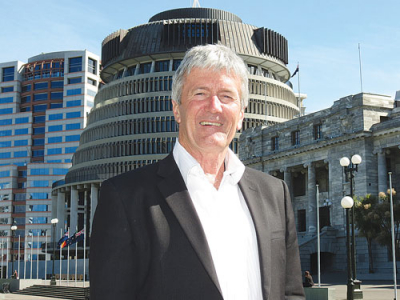 Agriculture and Biosecurity Minister Damien O’Connor.
Farming leaders and the Government met again today to discuss ways to combat Mycoplasma bovis.
Agriculture and Biosecurity Minister Damien O’Connor says the group is committed to make a decision about the next steps in the biosecurity response next week.
O’Connor says everyone understands that farmers need certainty about a future plan.
“On the table are two key options – either completely getting rid of the disease from New Zealand over time (phased eradication) or long term management (how we can all manage the disease, protect farms and slow any spread of it). This decision will be taken jointly by the Government and farming industry representatives,” says O’Connor.
“Today’s meeting was constructive with all participants, including the Prime Minister Jacinda Ardern, updated on the known extent of the disease, the effects it’s having and the costs, both social and economic, of dealing with it.
“Farmer, rural community and animal welfare is at the heart of the difficult decision. Clearly we want to make the best decision for farmers and the country.”
DairyNZ chairman Jim van der Poel says the past 10 months have been challenging for farmers living with a great deal of uncertainty.
“We expect to be able to relieve some of that concern once this difficult decision has been made. Today’s meeting was very helpful with a lot of useful information sharing and constructive discussion.”
Beef+Lamb New Zealand chairman Andrew Morrison says farmers can be assured that the Government and sector groups are working extremely hard on this issue.
“We all see farmer welfare as a key issue and are committed to helping farmers on the ground, no matter what future management option is pursued.”
Federated Farmers President Katie Milne says while Mycoplasma bovis is challenging, the degree of cooperation was positive.
“This disease is challenging for all involved, but if there is one positive it is how farmers, farmer representatives and Government are working together. Whatever option is taken, we need to keep doing that.”
Organisations represented at the meeting were DairyNZ, B+LNZ, Federated Farmers, Rural Women New Zealand, Dairy Companies Association of New Zealand and the Meat Industry Association.
O’Connor says the Government is committed to a resilient primary sector.
“The Prime Minister and I had very informative meetings with farmers in the Waikato and Ashburton yesterday. We can see just how much farmers are hurting in the midst of this unprecedented biosecurity event.
“To date we’ve undertaken constructive actions including: the investment of $100 million to the response, including funding compensation for affected farmers, a national bulk milk testing programme to help determine the geographic spread, and taken steps to upgrade the NAIT animal tracking system which is so vital to managing a disease response like this.”
Running a tight and self-contained ship is the key to the success of the country's largest dairy farmer, says Blair Robinson, the new man at the helm of Dairy Holdings.
OPINION: It's no surprise that "world-class biosecurity" continues to dominate as the top priority for agribusiness leaders, holding the number one spot for the 16th consecutive year in KPMG's latest agribusiness report.
A miserable budget that didn’t deliver much for anyone.
National's decision to ‘dribble’ information about the NZ/India to Labour contributed to the delay in it deciding to supported the FTA.
When it comes to international trade, politicians from all sides of the aisle are united, says Labour's trade spokesman Damien O'Connor.


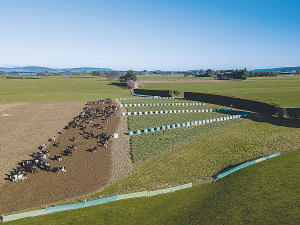
Central Otago District Council (CODC) has voted against a plan to spread treated sewage sludge from Cromwell and Alexandra on farmland near Lauder, a decision Federated Farmers says reflects strong opposition from rural residents.
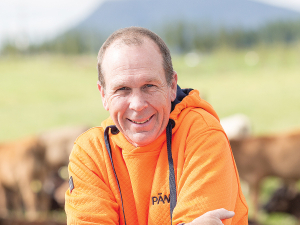
Pāmu has released its FY26 Integrated Annual Report, reporting a Net Operating Profit of $113 million, more than double the $49 million recorded in FY25.
Meat Industry Association data, released alongside the Red Meat Sector conference in Wellington, shows export value climbing across the US, China, UK and Canada.
Applications are set to open for the 2027 Zanda McDonald Award, a trans-Tasman award recognised for identifying and fast-tracking talented young leaders in agriculture and agribusiness.
The Royal New Zealand College of General Practitioners (the College) and Hauora Taiwhenua Rural Health Network are calling for investment in a proposed new training pathway for rural GPs, warning that many rural practices are struggling to recruit while a large share of the existing workforce nears retirement.
Synlait has swung to second-half profit as operations stabilise, but the dairy processor still posted a $75.4m annual loss.