Fonterra Names Four Independently Assessed Director Candidates
Fonterra Co-operative Group has confirmed the independently assessed candidates standing for election to its board in 2026.
 increase font size
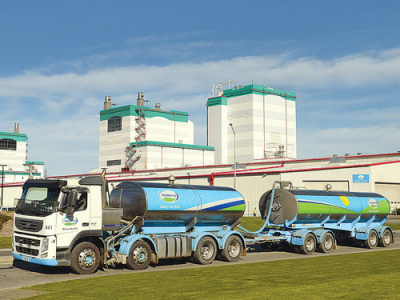 Fonterra says it shouldn’t be forced to collect milk from farms with poor environmental credentials.
Fonterra says it shouldn’t be forced to collect milk from farms with poor environmental credentials.
Fonterra chairman John Wilson says a lot has changed since the Dairy Industry Restructuring Act (DIRA) was enacted to launch the co-op in 2001.
“Today’s environment is so different,” he told a Northland Dairy Development Trust conference in Whangarei this month.
“Right now we are required to pick up milk from any farmer who is thinking about supplying milk.... If that farmer does not have great environmentl practices or is in an area that’s not great for dairying or has a highly fragile ecosystem, we are still forced to pick up that milk,” Wilson says.
“That’s not the right answer so regulations need to be changed to address that…. Unfortunately they were not changed by the previous government and we hope we can have a constructive conversation with the current government.”
The Labour-led coalition government has signalled a comprehensive review of DIRA.
It is also introducing a bill to prevent the expiry of the efficiency and contestability provisions of the DIRA in the South Island. This will mean the current regulatory regime will continue in place; it is due to expire on May 31 this year.
It includes the open entry-and-exit clause under which Fonterra must accept any application to become a shareholding farmer in the co-op, and accept supply of milk from that shareholder. Shareholding farmers can also readily exit from Fonterra and supply another dairy processor should they wish to do so.
Fonterra also has to sell up to 20% of its milk to other processors each season.
DIRA was set up to manage Fonterra’s dominant position in the NZ dairy market, until sufficient competition emerged. It contains automatic expiry provisions that were triggered in 2015 in response to the co-op’s reduced market share in the South Island.
More milk available
Fonterra says rival processors will need a competitive offering to catch milk from its suppliers.
Chairman John Wilson says farmers have seen processors come and go over time.
“We went through a period of five years until two years ago when our milk production grew at 5% average per annum.
“That’s a lot of milk growth; there has been a lot of milk available so other processors have been taking a slice of a growing pie. We strongly believe that environment has changed.”
Fonterra Co-operative Group has confirmed the independently assessed candidates standing for election to its board in 2026.

Fonterra has revised its Farmgate Milk Price forecast for the 2026/27 season, lifting the midpoint and narrowing the range on the back of improving global dairy commodity prices.
Outgoing Fonterra Co-operative Council chair John Stevenson says that it has been a privilege to represent the co-op's farmer shareholders.
OPINION: It seems Canterbury processor Synlait is still in the doldrums.
OPINION: Get offside with New Zealand First leader Winston Peters at your own peril.


The first major update to the Dairy Cattle Code of Welfare in more than a decade has been released, marking what DairyNZ describes as an important step in ensuring animal welfare standards continue to evolve alongside scientific evidence and on-farm realities.

Ravensdown shareholders have elected Jane Montgomery and Kate Acland to the Ravensdown Board for three-year terms, following a closely contested director election.
Federated Farmers says new legislation replacing the Resource Management Act will cut red tape, unlock investment and help grow New Zealand's export-led economy, after the Planning Bill and Natural Environment Bill passed their third reading in Parliament yesterday.
Leading figures from the major political parties will be questioned on their primary sector policies at the Rural Issues Debate at Mystery Creek Events Centre, Hamilton, on 30 September.
OPINION: Have a plan in place now!
Beef + Lamb New Zealand (B+LNZ) says it welcomes the passage of the Natural Environment Bill and Planning Bill, calling the bills a positive step for sheep and beef farmers.