Used by date?
OPINION: This old mutt hears that the voices of dissent in sheep and beef farming circles are growing louder about what they believe is the (non) performance of Beef + Lamb NZ - especially its top executive and CEO Sam McIvor.
 increase font size
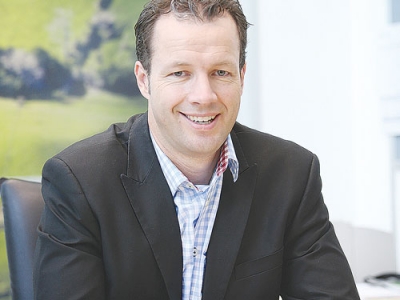 Tim Mackle
The latest outlook for dairy farming and a selection of ‘Hot Science’ topics will feature at the DairyNZ’s regional farmer forums which kick off in April.
Either DairyNZ chief executive Tim Mackle or the general manager R&D David McCall will describe the industry’s challenges and opportunities.
Rabobank’s director of dairy research New Zealand and Asia, Hayley Moynihan, will discuss the global environment and the implications for the New Zealand industry and farmers’ businesses. She will look at how farmers globally are reacting to the tough market and discuss how market changes, particularly in Europe and the US, will impact this country.
Moynihan will also present an economic outlook for China.
DairyNZ developer Dana Carver will lead a session on farmer wellbeing and the importance of managing stress and avoiding burnout.
In the ‘Hot Science’ sessions different topics are being tailored to each forum.
In Kerikeri and Balclutha, Managing for Tight Times will see DairyNZ senior scientist Kevin Macdonald and farms systems specialist Chris Glassey emphasise how with a lower milk price and dry conditions, farmers need to rely on the basic principles of science established in recent decades. They will outline appropriate body condition score, adequate calf feeding and production at high levels.
Does feeding grain to cows lead to better in-calf rates? In Stratford and Balclutha, DairyNZ team leader- reproduction Chris Burke will explain the results of a field trial last spring and whether they support an earlier experiment showing that cows fed on maize or grain barley in early lactation cycled earlier and had better in-calf rates.
Also, in Stratford and Balclutha, the popularity of wintering barns will be discussed by DairyNZ project manager people and business, Geoff Taylor. He will look at the latest research and examine the issues in investing in one of these structures.
Senior scientist Pierre Beukes will speak at Kerikeri and Balclutha on reducing footprint while maintaining profit, analysing lessons learnt a three-season trial comparing a low nitrogen-input farm with a control farm.
In Kerikeri and Balclutha, DairyNZ scientist Cathal Wims will examine how much gain has been achieved from perennial ryegrass breeding over the years and look at the connection between sowing rate and pasture performance.
A session in Stratford by DairyNZ forage value manager Cameron Ludemann will discuss the DairyNZ Forage Value Index and its development, including the incorporation of pasture quality and persistence traits into the evaluation.
What do the public really think of farmers and what issues about farming are most important to them? In sessions in Kerikeri and Stratford, DairyNZ brand manager Andrew Fraser will reveal findings of the latest research on this topic.
Register with DairyNZ online or tel. 0800 4 324 7969.
OPINION: This old mutt hears that the voices of dissent in sheep and beef farming circles are growing louder about what they believe is the (non) performance of Beef + Lamb NZ - especially its top executive and CEO Sam McIvor.

OPINION: Former DairyNZ chief executive Tim Mackle apparently had a dozen job offers in the past few weeks - all from farmers offering him farm assistant jobs!
New DairyNZ chief financial officer Robyn Marsh started last week, an appointment DairyNZ says will provide strong financial direction, vision, and profitable management.
Farm costs have risen 33% over the past years to top on average $9.17/kgMS last season, according to DairyNZ.
DairyNZ's new chief executive Campbell Parker will take up his new role in October.


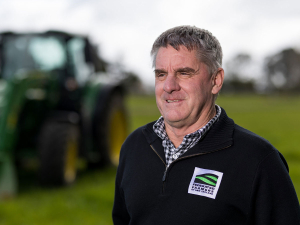
National’s pledge to introduce 19 new national standards shows the party is serious about getting Wellington out of farming, Federated Farmers says.
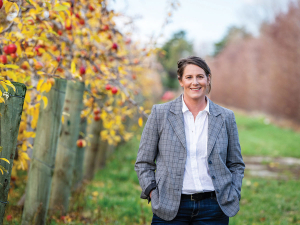
The National Party’s policies to make it easier to grow fresh vegetables, secure reliable water and energy and simplify farm planning are practical changes that will give growers the confidence to invest, according to Horticulture New Zealand (HortNZ).
Fonterra Co-operative Group chief financial officer Andrew Murray has resigned to take up a role outside the dairy giant.
A major move is about to get underway to improve the quality and viability of dairy beef and cattle in NZ.
Veterinarians say changes to the code of welfare for dairy cattle provides a positive foundation for improved cattle welfare across the country.
Today, 15 October, is the International Day of Rural Women, which recognises rural women’s contribution to farming, communities and the environment.