Alex Turnbull Appointed CEO of Yili Oceania Division
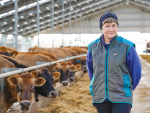
Former Fonterra executive Alex Turnbull has been appointed CEO to lead all five Yili Oceania Business Division companies in New Zealand.
 increase font size
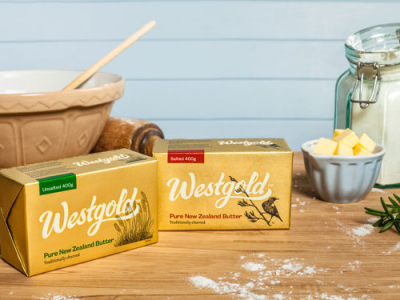 Westland Milk has reduced its payout prediction for the 2018-19 season.
Independent dairy processor Westland Milk has reduced its payout prediction for the 2018-19 season.
A drop in butter prices has forced the co-op to revise its predicted 2018-19 payout range to $6.50/kgMS to $6.90/kgMS.
Four months ago, the co-op was predicting a payout range of $6.75 to $7.20.
Westland chairman Pete Morrison says the revised forecast payout “is in line with other milk processors”.
Chief executive Toni Brendish says Westland was now implementing its new five-year strategy, the key to which is milk segregation, and the continual focus on improving internal systems and process, which were now starting to deliver results.
“During the 2017-18 season we proved our ability to identify, separately collect and process milk with key characteristics that carry significantly more value in the market place and return increased premiums.
“We’re working with Southern Pastures to produce grass-fed milk to a set of very high standards that include strict environmental, animal welfare, feed management, soil and water management and other criteria that will set this milk apart.
“Our comparatively smaller processing plant gives us the flexibility to produce nutritional products for very specific niche markets with increasing global demand. Other types of speciality milk will also soon be available,” she says.
Former Fonterra executive Alex Turnbull has been appointed CEO to lead all five Yili Oceania Business Division companies in New Zealand.
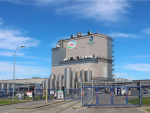
Chinese dairy giant Yili Group says its New Zealand operations are on track for strong revenue growth in 2025 after recording significant year-on-year growth for the first half of the year.
Arguably one of the country's top dairy company's chief executives, Richard Wyeth has abruptly quit Chinese owned Westland Milk Products (WMP)
OPINION: This old mutt well remembers the wailing, whining and gnashing of teeth by former West Coast MP and Labour Agriculture Minister Damian O’Connor when Chineseowned Yili took over the troubled dairy company Westland Milk a few years back.
Westland Milk has reaffirmed its commitment to pay farmer suppliers 10c above Fonterra farm gate milk price for the following two seasons.


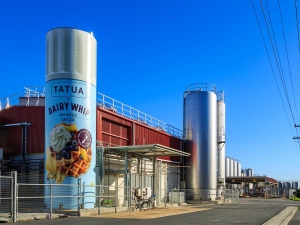
Waikato milk processor Tatua has again declared a record milk payout to farmer shareholders, leaving other processors in the dust.

A Labour-led Government won’t be bringing back the controversial freshwater rules of 2020.
National’s much-touted free trade deal with India featured in the Rural Issues Debate at Mystery Creek, Hamilton on Wednesday night.
New Zealand's 2026-27 freshwater fishing season has opened, with anglers encouraged to head to rivers and lakes over the coming days as conditions look favourable across much of the country.
Central Otago District Council (CODC) has voted against a plan to spread treated sewage sludge from Cromwell and Alexandra on farmland near Lauder, a decision Federated Farmers says reflects strong opposition from rural residents.
Pāmu has released its FY26 Integrated Annual Report, reporting a Net Operating Profit of $113 million, more than double the $49 million recorded in FY25.