FAR Eyes NZ Grain as Dairy Supplementary Feed
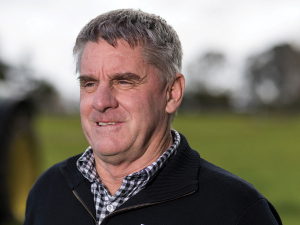
Dr Scott Champion, Foundation for Arable Research chief executive, says that everyone in the supply chain had a role to play in driving the sector's long-term success.
 increase font size
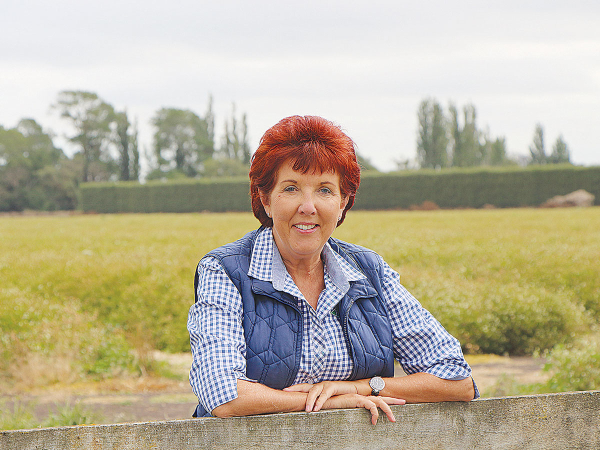 FAR chief executive Alison Stewart.
To survive and thrive in this changing world, New Zealand farmers must take a new look at what resilience means to them and their farming operations, Foundation for Arable Research (FAR) chief executive Alison Stewart says.
Farming faces several challenges including economic uncertainty, extreme weather events, environmental concerns and changing market demands.
As agriculture produces food and generates valuable export returns it is valuable to New Zealand, but it's not special, she told FAR's maize conference in Hamilton recently.
"New Zealand farmers need to get over the idea that 'we're special and we need to be treated in a special way'."
New Zealand agriculture is important, but so are other sectors like tourism, manufacturing, health and education.
"There's nobody in New Zealand saying 'let's make life difficult for agriculture'." Change in agriculture is happening across the world.
Agricultural resilience isn't just about the ability of farms to cope, it is about their ability to transform, Stewart says.
Creating resilience is the key to being a successful farmer.
"You may think that change is overwhelming but this maize conference has heard from farmers who have already embraced it."
Strategies to build farm resilience include adopting climate smart practices, diversification, financial management, embracing learning and innovation and networks and collaboration.
Climate smart practices include using drought and heat tolerant cultivars and not just focusing on yield potential, as well as implementing soil conservation measures such as no till and cover crops.
Diversification is also a way to manage risk, a consideration for maize growers focused on a single crop in continuous rotation.
"Maize creates a simple farm business, delivers economies of scale and usually generates greater profits. But, in a changing climate it can lead to greater risk and vulnerability to crop failure, fluctuating commodity prices and increasing input costs."
Growers also need to proactively plan and understand their finances.
Embracing learning and innovation and adopting new knowledge, tools and technology is also key.
"If you are working in isolation and doing the same thing you have always done then your future will be challenging."
Kiwis regard themselves as innovative, with a No.8 wire mentality, but New Zealand is not embracing change as much as the rest of the world and this is a risk, Stewart says.
"If we are truly world leaders in agriculture, we need to change. World leaders never defend the status quo because thye are always innovating, changing and evolving; that is what makes you world leaders. The All Blacks found that out the hard way.
"The only way to innovate is to have networks and collaboration, sharing knowledge, resources and expertise."
Nobody knows what the future looks like as the speed of change is so fast, Alison Stewart says.
"I only know it will change and your ability to respond to change will be what determines your success."
The conference had earlier heard from Margaret Stuart of Nestle Australasia. One of the biggest food companies, Nestle is committed to net zero greenhouse gas emissions by 2050. Sourcing ingredients represents 71.4% of its emissions, mainly coming from dairy and livestock.
Dr Scott Champion, Foundation for Arable Research chief executive, says that everyone in the supply chain had a role to play in driving the sector's long-term success.

Flat pricing in the face of significant increases in costs is the greatest problem facing the arable sector, says Foundation for Arable Research (FAR) chief executive Dr Scott Champion.
Four years since it was first detected in New Zealand, researchers and growers now know much more about management of maize pest fall armyworm (FAW).
Two Canadian spraying experts, Tom Wolf and Jason Deveau, are visiting New Zealand in early August to ensure that arable growers are hitting the target with this key piece of equipment.
Tickets are now available for the 2026 Arable Awards, set to be held in Christchurch on 20th August.


Federated Farmers has welcomed new rural policies released by ACT, saying they align closely with its own election priorities.

Rural Contractors NZ says proposed changes to land transport rules for agricultural vehicles are a welcome response by the Government to out of date regulations which have seen members hit with huge fines.
Alliance is calling for final applications for its 2027 Graduate Programme, with applications closing on Sunday 25 October.
Decades piloting planes has ensured vet and farmer David Hayes is focused on safety. So, after a serious accident while welding on farm, he is sharing his experience so others can learn from it.
Canterbury milk processor, Synlait Milk has confirmed Leon Fung as its chief executive officer.
OPINION: Making it easier to collect rainwater and use it to grow crops and livestock is a no brainer.